Western Wall
The Western Wall in Jerusalem is one of the most recognized and historically significant sites in the world. It is the remaining section of the retaining wall that once supported the expanded Temple complex built by Herod the Great around 10 BCE. The Temple itself, known as the Second Temple, was destroyed by the Romans in 70 CE, but this wall endured.
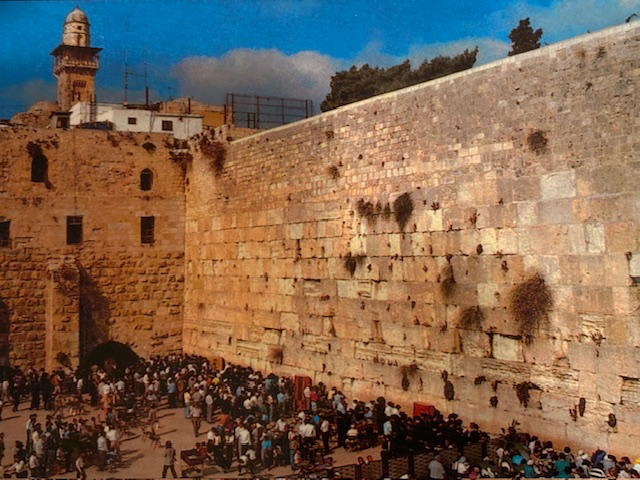
For centuries, Jewish people have come to this site as the closest accessible place to the location of the Temple, making it one of the holiest places in Judaism.
The large plaza in front of the wall is an addition created after 1967, allowing space for gathering, prayer and public events. The wall is divided into separate sections for men and women, and at any time of the day there are people standing at the stones, reading and praying.
When Marty and I visited, we approached the wall with a prayer note and placed it into one of the openings between the stones. Writing something down makes the prayer more intentional and personal.
It is not just the age of the Western Wall, but its continuity. It is not preserved as a relic of the past but is still in daily use. The same stones that were set in place over thousands of years ago continue to serve as a place where history and present-day life meet in a very direct way.
Standing at the Wall, you don’t need an explanation to understand its importance.
It is, in every sense, a place held as sacred by those who come to it.
Read More From Nancy
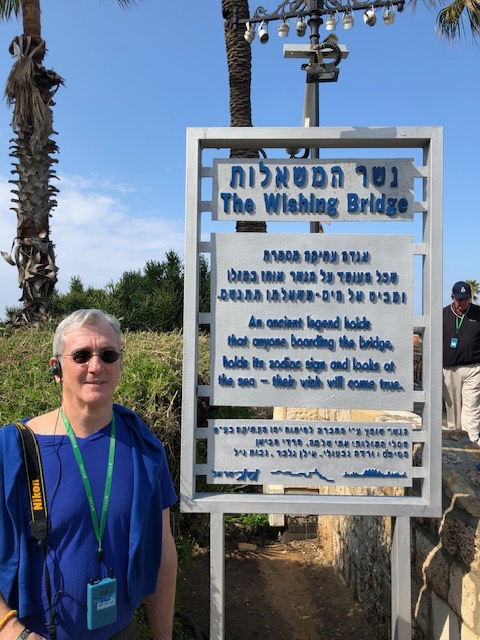
The Wishing Bridge
During our visit to Old Jaffa, we stopped at the entrance to the Wishing Bridge. The sign describes a local legend: anyone who stands on the bridge, holds the image of their zodiac sign, looks toward the sea, and makes a wish will have that wish come true. The bridge is decorated with twelve bronze […]
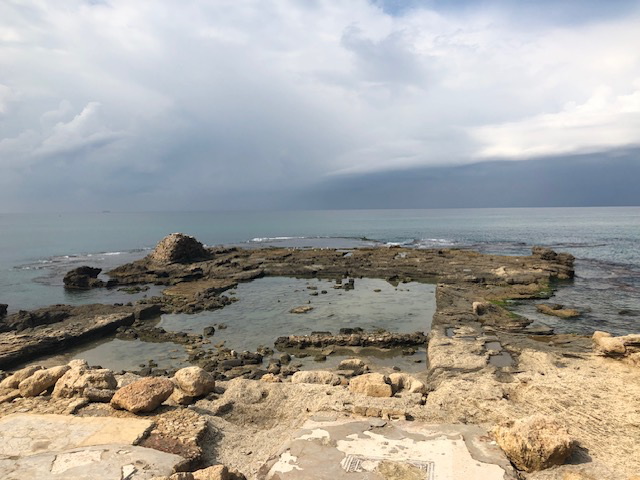
Herod’s Promontory Palace
On our visit to Caesarea, we walked among the remains of an ancient city built along the Mediterranean Sea. The setting alone was striking, with the ruins extending toward the water and waves breaking against the exposed stone. One of the most intriguing places we encountered was the remains of a large rectangular pool surrounded […]
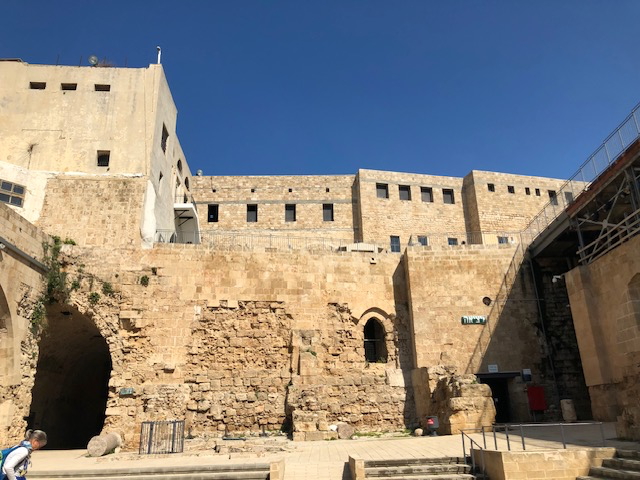
The Knights’ Halls and the Crusader City
The Knights’ Halls beneath the Old City of Acre preserve one of the most substantial surviving complexes from the age of the Crusades. Their vaulted chambers belonged to the Knights Hospitaller, one of the religious and military orders that became powerful forces in the Crusader states established along the eastern Mediterranean coast. The Crusades were […]

