The Sea of Galilee Boat
One of the highlights of our visit to the Sea of Galilee was seeing the ancient fishing boat preserved at the Yigal Allon Centre near Kibbutz Ginosar. Although often referred to as the “Jesus Boat,” its true significance lies not in who may have sailed it, but in what it teaches us about everyday life on the Sea of Galilee nearly two thousand years ago.
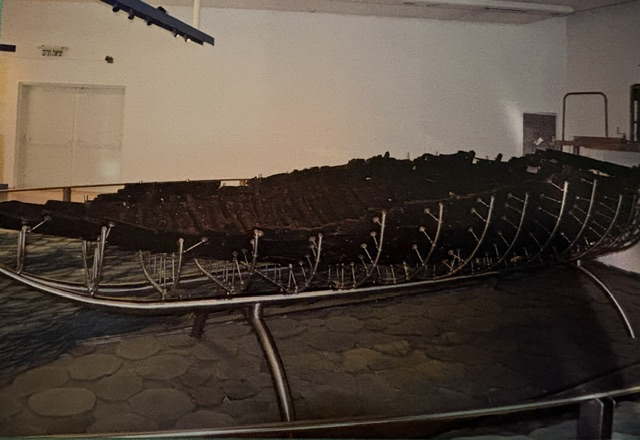
The boat was discovered in 1986 during a severe drought when the waters of the Sea of Galilee receded, exposing part of its wooden hull buried in the mud. Two brothers from Kibbutz Ginosar spotted the remains, and archaeologists quickly recognized the importance of the find. The waterlogged wood was extremely fragile, requiring an extraordinary twelve-day excavation followed by years of careful conservation before it could be placed on display.
Radiocarbon dating and analysis of the construction techniques indicate that the vessel was built sometime between the first century BC and the first century AD. Measuring about 27 feet long and 7½ feet wide, it was large enough to carry a crew of several fishermen along with their nets and catch. Made from a variety of different woods, the boat had been repaired repeatedly during its working life, suggesting that its owners valued it enough to keep it in service for many years.
Whether or not Jesus or his disciples ever saw this boat is impossible to know. What makes it so remarkable is that it is exactly the type of fishing vessel that would have been common on the Sea of Galilee during their lifetime. Reading the Gospel accounts of Jesus teaching from a boat, calming the storm, or calling fishermen to become his disciples becomes more tangible when standing before a vessel built during that same period.
This remarkably preserved hull offers a rare and authentic glimpse into the world of first-century Galilee, connecting history, archaeology, and faith in a way that few artifacts can. More than an ancient fishing boat, it provides a tangible link to the people who lived and worked on the Sea of Galilee during one of the most significant periods in history.
Read More

Read More From Nancy
The Knights’ Halls and the Crusader City
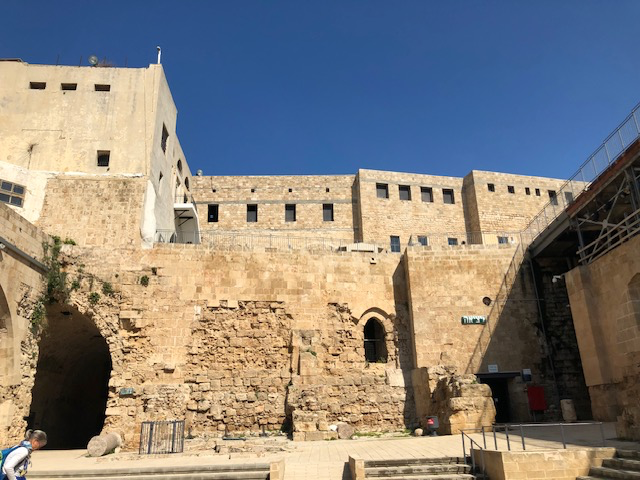
The Knights’ Halls beneath the Old City of Acre preserve one of the most substantial surviving complexes from the age of the Crusades. Their vaulted chambers belonged to the Knights Hospitaller, one of the religious and military orders that became powerful forces in the Crusader states established along the eastern Mediterranean coast. The Crusades were […]
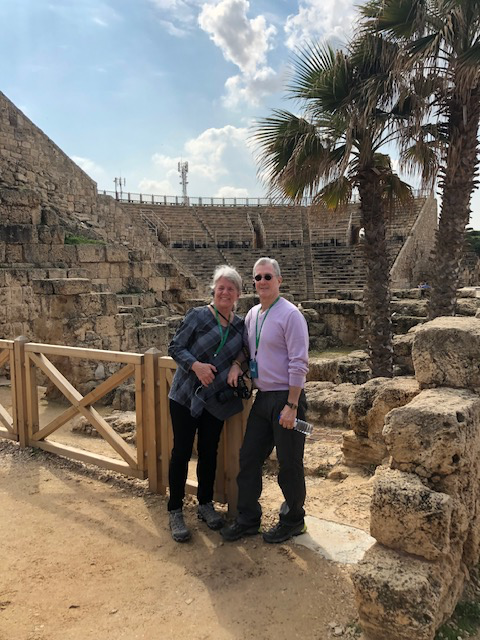
The Roman Theater
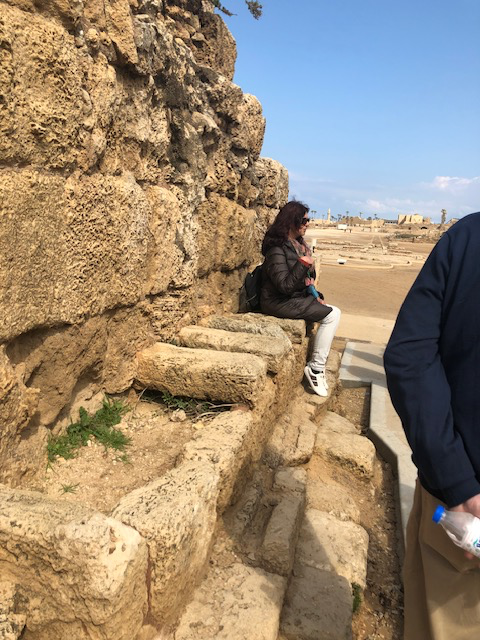
I especially enjoyed visiting Caesarea while we traveled through Israel. Its setting along the Mediterranean and the remains of so many different periods made it possible to experience several layers of history in one place. Caesarea Maritima was developed by Herod the Great between approximately 22 and 10 BCE. He transformed a small coastal settlement […]
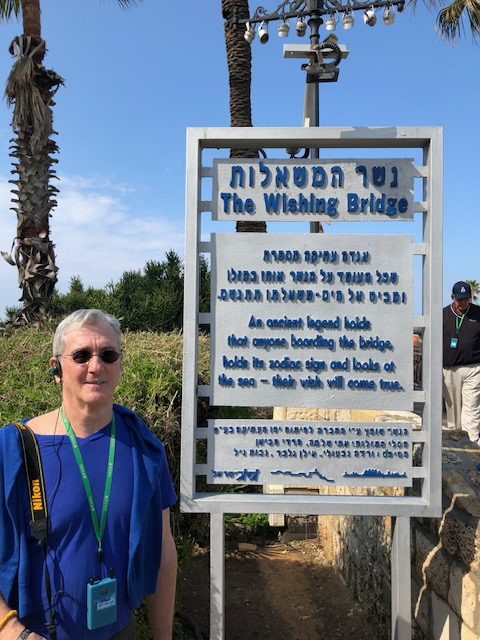
The Wishing Bridge
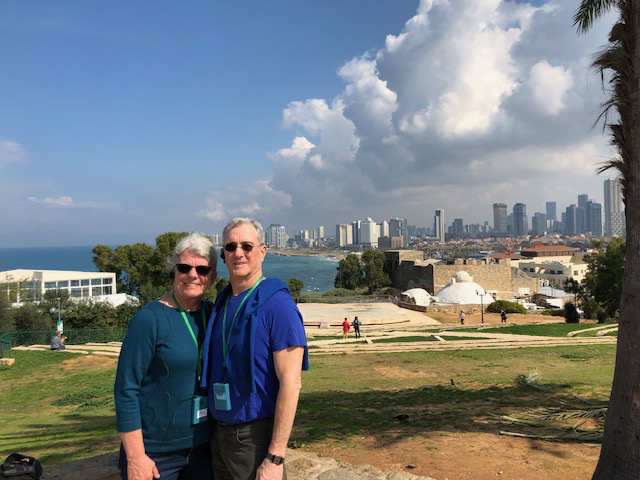
During our visit to Old Jaffa, we stopped at the entrance to the Wishing Bridge. The sign describes a local legend: anyone who stands on the bridge, holds the image of their zodiac sign, looks toward the sea, and makes a wish will have that wish come true. The bridge is decorated with twelve bronze […]

