Kunsthistorisches Museum
There are moments in travel when a space becomes an experience, and the grand staircase inside the Kunsthistorisches Museum in Vienna is one of those moments.
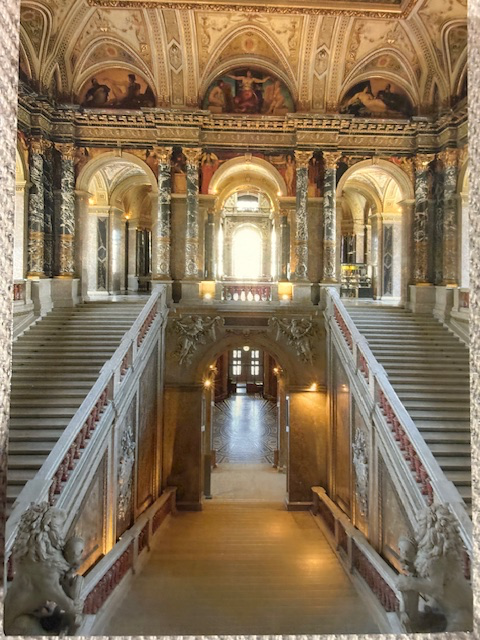
We expected to see art on the walls, but instead, we found ourselves standing within it.
The staircase rises in sweeping marble curves, framed by towering columns and crowned with a richly decorated dome above. Above are painted panels created by a young Gustav Klimt, long before his more famous works.
The museum itself was commissioned by Emperor Franz Joseph I and opened in 1891 to house the vast collections of the Habsburg dynasty. It was designed not just as repository of art, but as a statement of culture, power and the importance of preserving human achievement.
This statement becomes even more meaningful when we look at the moment in history in which it was built. By the late 19th century, the Habsburg Empire was vast but changing, holding together many different cultures, languages and regions. Buildings like this museum were part of a larger vision to unify the empire through shared culture, history and beauty. The collections inside span centuries and civilizations, reflecting the reach and ambition of Habsburg rule.
The museum, and its staircase, is designed to elevate the very act of looking.