“Stand Your Ground” Monument
On the Green in Lexington, there is this stone monument, low to the ground, a rough granite boulder. Carved into ts surface are words that carry the weight of a nation’s beginning:
“Stand your ground. Don’t fire unless fired upon. But if they mean to have a war, let it begin here.”
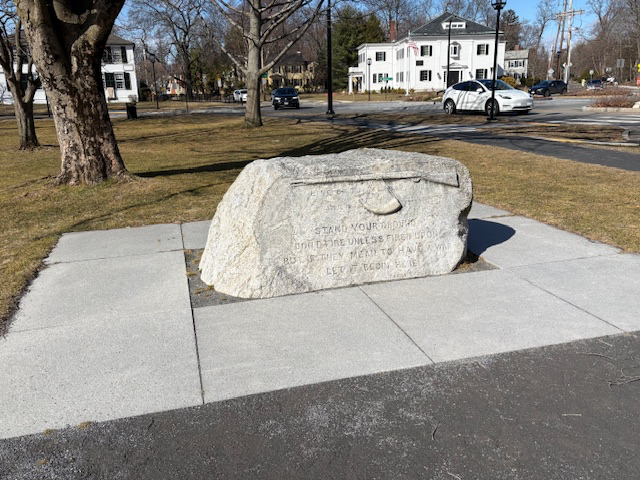
These words are attributed to John Parker, a man who was not seeking to become part of history.
Parker was a farmer, a husband, a father. A man chosen by his neighbors to lead. He had served before, in earlier colonial conflicts, but on that April morning in 1775, he stood not as a soldier of ambition, but as a citizen answering a call.
It is believed that Parker was sick, suffering from tuberculosis, a condition that eventually would take his life. Yet despite his illness, he took his place on the Green with his men, local farmers and tradesmen, gathered not as an army, but as a community.
In the early hours of April 19, British regulars marched into Lexington with orders to seize colonial supplies. Parker and his militia assembled to stand and to hold their ground. What happened next remains uncertain. A shot rang out, no one can say from which side, and within moments, the quiet tension of that morning broke. The militia, outnumbered for sustained conflict, began to disperse. The British moved on.
But something irreversible had begun: The American Revolution had started.
The stone on the Green was placed years later in 1900, by the town of Lexington. This is the Line of the Militia, where John Parker stood and where it physically happened.
Read More From Nancy
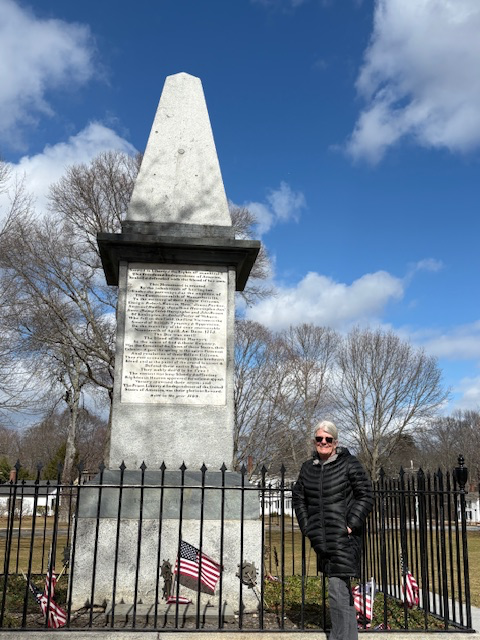
Revolutionary War Monument
The Revolutionary Monument on Lexington Green, erected in 1799, is widely considered the first monument in the United States specifically commemorating the American Revolution. The monument stands on Lexington Battle Green, the site where the first shots of the American Revolution were fired on April 19, 1775. Twenty-four years after the battle, the town of Lexington […]
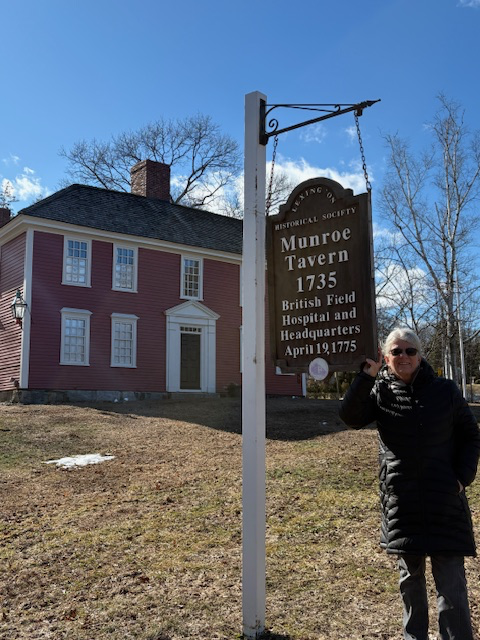
Munroe Tavern
Standing beside Munroe Tavern in Lexington, it is difficult to imagine how quickly this quiet colonial tavern became swept into the chaos of the opening day of the American Revolution. Built in 1735, the tavern originally served travelers moving along the busy road between Boston and Concord. Taverns like this were essential gathering places in colonial […]
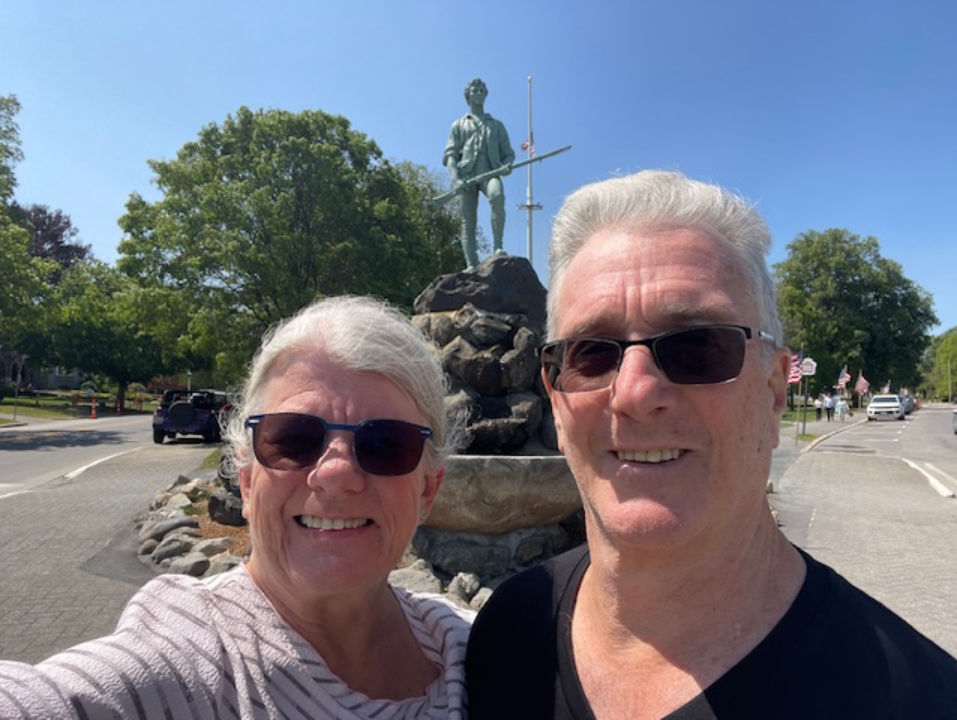
Minuteman Statue
Standing on the Lexington Battle Green, the Minuteman statue captures a single, defining moment in American history: The morning of April 19, 1775. This figure represents Captain John Parker, commander of the Lexington militia, not a professional soldier, but a farmer, husband, and father. Before dawn, he gathered 77 local militiamen on the town common […]

