Munroe Tavern
Standing beside Munroe Tavern in Lexington, it is difficult to imagine how quickly this quiet colonial tavern became swept into the chaos of the opening day of the American Revolution. Built in 1735, the tavern originally served travelers moving along the busy road between Boston and Concord. Taverns like this were essential gathering places in colonial New England, serving as part inn, part restaurant, part meeting place and often the center of political discussion and community life.
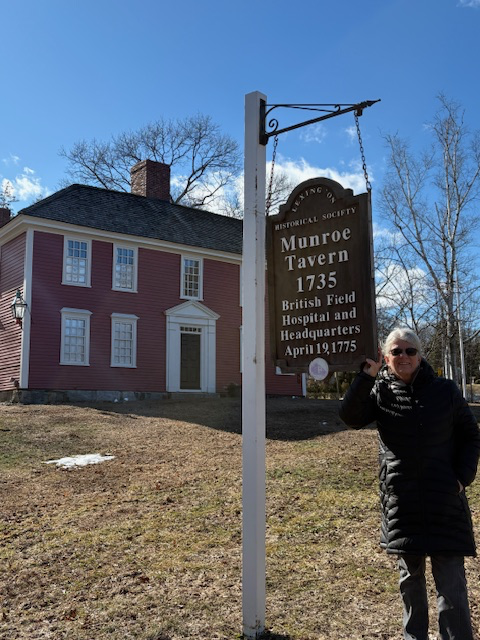
On April 19, 1775, Munroe Tavern found itself at the center of history. After the British troops completed their march to Concord and began their difficult retreat toward Boston, the tavern was taken over as a temporary headquarters and field hospital for British officers and wounded soldiers. Exhausted troops stopped here during the brutal fighting and confusion of the retreat, one of the bloodiest days of the Revolution’s opening.
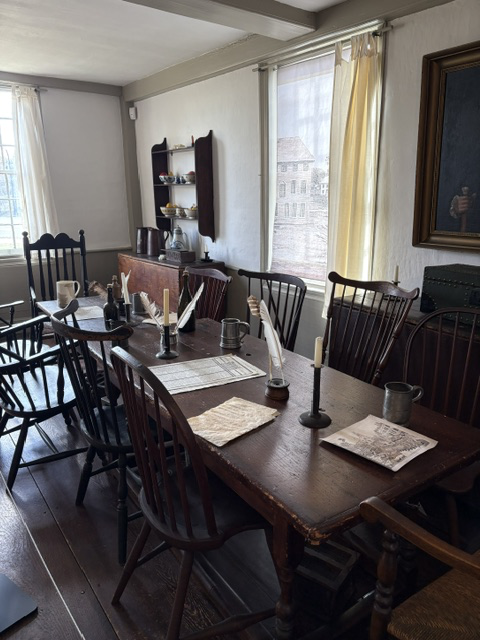
The building preserves the British experience during the retreat. Officers occupied the upper floors while wounded soldiers were treated inside the tavern. Within these rooms, officers made decisions, wounded soldiers suffered, and the British army struggled to regroup while under continuous attack from colonial militia firing from behind walls, trees and houses along the road back to Boston.
The tavern was owned by Willian Munroe, who himself served with the Lexington militia earlier that morning on the Battle Green. While he fought with the patriot forces, the British later occupied his own tavern during their retreat.
Lexington Historical Society preserves the tavern as one of the important surviving landmarks connected to April 19, 1775.
Read More From Nancy
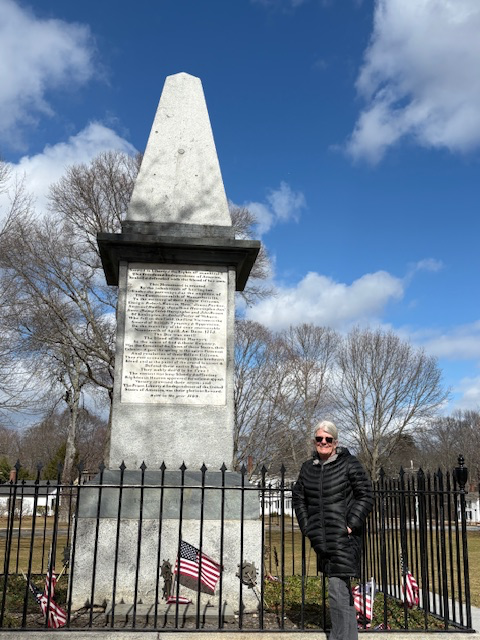
Revolutionary War Monument
The Revolutionary Monument on Lexington Green, erected in 1799, is widely considered the first monument in the United States specifically commemorating the American Revolution. The monument stands on Lexington Battle Green, the site where the first shots of the American Revolution were fired on April 19, 1775. Twenty-four years after the battle, the town of Lexington […]
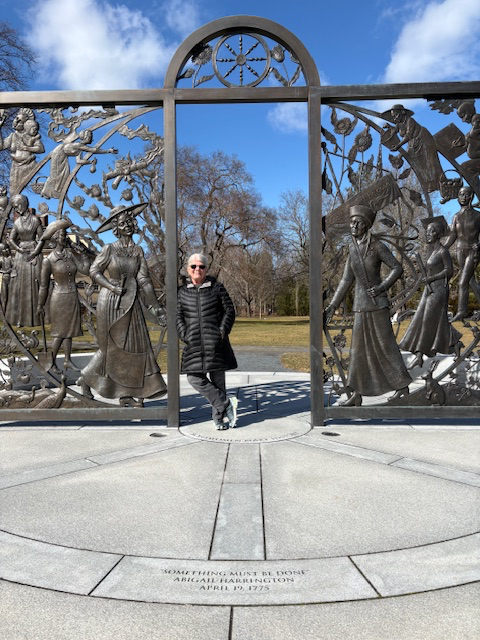
Women’s Liberty Monument
This is the Lexington Women’s Liberty Monument, officially titled “Something is Being Done” that was unveiled in May 2024 in the historic center of Lexington. The memorial was created by sculptor Meredith Bergmann and was commissioned by the organization LexSeeHer to recognize the women whose stories had been left out of Lexington’s public monuments. The phrase engraved beneath where […]
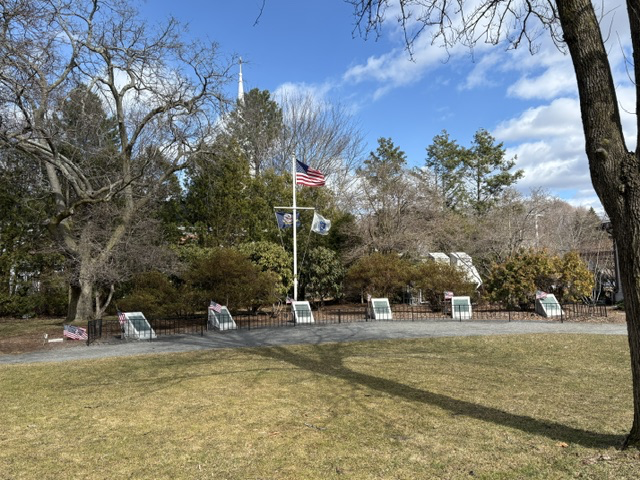
USS Lexington Memorial
Most visitors come to Lexington to remember the events of April 19, 1775, when the American Revolution began on the town’s Green. Tucked quietly nearby is another memorial that tells a different story, one that extends far beyond Massachusetts and across the world’s oceans. This memorial honors the United States Navy ships that have carried […]

