Minuteman Statue
Standing on the Lexington Battle Green, the Minuteman statue captures a single, defining moment in American history: The morning of April 19, 1775.
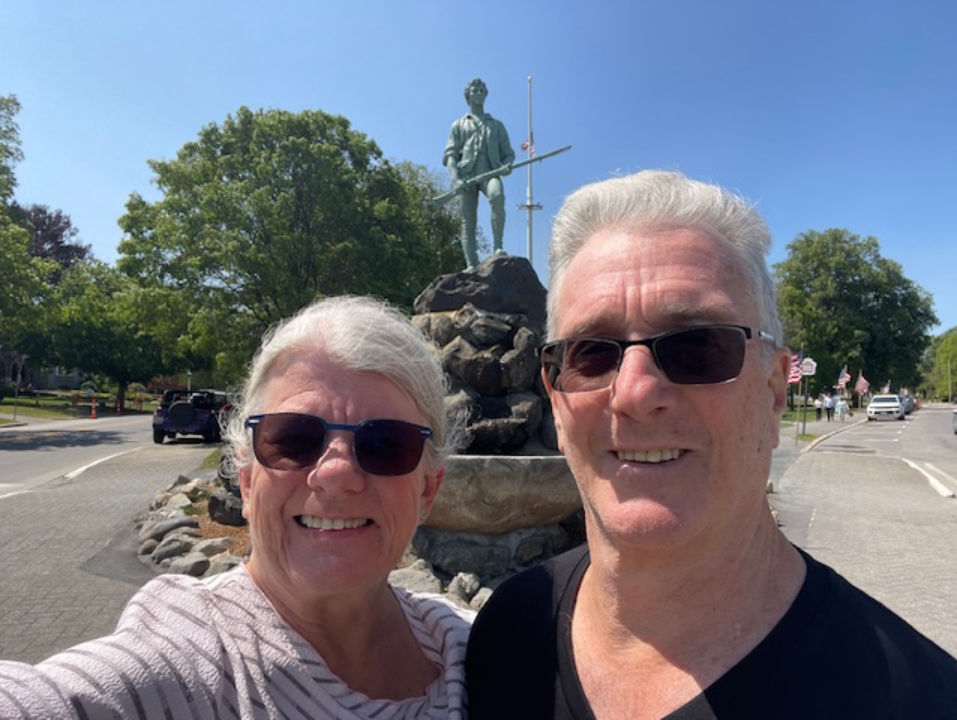
This figure represents Captain John Parker, commander of the Lexington militia, not a professional soldier, but a farmer, husband, and father. Before dawn, he gathered 77 local militiamen on the town common as British regulars marched toward Concord to seize colonial military supplies. Parker, who was ill with tuberculosis at the time, is remembered for words that have echoed through generations:
“Stand your ground. Don’t fire unless fired upon. But if they mean to have a war, let it begin here.”
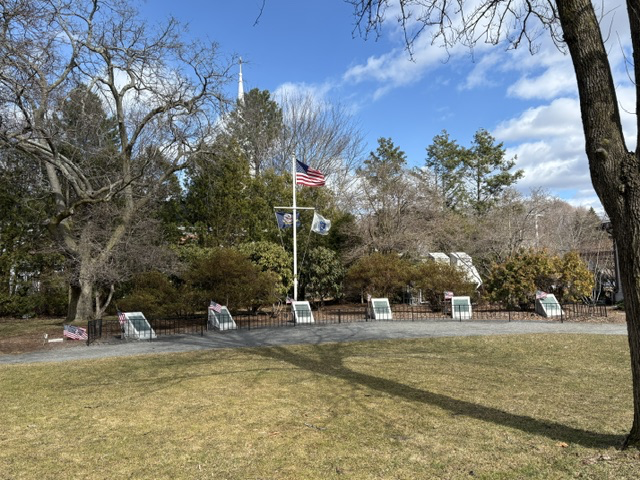
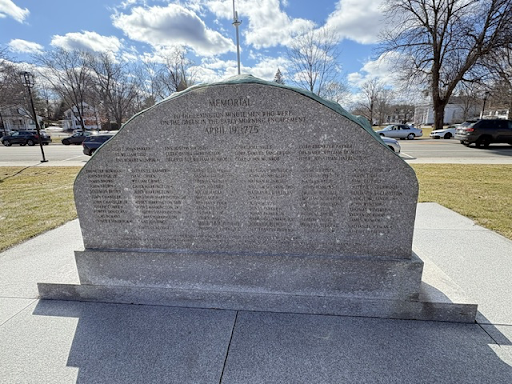
As the British troops advanced onto the Green, a shot rang out and the brief confrontation left eight colonists dead and ten wounded. The British column then continued toward Concord, but the events in Lexington marked the opening engagement of the American Revolutionary War.
Dedicated in 1900 and sculpted by Henry Hudson Kitson, the monument stands just off the Green. Here stands the minuteman, a citizen soldier prepared to defend home and principle.
In Lexington, history is not distant. It stands in the open air, asking us to remember the ordinary men who stepped forward at an extraordinary hour.
Read More From Nancy
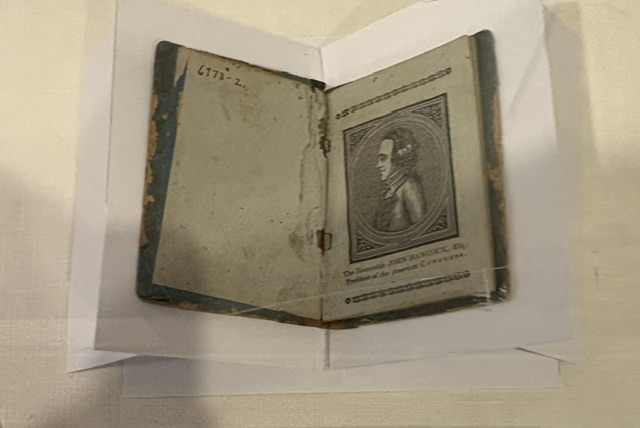
A 1777 Child’s Primer in Revolutionary
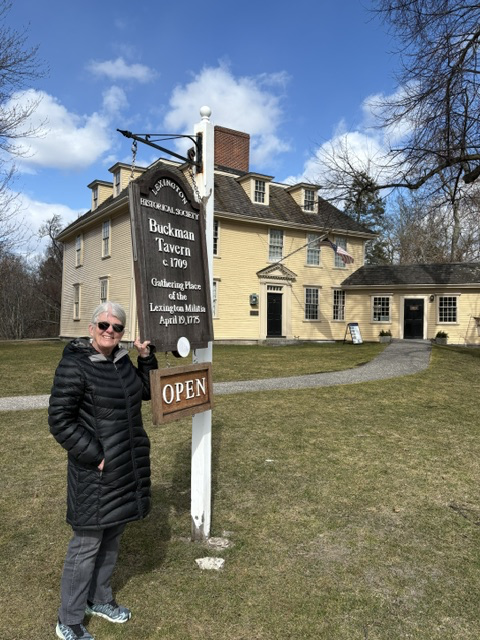
Inside Buckman Tavern in Lexington, I came across this remarkably small book. It is a children’s primer dating from 1777, only two years after the fighting at Lexington and Concord and just one year after the Declaration of Independence. On the first page, John Hancock is identified as a leader of the new nation. That […]
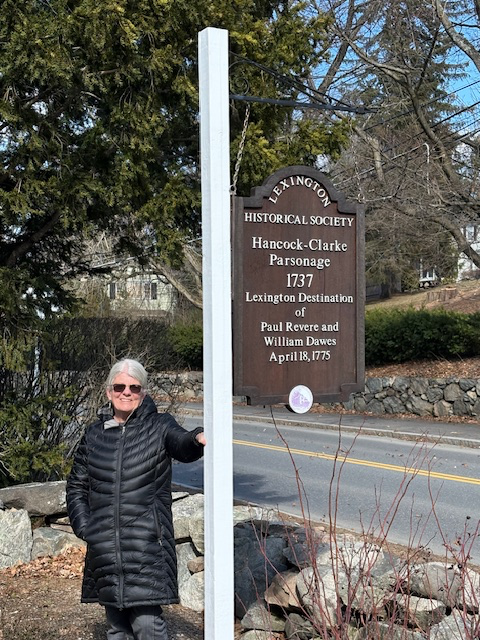
Hancock-Clarke Parsonage
Standing along the roadside in Lexington, the Hancock-Clarke Parsonage preserves one of the most important gathering places connected to the opening of the American Revolution. Built in 1737, the parsonage became forever tied to the dramatic events of April 18-19, 1775, when Paul Revere and William Dawes arrived here warning that British troops were marching toward […]
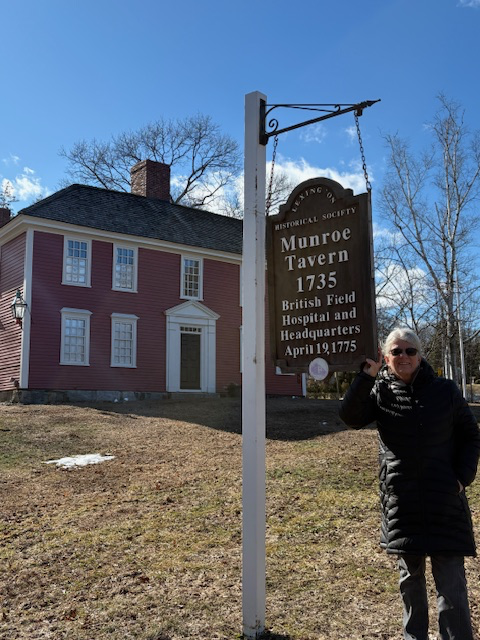
Munroe Tavern
Standing beside Munroe Tavern in Lexington, it is difficult to imagine how quickly this quiet colonial tavern became swept into the chaos of the opening day of the American Revolution. Built in 1735, the tavern originally served travelers moving along the busy road between Boston and Concord. Taverns like this were essential gathering places in colonial […]

