Missing in Action in Germany Clipping
1944Dearest Reader,
Sometimes it is not immediately clear why certain papers were saved. As I sort through the letters and clippings my parents kept, I occasionally come across items whose meaning is not obvious at first. One such folder contains a collection of small newspaper clippings about servicemen. The articles seem to come from many different places and as I share them, hopefully the connections will become clearer.
This clipping is titled: Missing in Action in Germany. Beneath the small photo is the notice of Sgt. William Gregory, Jr. and a brief history of his service record and family. Before William was in the service, he was a spinner at the Berkeley Woolen Mill.
That detail suddenly gave the clipping meaning. The Berkley Woolen Mill, located in Martinsburg, West Virginia, was part of the industrial life of Berkeley County, the same place my father called home. This clipping was reporting the loss felt in my father’s own hometown.
Sgt. Gregory was the 98th man from Berkeley County to be listed as killed or missing in action since the beginning of the war. Seen now in that light, it becomes easier to understand why my parents kept this clipping. It was not the story of a soldier somewhere in the war. It was the story of a young man from the same streets, mill and community my father had grown up in. In the small towns of America during the war years, every telegram carried the weight of a community’s loss.
Although the newspaper is brief, it offers more clues to the life of Sgt. Gregory and the world he lived in. Gregory came from Berkeley County, WV, a community shaped by both agriculture and industry in the Shenandoah Valley. Before entering the military 1944, he worked as a spinner at the Berkeley Woolen Mill in Martinsburg. A spinner’s job was one of the essential steps in textile production. This work was part of a larger industrial process that produced fabrics used for clothing, coats and uniforms.
He entered the Army in November 1942 when the United States was rapidly expanding its military after entering WWII. After training in two important Army training centers, Fort Benning, and Fort Gordon, he joined the 10th Armored Division.
The 10th Armored Division became part of the Third Army under the leadership of George S. Patton. Patton’s army was famous for its rapid advances across Europe following the Allied landings in France in 1944. Gregory was sent overseas in Sept 1944, entering the war during its final and most intense phase in Europe. The 10th Armored Division fought in several major operations, including the Battle of the Bulge, when elements of the division rushed to defend the town of Bastogne against German forces.
Sgt Gregory was missing in action in Germany since February 15. By that time, Patton’s Third Army was pushing deep into Germany during the final months of the war. Those advances were fast and dangerous. Armored units were often on the front edge of the fighting, encountering resistance as they moved through towns and countryside that had rarely seen Allied soldiers before.
Dr. Nancy Watson
Washington
Read More From Nancy
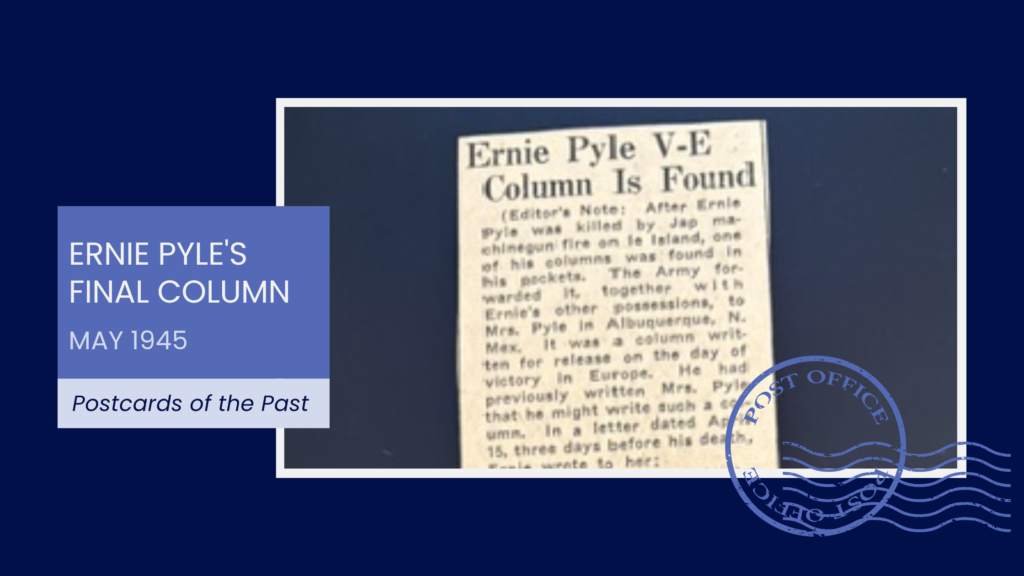
Ernie Pyle’s Final Column
Among my parents’ papers was this newspaper clipping titled “Ernie Pyle V-E Column Is Found,“ with the handwritten date of May 11, 1945. I do not know why they chose to save it, but its preservation suggests that it held some significance for them during the closing days of World War II. The article reports the publication […]
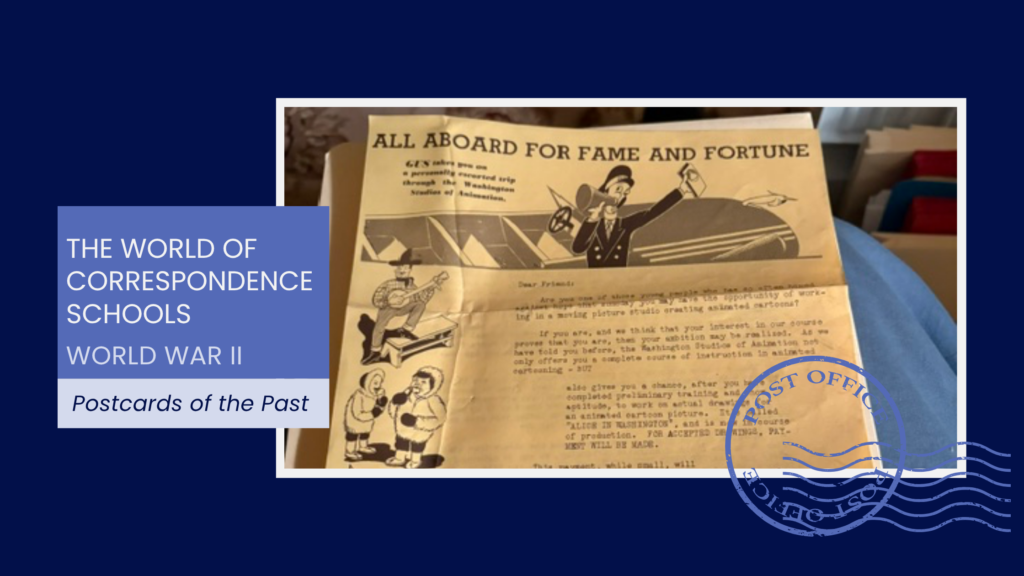
The World of Correspondence Schools
This advertisement from my father’s papers represents something that was once a familiar part of American life—the correspondence school. Long before online courses, instructional videos, or even widespread community colleges, companies promised that almost anyone could learn a new skill and perhaps begin a new career without ever entering a classroom. This advertisement came from the Washington […]

Harold T. Smith
The headlines is direct: “Harold T. Smith, 25, with Coast Guard, Dies of Injuries“ The article tells his story in the same way as the other clippings: name, address, family, education and service. He was from Queen Street in Martinsburg, the only son of his parents, a graduate of Martinsburg High School, trained in aeronautics, and in the Coast […]

