The Beacon Hill Monument
A gilded eagle spreads its wings above a slender column in Ashburton Park, beside the Massachusetts State House. Surrounded by trees and lawn, the Beacon Hill Monument preserves the memory of an earlier Boston—both its Revolutionary history and a landscape that has changed considerably.

The monument follows a design by Charles Bulfinch, the architect of the State House. His original column, erected in 1790, commemorated the events leading to American independence. It stood on Beacon Hill, where a warning beacon had once given the hill its name. The eagle above the column provided a fitting symbol for the young nation.
That first monument was removed in 1811 as the summit of Beacon Hill was cut down. Boston’s hills supplied earth for filling low-lying areas, altering the city’s contours and creating land for development. The loss of the column was therefore part of a much larger transformation: the physical landscape of the early city was being reshaped around its growing population.
The present monument was dedicated on June 17, 1898—Bunker Hill Day. Four original inscribed slate tablets, preserved inside the State House for roughly a century, were incorporated into the replacement. Those surviving pieces connect the later memorial directly to Bulfinch’s original monument and the generation that first commemorated the Revolution.
Its quiet garden setting makes this an easily overlooked piece of Boston history. Yet the column tells two related stories: how the city chose to remember independence, and how it later recovered a landmark lost during its own expansion. Above the surrounding greenery, the golden eagle makes that act of remembrance visible.
Read More From Nancy
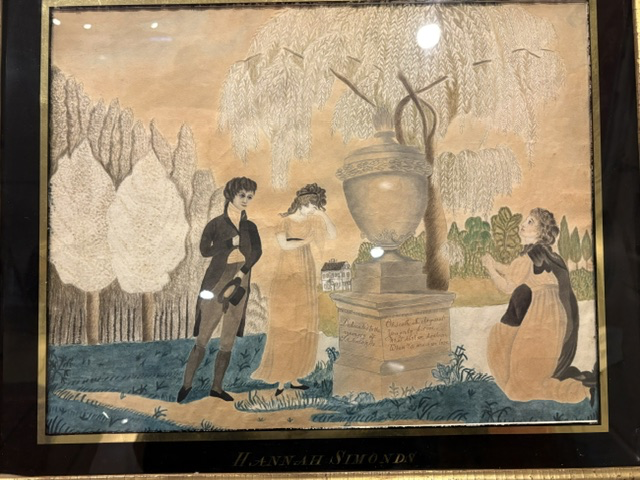
Hannah Simonds’ Mourning Portrait
One of the most moving pieces we discovered at the Buckman Tavern in Lexington was this delicate watercolor painted by Hannah Simonds in 1805. At first glance, it appears to be a simple family memorial, but it tells a much larger story about remembrance, family, and the quiet ways ordinary Americans preserved the legacy of […]
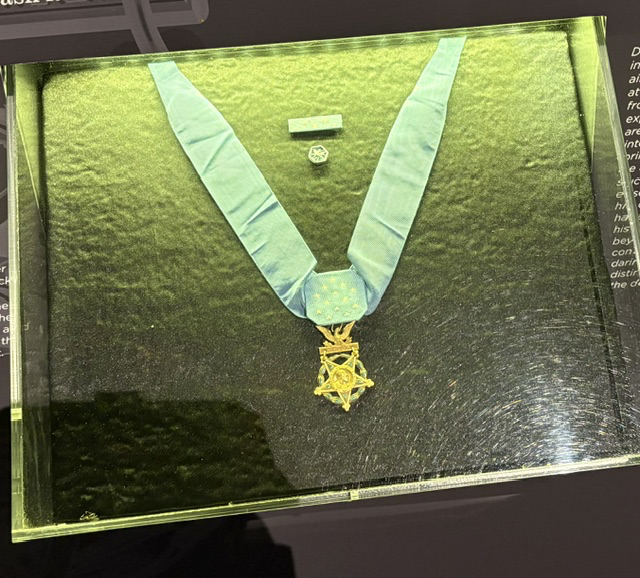
The Medal of Honor
Among all the artifacts displayed at the American Heritage Museum, few carry the emotional weight of the Medal of Honor. Unlike a tank, an aircraft, or a weapon, this small medal represents something that cannot be manufactured or engineered. It symbolizes extraordinary courage in the face of overwhelming danger. Established during the American Civil War […]
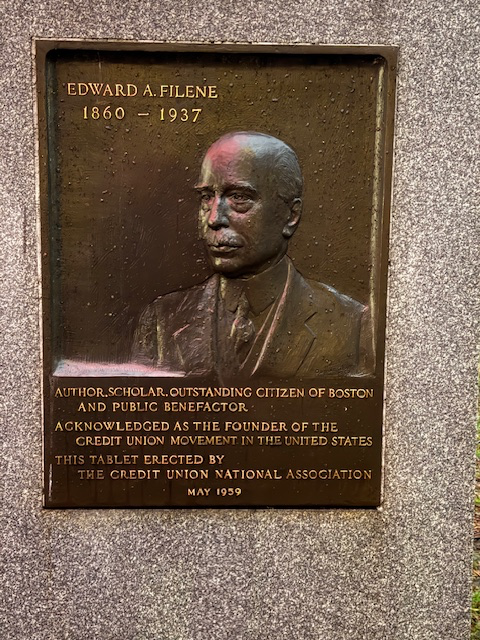
Edward A. Filene Plague
Walking along the fence surrounding the Boston Common, I came across this bronze plaque honoring Edward A. Filene. While many people recognize the Filene name from the famous Boston department store, few realize the tremendous influence he had beyond retail. Filene believed that ordinary working families deserved access to affordable credit and financial opportunity. His […]

