Working the Cranberry Bogs
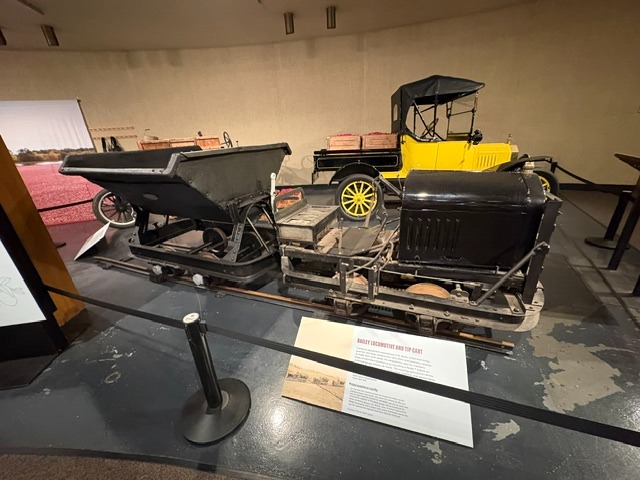
The small locomotive and tip cart at Heritage Museums & Gardens introduce a practical side of cranberry growing: moving heavy materials across the bogs. Beyond picking berries, growers needed to build and maintain beds, transport supplies, and move their crop toward markets.
Small industrial railways helped meet those needs. Temporary tracks allowed equipment to reach working areas, where locomotives hauled tip carts carrying sand used in bog construction and maintenance. The carts could tilt to discharge their loads, reducing the labor of unloading by hand.
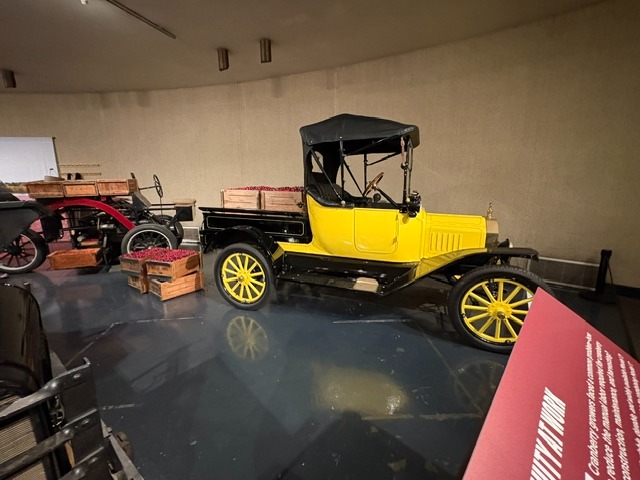
The Bailey locomotive and tip cart displayed in Sandwich make this system tangible. Their compact size suited a specialized job. Nearby, a yellow truck displayed with cranberry boxes extends the transportation story from rails within the growing operation to vehicles carrying goods by road.
Commercial cranberry cultivation on Cape Cod dates to 1816 in Dennis. Over the following generations, the crop became an important regional industry, supporting growers, seasonal workers, equipment makers, and businesses that packed and distributed the fruit.
Heritage’s cranberry collection preserves those connected occupations through machinery, tools, photographs, packaging, and business records. Together, these objects reveal the work behind a crop closely associated with Massachusetts: an agricultural enterprise sustained by labor, ingenuity, and transportation.

Read More From Nancy
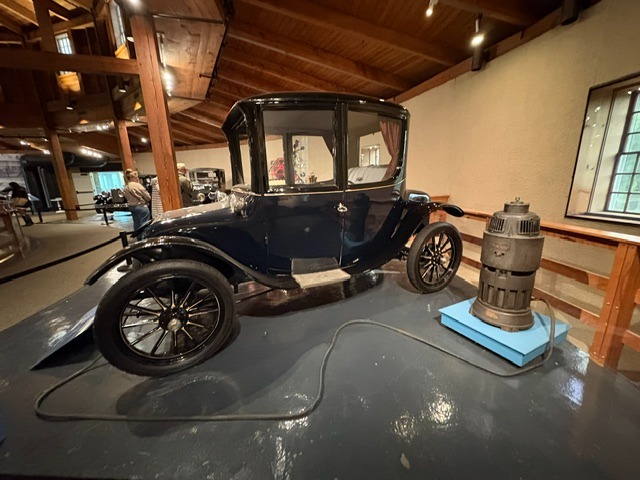
The 1917 Milburn Light Electric
The 1917 Milburn Light Electric at Heritage Museums & Gardens preserves a chapter of motoring that can seem surprisingly familiar. More than a century ago, manufacturers were already addressing questions about battery charging, convenience, and how electric vehicles could fit into daily life. Built by the Milburn Wagon Company of Toledo, Ohio, this automobile has […]

Glass Museum
In December 2020, I was searching for something meaningful to do for my birthday. COVID-19 had brought much of the MetroWest Boston area to a standstill, and nearly everything was closed. After months of restrictions and canceled plans, even a simple day trip felt like a welcome escape. When I learned that the Sandwich Glass […]
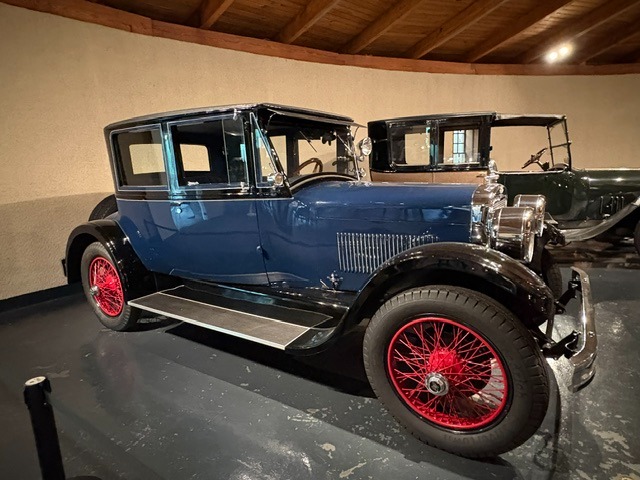
The 1925 Rickenbacker 8 Coupe
The blue 1925 Rickenbacker 8 Coupe at Heritage Museums & Gardens connects automobile history with one of America’s best-known World War I aviators. Behind its name is Eddie Rickenbacker, whose career carried him from automobile racing to aerial combat and then into the competitive business of manufacturing cars. Before becoming a fighter pilot, Rickenbacker was […]

