The Hidden Costs of Swaddling: Why Freedom of Movement

When our daughters were babies, we quickly discovered how much advice parents receive about helping their newborns sleep. Everyone seemed to have a suggestion about how to keep a baby comfortable, settled, and sleeping longer.
One practice that has been passed down through generations is swaddling—wrapping a baby snugly in a blanket to limit movement and create a feeling of security.
For many parents, swaddling seems to work. Their baby settles more easily, startles less frequently, and may sleep for longer periods. When you’re caring for a newborn and trying to get some much-needed rest, those benefits can be appealing.
But as parents, chiropractors, and educators who have spent more than four decades working with children and families, we believe there is another important question worth considering:
What role does freedom of movement play in your baby’s developing nervous system?
Understanding that connection can help parents make informed choices about when and how to swaddle, when to stop, and how to encourage healthy movement throughout the day.
Your Baby’s Nervous System Is Learning Through Movement
From the moment your baby is born, their nervous system is adapting to an entirely new environment.
Before birth, your baby was surrounded by fluid and supported within the uterus. After birth, they must begin responding to gravity, moving their arms and legs against their own body weight, turning their head, and gradually developing control over their movements.
Every stretch, kick, and turn provides sensory information to the developing brain.
These experiences help babies begin to understand where their bodies are in space, how their muscles work together, and how movement changes what they see, feel, and experience.
When we watched our own daughters, we began to appreciate how much was happening during moments that might otherwise have seemed ordinary. A little foot pushing against a blanket, an arm reaching outward, or a head turning toward a familiar voice represented another opportunity for their developing nervous systems to learn.
As chiropractors, we understand that movement and sensory feedback are essential parts of neurological development. As parents, we learned to appreciate those movements as part of the pleasure of watching our children discover their own abilities.
Understanding Your Baby’s Early Reflexes
Newborns arrive with automatic responses called primitive reflexes.
You may already recognize some of them.
When you gently touch your baby’s cheek, they may turn toward the touch and open their mouth. This is the rooting reflex, which helps them find the breast or bottle.
When your baby wraps their tiny fingers around yours, you’re seeing the palmar grasp reflex.
And when a baby experiences a sudden change in support or sensation, they may throw their arms outward before bringing them back toward their body. This is known as the Moro, or startle, reflex.
These responses are a normal part of early neurological development.
As babies grow, many primitive reflexes gradually become less prominent while more intentional movements emerge. The hand that initially grasps automatically will eventually reach for a favorite toy. The head that turns in response to touch will gradually turn toward something the baby wants to see.
Movement, sensory experiences, and neurological maturation all contribute to these changes.
Swaddling temporarily limits some of those movements, which is one reason we encourage parents to provide plenty of opportunities for unrestricted movement when their babies are awake.
However, it is important to distinguish temporary restriction from lasting developmental harm. There is not sufficient evidence to conclude that appropriate swaddling by itself causes retained primitive reflexes or later neurological difficulties.
The important principle is that babies need regular opportunities to move, explore, and practice emerging skills.
Why Head Position and Movement Matter
Have you ever noticed that your baby seems to prefer looking in one direction?
Perhaps they consistently turn their head toward the same side when resting, feeding, or being held.
During the early months, a baby’s skull is still growing rapidly, and its bones are connected by flexible tissues. Because the skull is relatively soft, repeated pressure on one area can contribute to flattening, a condition known as positional plagiocephaly.
A baby who spends considerable time resting with their head in the same position may develop a flat area on the back or side of the skull.
Swaddling can limit the ability to reposition the body, although head preference and flattening can have several contributing causes.
Parents can help by offering supervised tummy time, changing which arm they use when holding or feeding their baby, and encouraging the baby to look in different directions during awake play.
If your baby consistently favors one side or seems unable to turn comfortably in both directions, bring that observation to your pediatrician. Sometimes a restricted range of motion or a condition called torticollis needs further evaluation.
These observations are not reasons to become anxious. They are opportunities to better understand how your baby is moving and adapting.
The Important Turning Point: Learning to Roll
One of the most exciting early milestones is watching your baby begin to roll.
Before that first successful roll, you may notice small attempts: shifting weight, turning the head, lifting a shoulder, or moving the legs in a new way.
We remember how easy it was to celebrate the completed milestone while overlooking all the little efforts that came before it.
Yet those attempts are an important part of learning.
Rolling requires coordination between different parts of the body. Babies gradually learn how to shift their weight, turn, and organize their movements.
This milestone also marks an important change in swaddling safety.
Swaddling should stop as soon as your baby shows signs of attempting to roll.
A swaddled baby who rolls onto their stomach may be unable to use their arms freely to reposition themselves, increasing the risk of suffocation.
You do not need to wait until your baby completes their first roll. The early signs that rolling may begin are enough to make the transition away from swaddling.
For sleep, babies should always be placed on their backs on a firm, flat sleep surface without loose blankets, pillows, or positioners.
Once swaddling is discontinued, an appropriately sized, non-weighted sleep sack that leaves the arms free can provide warmth without restricting movement.
Helping Your Baby Feel Secure Without Restricting Movement
One of the lessons we learned while raising our daughters was that comfort doesn’t always require keeping a baby still.
Sometimes what a baby needs most is simply the familiar presence of a parent.
The sound of your voice, the warmth of being held, gentle rocking, and skin-to-skin contact can all help create a sense of security.
You can also support your baby’s developing movement skills through everyday experiences.
During awake, supervised tummy time, your baby has opportunities to lift and turn their head, strengthen their neck and trunk muscles, and begin learning to support their body against gravity.
Start with brief periods that are comfortable for your baby and gradually increase the time as they grow stronger.
Getting down on the floor at your baby’s level, talking to them, or placing an interesting toy nearby can turn these moments into enjoyable, shared experiences.
Allowing your baby to stretch, kick, reach, and move freely during awake time provides valuable opportunities for exploration.
These activities do not need to become formal exercises. They can be part of the ordinary rhythm of caring for your child.
Finding the Balance Between Comfort and Development
We understand why parents swaddle their babies.
A newborn who startles frequently or struggles to settle can leave the entire family exhausted. Parents are doing their best to respond to their baby’s needs while also managing their own need for sleep.
Our goal is not to suggest that parents who swaddle are doing something wrong.
Rather, we want to encourage an understanding of both the benefits and limitations of the practice.
When swaddling is used, it should be done safely. The wrap should not interfere with breathing, restrict the hips and legs in a straightened position, or cause overheating. Weighted swaddles should be avoided.
And swaddling should end when a baby begins showing signs of rolling.
Equally important, babies should have regular opportunities for unrestricted movement during their waking hours.
There is no need to rush development or turn every moment into a lesson. Babies learn through experiences that are often simple, repetitive, and enjoyable.
Learning to See Your Baby Differently
When we think back on our daughters’ early months, some of our most meaningful memories involve ordinary moments: watching them stretch after waking, turn toward our voices, discover their hands, or make their first attempts to move across the floor.
At the time, we were experiencing the joys and challenges familiar to most parents.
Our professional education gave us another way to appreciate what we were seeing.
We understood that behind those small movements, the nervous system was growing, adapting, and organizing increasingly complex abilities.
Over the years, working with families has reinforced the value of helping parents recognize these everyday signs of development.
Your baby’s movements are not simply something to manage or quiet. They are part of how your child experiences and learns about the world.
Swaddling may be one way to comfort a newborn during the earliest weeks, but freedom of movement is an essential part of healthy development.
As parents, we have the privilege of providing both: the security of our presence and the opportunities our children need to explore.
In the articles that follow, we’ll look more closely at the remarkable development taking place during your baby’s first years, including primitive reflexes, head movement, rolling, crawling, and the experiences that help children gain greater control of their bodies.
Our hope is that understanding these processes will help you recognize the significance of everyday moments and approach your child’s development with curiosity, knowledge, and confidence.

Read More From Nancy
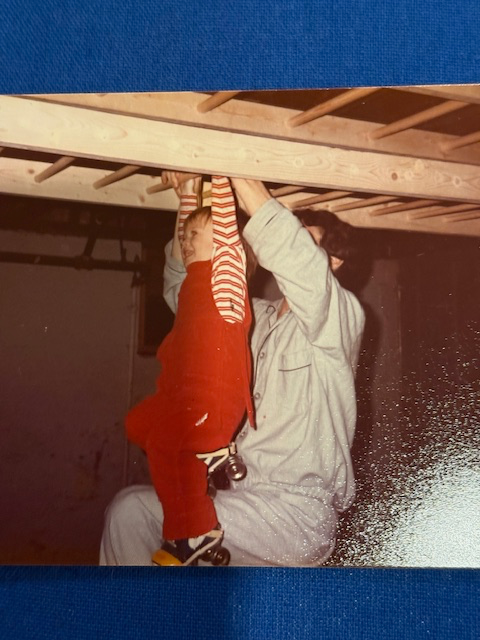
The Reach and the Rhythm: How Movement Builds the Growing Brain
This is a photo of our firstborn daughter, Emily, learning to brachiate, those tiny hands reaching, grasping, and swinging across a simple setup we built in our home. I still remember the look on her face the first time she figured out the rhythm, reach, grip, shift, breathe. It was a small victory that felt […]
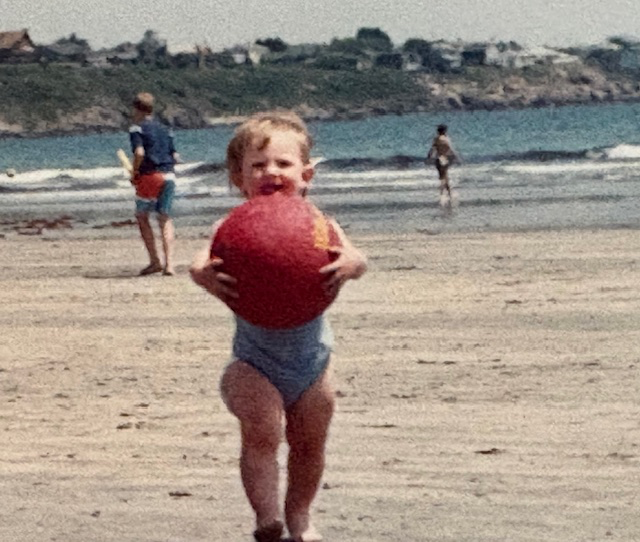
Brain Grows by Repetition
One important principle I have come to understand, and one that sits at the heart of It’s All in the Head, is that the brain develops through use. The brain does not simply grow with time it grows through experience. Each level of brain development is built upon the successful repetition of the level below it. […]
Flexibility in Parenting
Becoming as prepared as possible for pregnancy and parenthood is something many of us strive for. Gaining knowledge, exploring different options, and understanding what’s available is an important first step. It helps build confidence and provides a foundation for decision-making as your child grows. But one of the most essential qualities in parenting is flexibility. No matter how much […]

