The Sullivan-Sleeper House: Inn by the Bandstand
Built in 1809, the Sullivan-Sleeper House stands on Front Street overlooking Exeter’s town center. Now known as the Inn by the Bandstand, it began as the family home of George Sullivan, a lawyer and statesman. Its three-story Federal-style form belongs to a group of neighboring houses that preserve the scale and character of early nineteenth-century Exeter.
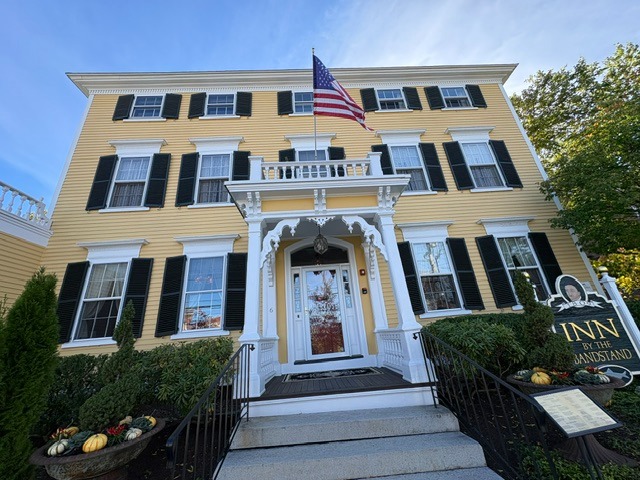
The house’s appearance evolved with successive owners. Its decorative Victorian entrance porch was added before 1885, introducing elaborate brackets and a balcony to the earlier façade. These additions illustrate how families adapted older homes to changing tastes while retaining their substantial original structures.
Otis Sleeper purchased the property in 1889. His jewelry business brought a commercial presence to the residence, and Sleeper and his son, Almon, operated their shop for decades. The combination of a family house and an attached storefront connected the property directly with the daily business of downtown Exeter.
By 1970, the house faced demolition. Mobil Oil, which owned the neighboring lot, planned to acquire the property and remove the building. The Exeter Historical Society intervened, securing the opportunity to purchase it. Restoration followed, and the house was converted into apartments and resold with preservation restrictions. Its threatened destruction helped prompt voters to establish Exeter’s historic district that same year.
Its later use as the Inn by the Bandstand continued the building’s long history of adaptation. The house survives because residents acted when its future was uncertain. Along Front Street, it preserves both an early Exeter residence and a tangible reminder of the local preservation effort that helped protect the surrounding town center.
Read More
Read More From Nancy
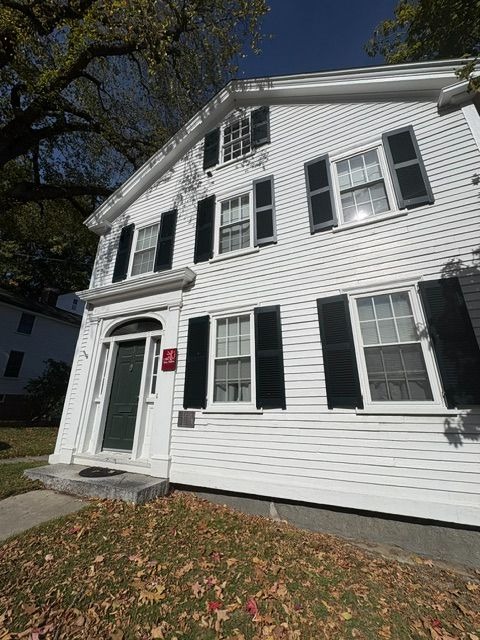
Lewis Cass House
A plaque commemorating Lewis Cass connects this Exeter house with a statesman whose career reached across the expanding United States. Born in Exeter on October 9, 1782, Cass attended Phillips Exeter Academy before leaving New England. He became a territorial governor, cabinet secretary, diplomat, senator, and presidential candidate. Cass established a legal career in Ohio […]
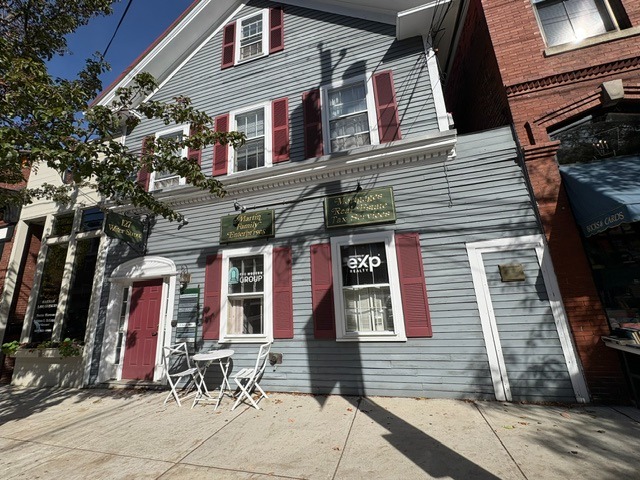
The Cutler and Harris Building
At 127 Water Street, a plaque identifies a building associated with generations of Black business ownership in Exeter. Its history connects the Cutler and Harris families with the shops, restaurants and services that sustained downtown commerce during the nineteenth century. Rufus Cutler, the son of Revolutionary War veteran Tobias Cutler, established businesses on Water Street […]
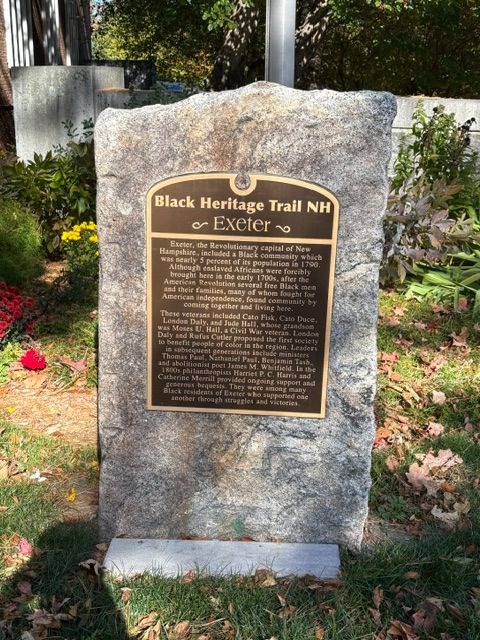
Exeter’s Black Heritage
Near the entrance to Swasey Parkway, a bronze marker honors Exeter’s early Black community and the Revolutionary War veterans who helped shape it. In the first federal census of 1790, Black residents constituted nearly five percent of Exeter’s population—the highest proportion recorded in any New Hampshire town. Their history connects military service, family life, commerce, […]

