PT 617: A Small Boat with a Wartime Purpose
Preserved indoors at Battleship Cove, PT 617 represents a form of naval warfare built around small crews, speed, and heavily armed wooden boats. Its compact deck brings weapons, equipment, and crew stations close together, revealing how much fighting capability designers fitted into an eighty-foot hull.
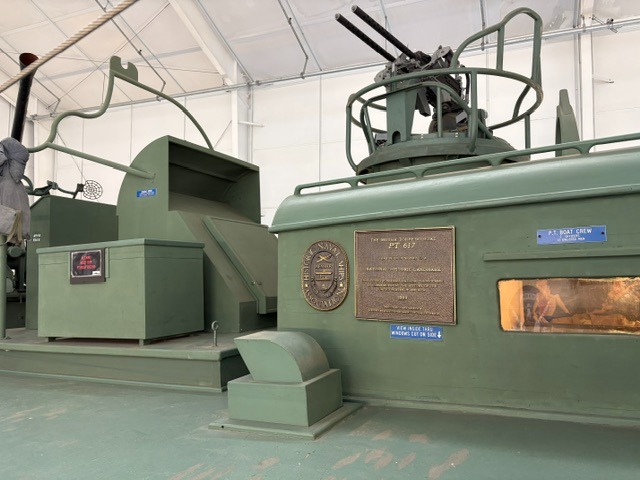
PT stood for “patrol torpedo.” Built by the Elco Naval Division of Electric Boat in Bayonne, New Jersey, these boats were among the best-known American small combat vessels of World War II. PT 617 belongs to the same broad class as PT 109, commanded during the war by future President John F. Kennedy.
PT boats operated in coastal waters, where their shallow draft and maneuverability allowed them to undertake missions unsuited to larger warships. Their duties included attacks on enemy shipping, reconnaissance, and rescue work. Torpedoes gave them the ability to threaten larger vessels, while guns became especially important in engagements with smaller coastal craft.
PT 617 was built in 1945, near the end of the war, and did not see combat. Its historical importance lies in preserving the design and working environment of boats that served extensively during the conflict. The surviving vessel allows visitors to examine their construction and equipment at close range.
The crowded arrangement of the deck suggests the demands placed on a small crew. Sailors worked near exposed weapons and machinery, with limited space separating their duties. Operating effectively required coordination among the men steering the boat, maintaining its engines, handling communications, and manning its armament.
Recognized as a National Historic Landmark, PT 617 preserves a rare example of the eighty-foot Elco design. At Fall River, it gives a physical presence to the history of the PT boat service and the crews who carried out dangerous missions aboard these small vessels.
Read More
Read More From Nancy
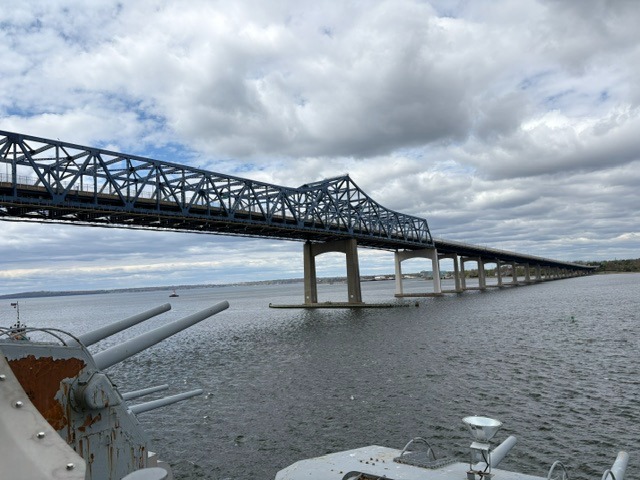
Charles M. Braga Jr. Memorial Bridge
Stretching across the Taunton River between Fall River and Somerset, the Charles M. Braga Jr. Memorial Bridge is one of the most recognizable structures on the city’s waterfront. Its steel framework carries Interstate 195 high above the water, connecting communities across southeastern Massachusetts. Opened in 1966, the bridge became an important part of the region’s […]
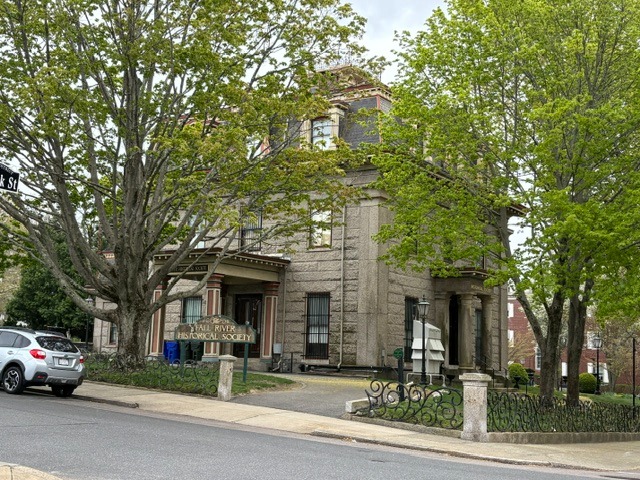
The Fall River Historical Society Mansion
The granite mansion at 451 Rock Street has occupied two locations and served several purposes during its long history. Built as a private home in 1843, it became associated with the Underground Railroad, underwent relocation and architectural transformation, and eventually became the home of the Fall River Historical Society. The house was originally constructed on […]
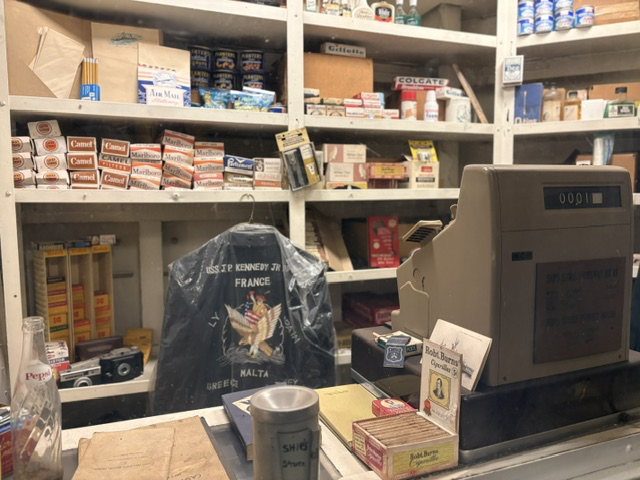
The Ship’s Store
Touring the ships at Battleship Cove, it was the ordinary spaces that often made me stop and look more closely. The enormous guns and machinery tell us what these ships were built to do, but places like this tell us what it was like to live aboard one. The ship’s store was a small piece […]

