Petit Palais
A sweeping staircase, monumental stone arch, and elaborate gilded gate mark the entrance to the Petit Palais. Designed by architect Charles Girault for the Paris Universal Exposition of 1900, the building made architecture and craftsmanship part of the exhibition itself.
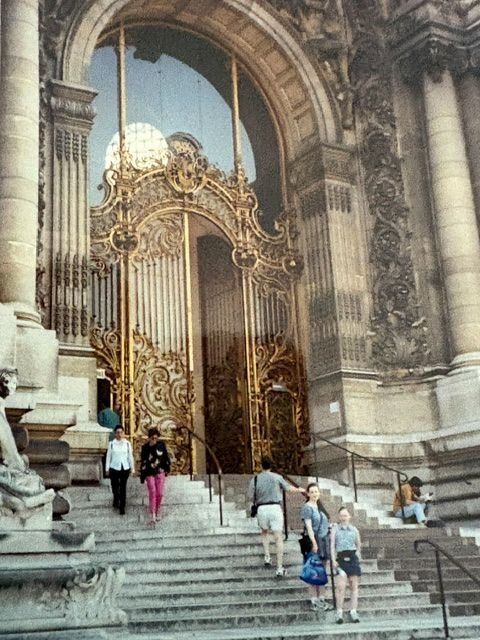
Girault also designed the entrance gate. Its curling metalwork and intricate ornament fill the archway while allowing light and views to pass through. Praised from its installation for its elegance and execution, the gate remains one of the building’s most distinctive features.
The Petit Palais formed part of an ensemble created for the exhibition that included the Grand Palais and Pont Alexandre III. These structures gave the international event a lasting architectural presence between the Champs-Élysées and the Seine.
In 1902, the Petit Palais became the fine arts museum of the City of Paris. Its painted and sculpted decoration continued to develop until 1925, extending the artistic work well beyond the exhibition.
Inside the entrance, Albert Besnard’s Symbolist paintings and stained glass by the Champigneulle workshop continue the attention to decoration. The doorway introduces a building in which metalwork, painting, sculpture, glass, and architecture contribute to a single public setting for art.

Read More From Nancy
A Family Tradition of Bookstores
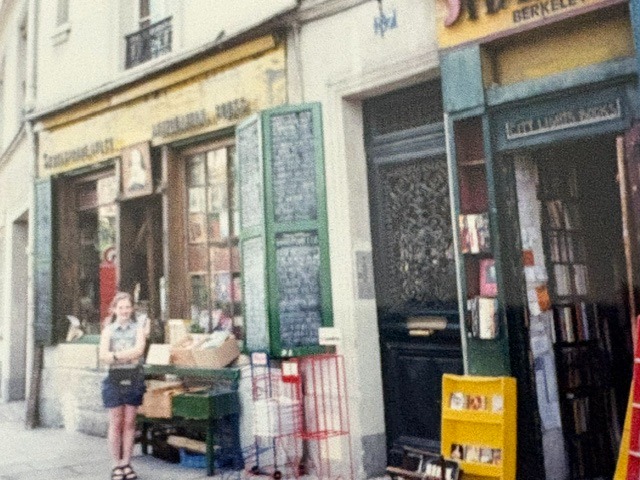
Visiting bookstores has long been part of how our family travels. Wherever we go, we enjoy making time to browse the shelves and discover a place through its books. In Paris, that tradition brought us to Shakespeare and Company. Both of our daughters are pictured at Shakespeare and Company: one outside among the books displayed […]
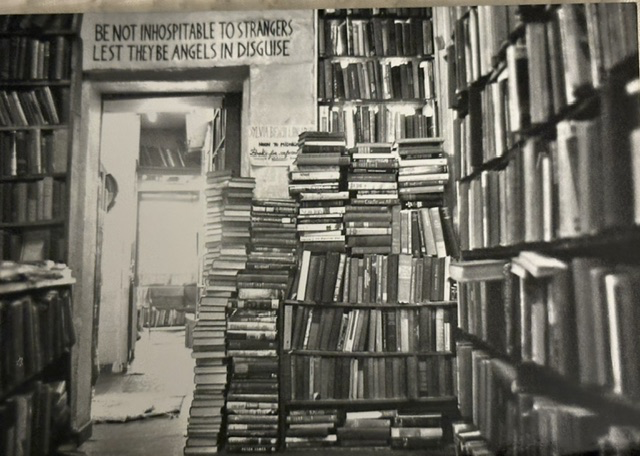
Shakespeare and Company
There are bookstores that sell books, and there are bookstores that become destinations. Shakespeare and Company in Paris is one of those rare places where literature, history, and hospitality have come together for generations. Marty and I have visited Shakespeare and Company each time we have traveled to Paris. As someone who has always loved […]
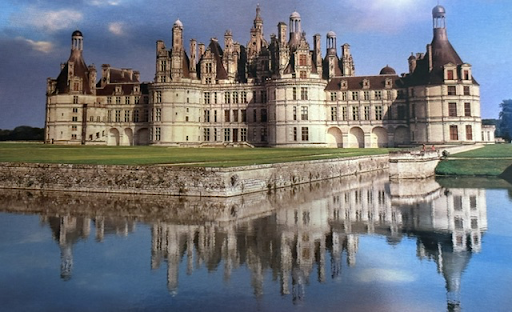
Chateau de Chambord
While staying in Paris, we took a day trip into the Loire Valley, a region of France known for its picturesque countryside, charming villages, vineyards, and magnificent châteaux. It is an area that truly looks as though it belongs in a fairy tale. Of all the castles we saw, Château de Chambord is perhaps the […]

