Victoria Range Light
For a captain approaching Victoria with a loaded vessel, seeing the harbour was only part of the task. Reaching it required finding the correct passage through the shallows. A small wooden lighthouse on shore helped make that possible, not by illuminating the water, but by giving mariners a line to follow.
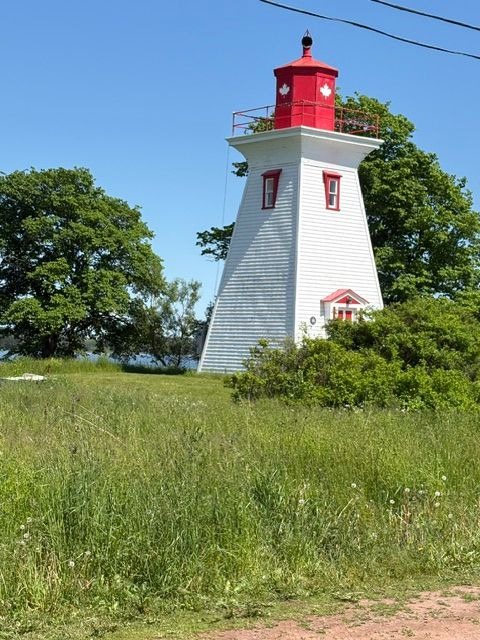
Built in 1879, the Victoria Range Light performed an unusual double duty. Within its white tower were two lights: one served as Leard’s Front Range Light, the other as Palmer’s Rear Range Light. Each worked with another light positioned elsewhere on shore. The arrangement made this the only lighthouse structure on Prince Edward Island to house lights for two separate navigation ranges.
The principle was simple enough to understand from a ship’s deck. When the front and rear lights appeared directly above one another, the vessel was following the intended course. If they drifted apart, the captain needed to correct the direction. Two points of light became a guide through water where the safe route was otherwise difficult to see.
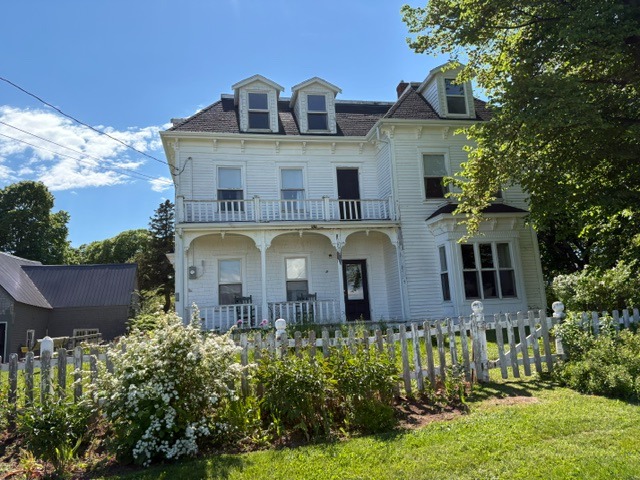
Victoria’s harbour had three pairs of range lights, a reminder of how much activity once depended on these approaches. Before a purpose-built rear light was established for Leard’s range, a light shone from the gable window of Solomon Leard’s house. Known as Beacon House, that residence was itself part of the system that helped vessels reach port.
The tower later took on the task of keeping those maritime stories alive. The Victoria Seaport Museum opened inside it in 1990, using photographs and exhibits to explain the harbour’s development and the lives of its lightkeepers.
Today, its red lantern and white walls are an appealing part of the village waterfront. But its history gives the building a more practical meaning. To someone standing on shore, it was a small tower. To someone approaching from the water, its lights helped answer an essential question: which way is safe?