Lupines by the Shore
For a few weeks each summer, lupines bring bands of purple, pink, and white to Prince Edward Island’s roadsides and open spaces. Their tall flower spikes rise above the grasses, turning otherwise ordinary stretches of ground into memorable parts of the landscape. June is especially associated with their arrival, although flowering times vary with weather and location.
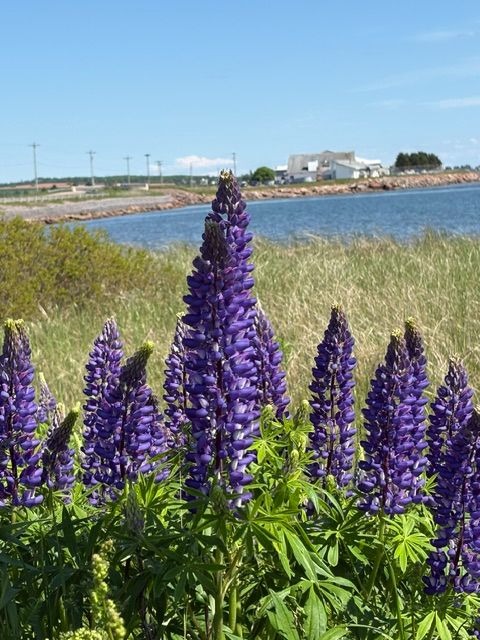
In Victoria, purple lupines grow beside the water, their upright stems contrasting with the broad, level surface of the harbour. Each spike holds many small blossoms, while below them, narrow leaflets spread outward like the fingers of an open hand. Seen together, the flowers form a dense patch of colour between the grassy shore and the blue water.
Although lupines have become closely associated with the Island, the familiar large-leaved lupine was introduced here in the early twentieth century. Its presence is a reminder that a landscape can acquire features that later seem inseparable from its identity. A flower brought to a place can, over generations, become part of how residents and visitors picture it.
The large-leaved lupine belongs to the pea family. Its individual flowers have the characteristic pea-like shape, arranged in a tall cluster rather than appearing alone. Originally introduced in many regions as a garden plant, it has established itself beyond cultivation in parts of eastern North America.
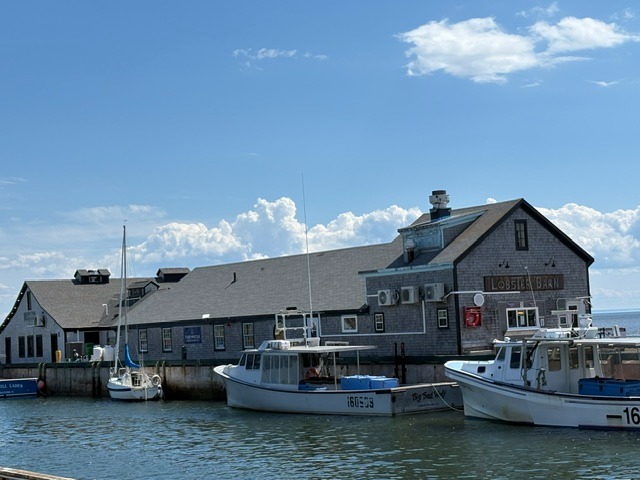
In a village known for its harbour and historic buildings, the lupines offer a quieter sense of place. Their flowering marks a season rather than an event, briefly changing the appearance of the shore before the blossoms fade. Along Victoria’s waterfront, they add a living, seasonal detail to the village’s maritime setting.