Tidal Beacon and Rise Again
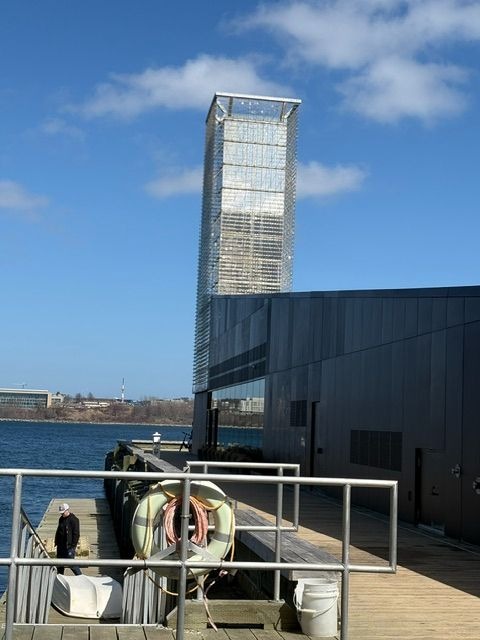
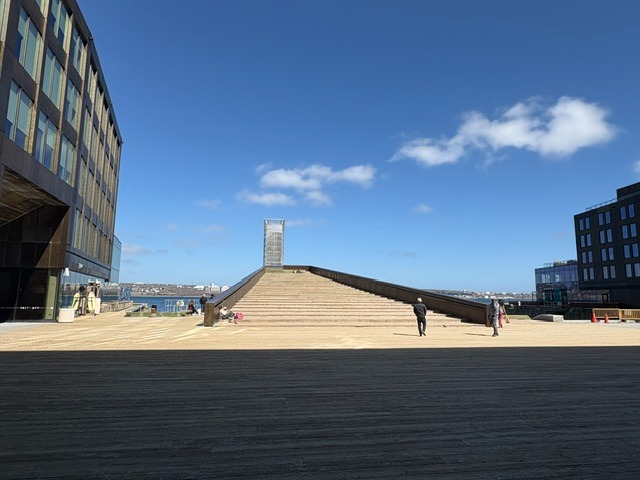
At Queen’s Marque on Halifax’s waterfront, a broad timber staircase rises toward a shimmering tower overlooking the harbour. The staircase, called Rise Again, forms a public gathering place and an elevated lookout. At its summit stands Tidal Beacon, an artwork by Ned Kahn that responds to the wind and the changing tides. Together, the structure and sculpture bring the movement of the harbour into the design of the waterfront.
Rise Again is built into a sloping roof whose form suggests a vessel emerging from the sea. Its wide steps create an informal amphitheatre facing the surrounding square, while the climb opens a view across Halifax Harbour. The name draws on a familiar Nova Scotian refrain associated with resilience and the ability to recover from adversity. The designers intended the ascent as a tribute to generations whose work and perseverance helped shape the province.
Above the stairs, Tidal Beacon translates natural forces into visible changes. Its exterior is covered with moving elements that ripple in the wind and catch the light, producing a surface that shimmers like water. Within the tower, illumination grows and diminishes with the Atlantic tides. The artwork therefore changes with conditions around it, linking its appearance to the same forces acting on the harbour below.
At high and low tide, a programmed light sequence marks the turning points of the water’s cycle. Shimmering illumination builds within the structure, and directional lights reach into the sky and across the harbour. This gives the beacon a relationship to maritime timekeeping: its changing light draws attention to the tides that have long influenced activity along Nova Scotia’s coast.
The installation also makes the waterfront a place to pause. People can gather on the steps, climb above the boardwalk and watch the harbour from a different height. The timber seating, vessel-like roof and responsive tower connect a contemporary public space with the sea, giving wind, water and light an active role in the experience of the site.
Read More From Nancy
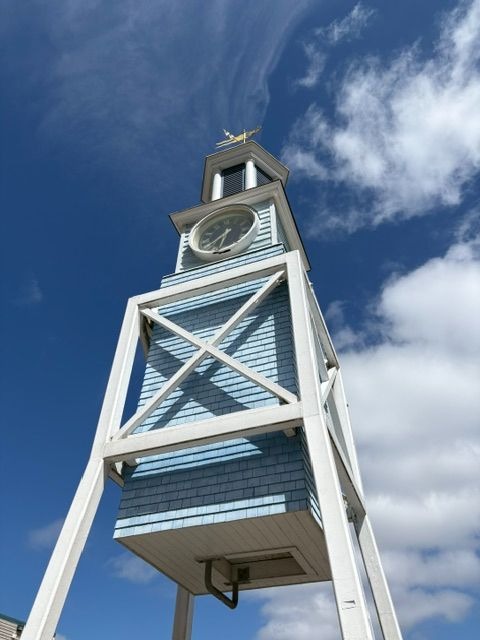
The Dockyard Clock
At Chebucto Landing on Halifax’s waterfront, the Dockyard Clock stands above the boardwalk in a blue-shingled tower supported by an open framework. Its public setting is relatively recent, but the timepiece dates to 1767. Made in London, England, it was installed in Halifax’s naval dockyard in 1772, where it served generations of sailors and civilian […]
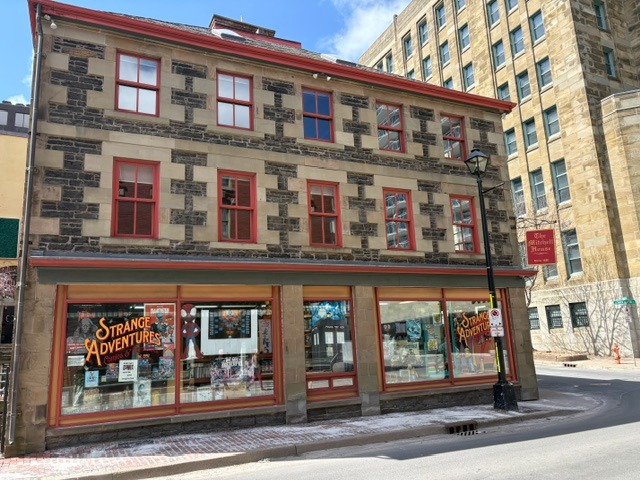
Mitchell House
At the corner of Prince and Lower Water Streets, Mitchell House preserves a chapter of Halifax’s history when a merchant’s home and business could share the same building. George Mitchell purchased the property in 1819 and, in the mid-1820s, replaced an earlier wooden house with an ironstone residence and warehouse. The location placed his family […]
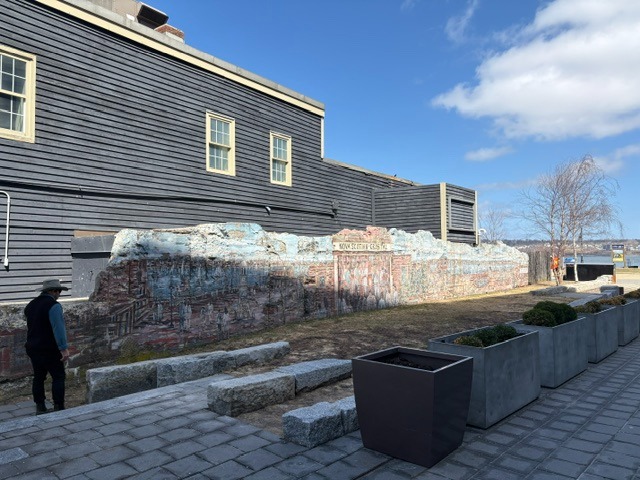
NovaScotian Crystal Mural
Along Halifax’s waterfront near Cable Wharf, a painted stone wall preserves a connection to a craft once practiced within sight of the harbour. Created by artist Zeqirja “Zack” Rexhepi, the NovaScotian Crystal mural recalls a business that brought traditional Irish crystal making to Nova Scotia. Its weathered surface carries the company’s name, linking this stretch […]

