The Dominion Building
The Dominion Building on Hollis Street was conceived as a centre for the services that connected nineteenth-century Nova Scotia to the wider world. In 1863, the provincial legislature approved its construction to house the Post Office, Customs House and Railway Department. Completed in 1868, it brought together institutions responsible for communication, trade and transportation.
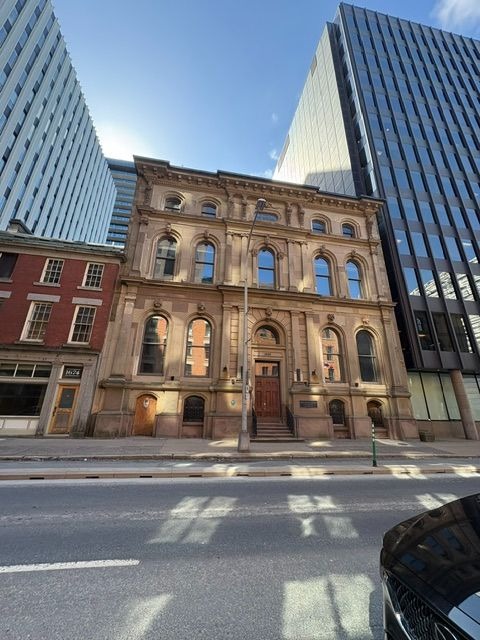
Designed by architect David Stirling, the building drew inspiration from the Renaissance palaces of Italy. Its Nova Scotia sandstone exterior, round-arched windows, carved ornament and projecting cornices gave it the substantial presence expected of an important public institution. The orderly arrangement of its windows and the emphasis on its central entrance remain defining features of its Italianate architecture.
The building’s construction coincided with a major political transition. Nova Scotia entered Confederation in 1867, making postal services, customs and railways federal responsibilities. In 1871, the Canadian government purchased the building from the province. Over subsequent decades, its occupants included the Bank of Canada and the Royal Canadian Mounted Police, extending its history of public service.
A different chapter began in 1988, when the Art Gallery of Nova Scotia opened here in its first permanent home. The institution’s predecessor, the Nova Scotia Museum of Fine Arts, had been established in 1908, but its collections and exhibitions had occupied temporary locations for decades. These included a former powder magazine on Citadel Hill and premises on Coburg Road. Moving into the Dominion Building gave the gallery an established home for exhibitions and its growing collection, adapting a former government building to a new public purpose.

Read More From Nancy
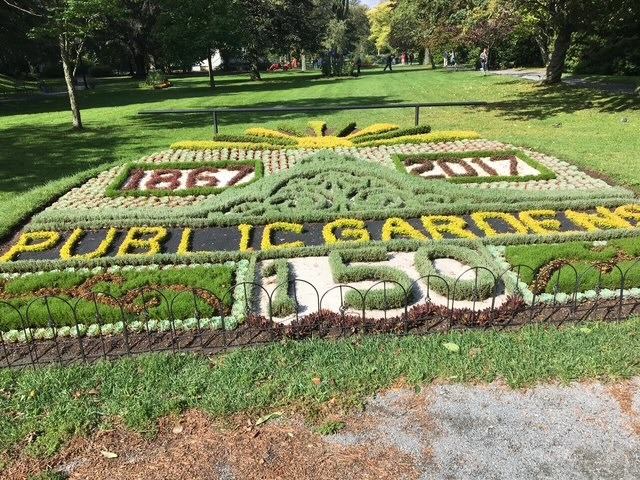
Halifax Public Gardens
The Halifax Public Gardens preserve a rare example of a Victorian public garden in the heart of a modern city. Across approximately sixteen acres, winding gravel paths connect carefully maintained lawns, ornamental flower beds, mature trees, and water features. The landscape was designed for leisurely walking and close observation, offering opportunities to appreciate both individual […]
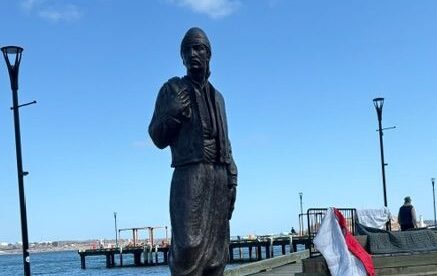
The Lebanese Emigrant Statue
On Halifax’s waterfront, a bronze figure honours the Lebanese emigrants who crossed the ocean to establish new lives in Nova Scotia. Installed in September 2018, the Lebanese Emigrant Statue recognizes their pioneering spirit and the contributions of generations of Lebanese Canadians to the province’s communities, businesses and professions. Lebanese migration to Nova Scotia began in […]
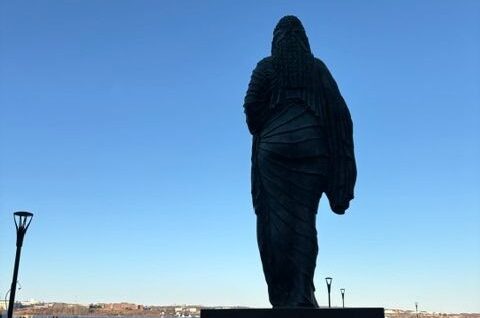
The Sirens’ Calling
At Queen’s Marque on Halifax’s waterfront, four sculpted figures stand on black granite bases, each oriented toward a different point of the compass. Created by Nova Scotia artist John Greer and installed in 2020, The Sirens’ Calling draws on ancient Greek sculpture and mythology to explore departure, return and the harbour’s role as a place […]

