William Annand
A portrait bust in Halifax’s Founders Square commemorates William Annand, a newspaper publisher and political leader whose career spanned Nova Scotia’s struggle for responsible government and its contested entry into Confederation. Born in Halifax in 1808, Annand was first elected to the provincial House of Assembly in 1836, where he supported demands for a government accountable to elected representatives.
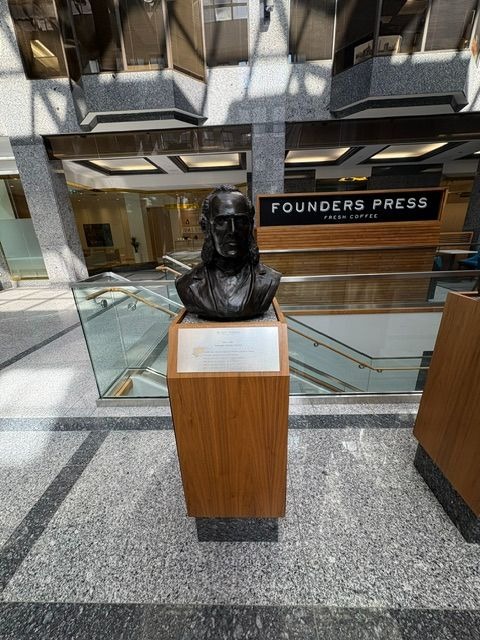
His influence grew through the newspaper business. In 1843, Joseph Howe helped him purchase the Novascotian, an established Halifax weekly. Annand founded the Morning Chronicle the following year, giving him another platform for political debate. His newspapers became important vehicles for discussing the province’s government and future.
When Confederation became a serious prospect, Annand emerged as a leading opponent. In 1866, he joined Howe in a delegation to London seeking to prevent Nova Scotia’s inclusion in the proposed union. Their campaign failed, and Nova Scotia became one of Canada’s founding provinces on July 1, 1867. Annand’s opposition nevertheless reflected a substantial division within the province over the terms and legitimacy of the arrangement.
Annand became premier in 1867, leading an administration elected under the Anti-Confederation banner. He remained in office until 1875, then moved to London, where he served as an agent-general for Canada and subsequently for Nova Scotia. He died there in 1887. His commemoration preserves a less celebratory side of Canada’s founding story: Confederation was debated and resisted, and some of the people who helped shape the new country had opposed its creation.


Read More From Nancy
The Imperial Oil Building
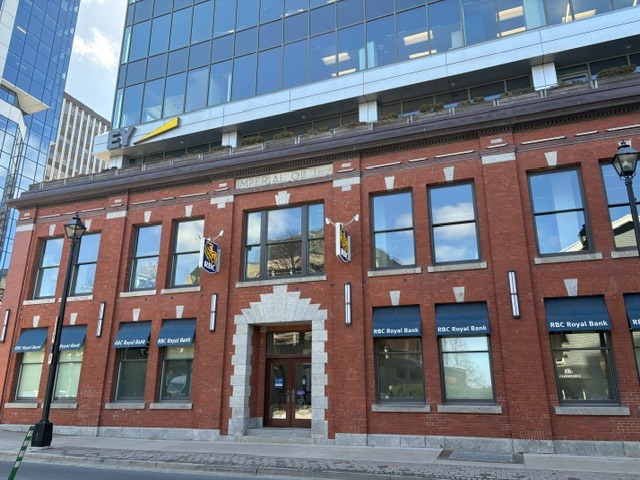
At the corner of Duke and Upper Water Streets, the Imperial Oil Building records a twentieth-century chapter in Halifax’s waterfront commerce. Completed in 1926, the two-storey brick building provided office space for Imperial Oil Limited. The company’s name, carved above the central entrance, preserves its original identity. The property’s history reaches further back. It was […]
The Dockyard Clock
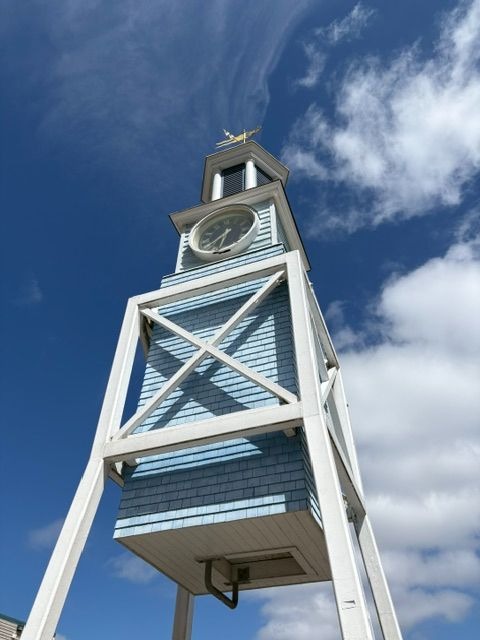
At Chebucto Landing on Halifax’s waterfront, the Dockyard Clock stands above the boardwalk in a blue-shingled tower supported by an open framework. Its public setting is relatively recent, but the timepiece dates to 1767. Made in London, England, it was installed in Halifax’s naval dockyard in 1772, where it served generations of sailors and civilian […]

The Sirens’ Calling
At Queen’s Marque on Halifax’s waterfront, four sculpted figures stand on black granite bases, each oriented toward a different point of the compass. Created by Nova Scotia artist John Greer and installed in 2020, The Sirens’ Calling draws on ancient Greek sculpture and mythology to explore departure, return and the harbour’s role as a place […]

