Joseph Howe Monument
The Joseph Howe monument honors a Halifax-born journalist and political reformer whose work helped shape Canadian public life. Created by sculptor Louis-Philippe Hébert and erected in 1904, the bronze figure portrays Howe standing with one arm extended, recalling his reputation as a persuasive public speaker. His name is carved into the tall stone pedestal beneath him.
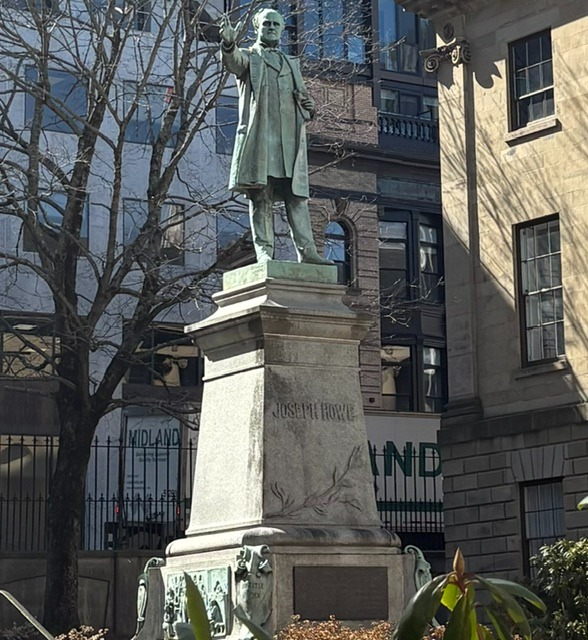
Howe’s most celebrated defense of public expression came in 1835. As publisher of the Novascotian, he faced a criminal libel charge after publishing accusations of corruption against Halifax officials. He defended himself before a jury and won an acquittal. The case became an important milestone in the history of freedom of the press in Canada, demonstrating the power of challenging public authorities through argument and published criticism.
Elected to Nova Scotia’s Assembly in 1836, Howe became a leading advocate for responsible government. Under this system, the governing executive had to maintain the confidence of elected representatives, making it accountable through the legislature. His long campaign helped bring about responsible government in Nova Scotia in 1848. James Boyle Uniacke led the new administration, while Howe served as provincial secretary.
Howe later served as premier of Nova Scotia, a federal cabinet minister, and briefly as lieutenant governor before his death in 1873. His career carried him from newspaper publishing into some of the highest offices in public life. The monument’s extended arm recalls the skill that connected those roles: his ability to turn an argument into a public cause. It commemorates a man whose influence rested on both the written word and the spoken defense of political reform.

Read More From Nancy
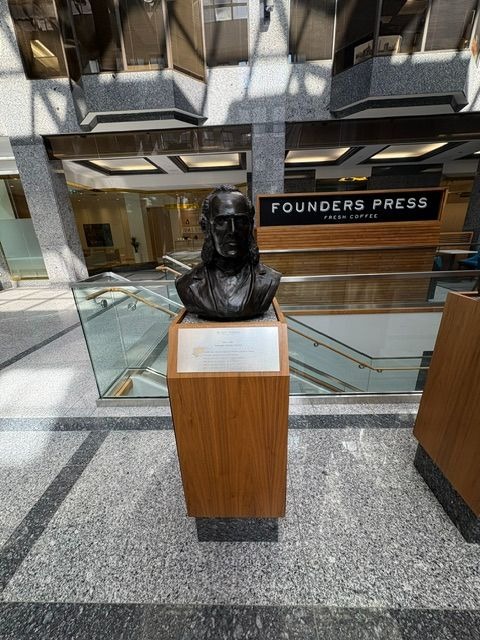
William Annand
A portrait bust in Halifax’s Founders Square commemorates William Annand, a newspaper publisher and political leader whose career spanned Nova Scotia’s struggle for responsible government and its contested entry into Confederation. Born in Halifax in 1808, Annand was first elected to the provincial House of Assembly in 1836, where he supported demands for a government […]
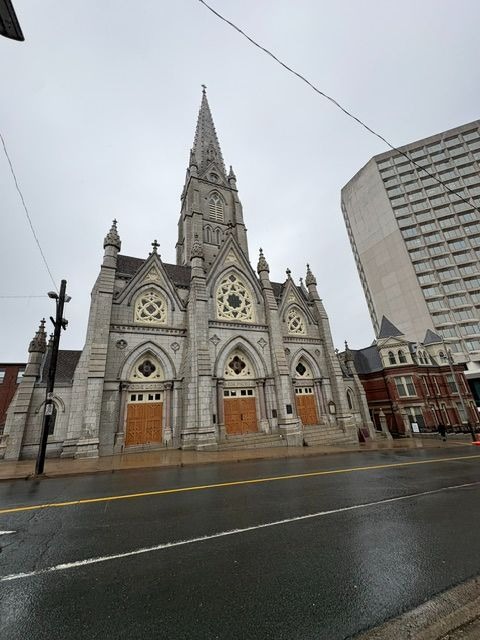
St. Mary’s Cathedral Basilica
On Spring Garden Road near its intersection with Barrington Street, St. Mary’s Cathedral Basilica rises directly from the streetline, its granite spire overlooking downtown Halifax. The three entranceways, pointed arches and elaborate stone tracery make it a prominent example of Gothic Revival architecture. Its construction and later expansion also reflect the growing presence and standing […]
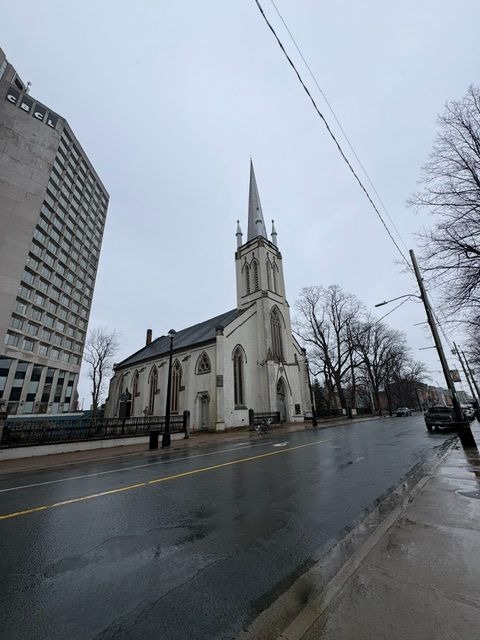
St. Matthew’s Church
On Barrington Street near Spring Garden Road, St. Matthew’s Church preserves the history of a congregation whose origins reach back to Halifax’s founding in 1749. Its tall spire, pointed windows and buttressed walls belong to a building completed in 1859, but the community that built it had already worshipped in the town for more than […]

