Westminster Abbey
Westminster Abbey holds an extraordinary range of lives and stories within its walls. Monarchs have been crowned here, writers and scientists honored, and an unknown serviceman laid to rest among some of Britain’s most recognized figures. Visiting during our family vacation in the United Kingdom gave us a chance to consider how one place became a setting for both national celebration and personal remembrance.
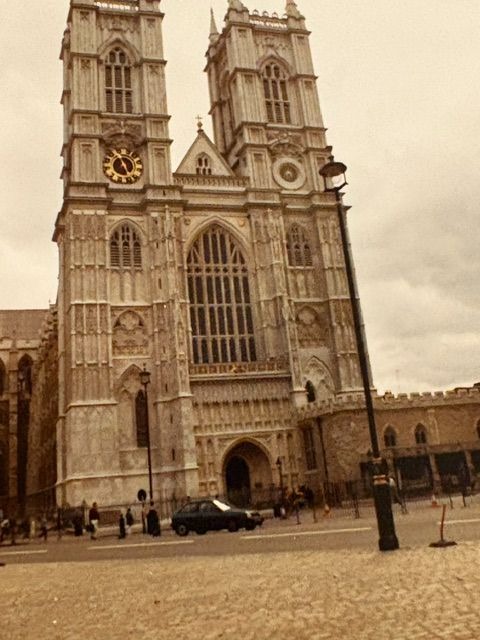
A Benedictine monastery was established here in the tenth century. Edward the Confessor later built a substantial church, dedicated in 1065, shortly before his death. In 1245, Henry III began rebuilding it in the Gothic style, creating much of the Abbey we recognize today and providing a magnificent setting for Edward’s shrine. The building continued to develop over generations. Its western towers were completed only in 1745, following a design by Nicholas Hawksmoor—about five hundred years after Henry’s rebuilding began.
Westminster Abbey has been a coronation church since 1066. William the Conqueror was crowned here on Christmas Day that year, establishing a connection between the Norman monarchy and this existing English religious foundation. Coronations became part of the building’s design: Henry III’s new church included a spacious ceremonial area between the choir and the high altar. Architecture and royal ritual developed together.
The people remembered within the Abbey extend far beyond royalty. Geoffrey Chaucer was buried here in 1400, beginning the association that developed into Poets’ Corner. Later burials and memorials honored generations of writers. Elsewhere, the graves of Isaac Newton and Charles Darwin recognize scientific contributions that changed how people understood the world. Some individuals are buried in the Abbey; others are commemorated there while resting elsewhere.
Near the west entrance lies the grave of the Unknown Warrior. An unidentified British serviceman was brought from France and buried here on November 11, 1920. Among the named and celebrated, his anonymity gave grieving families a place to remember those whose bodies had never been identified or whose resting places were unknown.
The Abbey’s significance reaches beyond the grandeur of its entrance. Within one building, a nation has made room to remember its rulers, its creative and scientific minds, and someone whose name it will never know.
Read More
Read More From Nancy
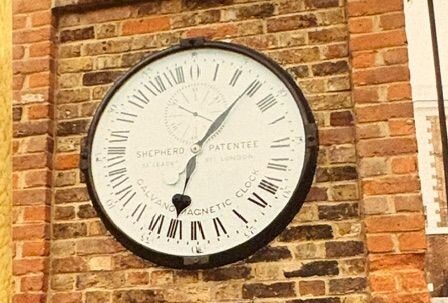
The Shepherd Gate Clock
At first glance, the Shepherd Gate Clock looks familiar: a round face, Roman numerals, and hands marking the time. Look more closely, however, and the dial reveals twenty-four hours instead of twelve. The hour hand makes just one complete circuit each day, pointing downward at noon and upward at midnight. Installed outside the Royal Observatory […]
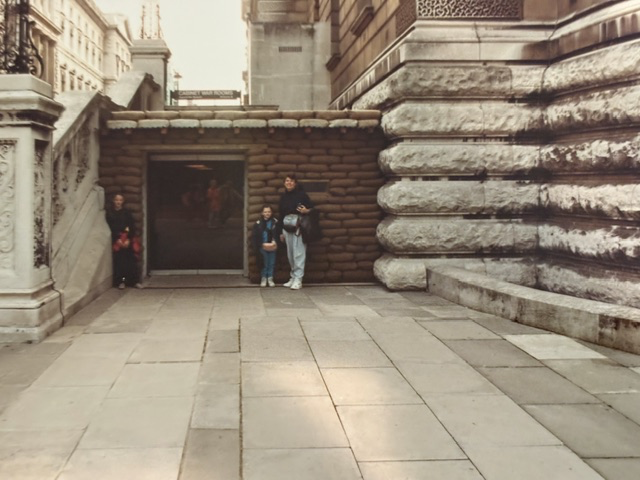
Original Entrance to the Churchill War Rooms
I have visited the Churchill War Rooms more than once, but this photograph holds a special place in my memories because it was our first visit with our daughters. Before we descended into one of the most remarkable museums in the world, we paused at this sandbag-covered entrance, an image that immediately transported us back […]
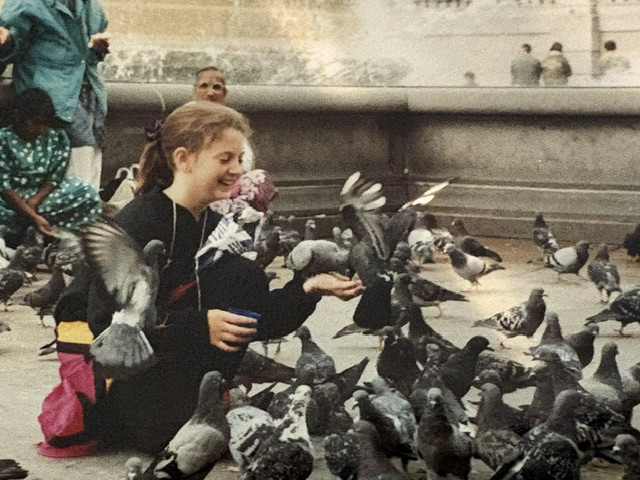
Feeding Pigeons in Trafalgar Square
One of the highlights of our trip to London with the girls was spending time in Trafalgar Square, where feeding the pigeons became an unforgettable part of the day. Looking at these photographs now brings back memories of laughter, excitement, and the simple joy of watching the birds gather around eager little hands. For our daughters, […]

