Moses Eames House
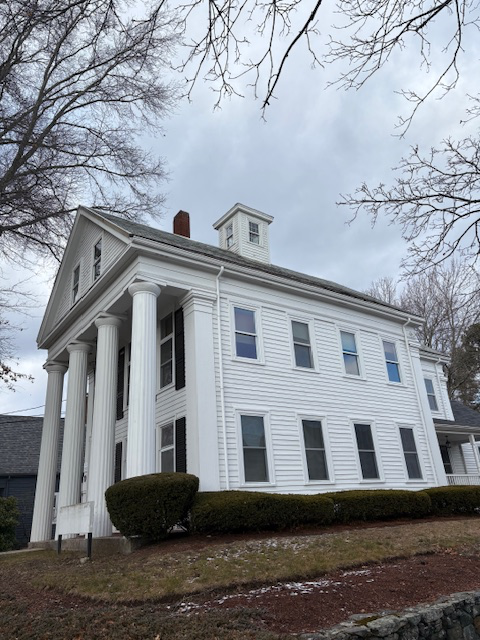
The Moses Eames House, built in 1839, is one of the most visually striking historic homes in South Natick. Finished in white clapboard and fronted by prominent classical pillars, the house is a refined example of Greek Revival architecture, a style that swept through New England in the early 19th century.
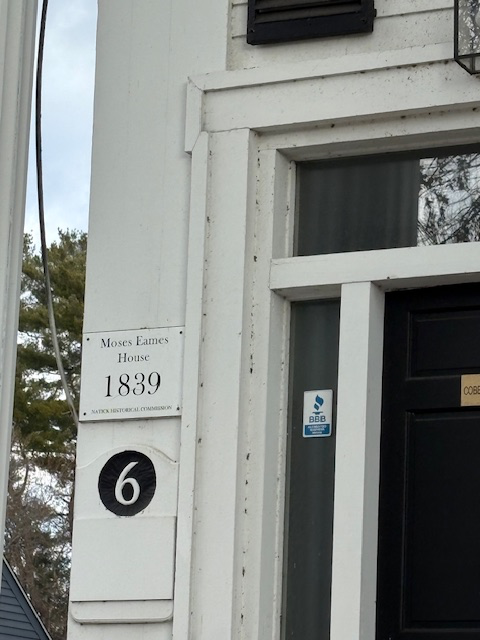
The home was built for Moses Eames, who acquired the land in the 1830s. During this period, Natick was transitioning from its early agrarian and milling roots into a more established village with prosperous residents who expressed success and civic pride through architecture. Greek Revival homes, inspired by ancient Greek temples, symbolized cultural aspiration.
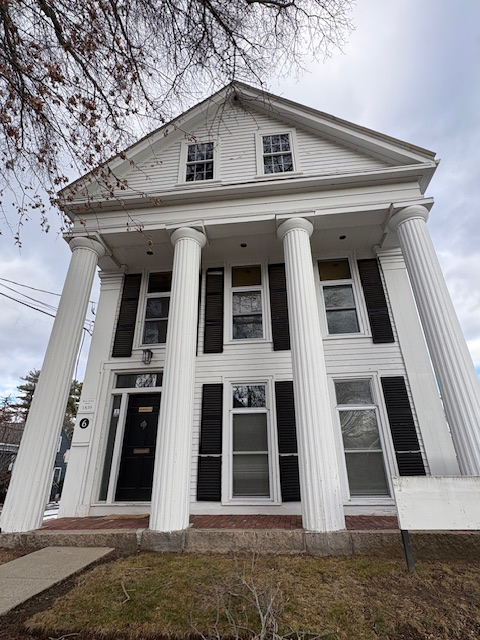
The defining features of the Moses Eames house include its classical portico supported by Doric columns. Set within the historic fabric of South Natick, the house reflects a time when architecture was used not just for shelter, but for expression. Today, the Moses Eames House remains a landmark of South Natick’s 19th century streetscape.
Read More From Nancy
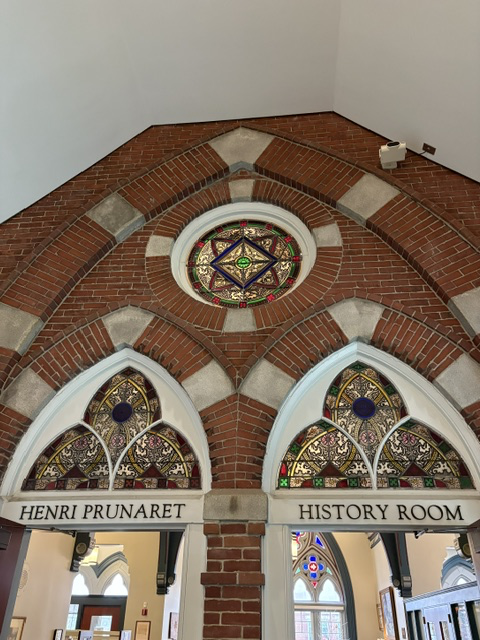
The Henri Prunaret History Room
Living in Natick, I have passed through the Morse Institute Library many times, but there are details inside the building that connect directly to the history of the town. One of them is this beautiful entrance to the Henri Prunaret History Room, framed by old brickwork, Gothic arches, and colorful stained glass. The Morse Institute […]
Daniel Takawampit
Daniel Takawampbit, an Algonquian leader, stands as one of the most extraordinary and overlooked figures in New England’s Colonial past. He was the first Natick American ordained as a Puritan minister, the student and successor of John Eliot, and a spiritual guide to the Praying Indian community of Natick during some of the most challenging […]
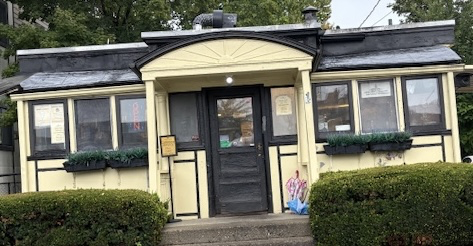
Casey’s Diner
Hometown stories would not be complete without sharing Casey’s Diner. Casey’s Diner is tucked along South Avenue in Natick and has been feeding generations for over a century and remains one of the town’s most enduring landmarks. The story of Casey’s begins in 1890, when Fred Casey purchased a horse-drawn lunch wagon and began serving […]

