Cutty Sark
During our family vacation in the United Kingdom, we visited Cutty Sark in Greenwich. Its tall masts and intricate rigging offered a connection to a time when moving goods across the world depended on the wind, the design of a ship, and the skill of its crew.
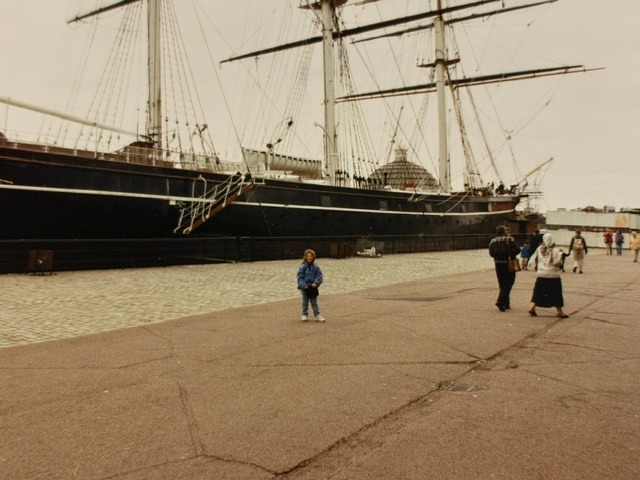
Launched in Dumbarton, Scotland, in 1869, Cutty Sark was built to carry tea from China to Britain as quickly as possible. Its wooden hull over an iron frame combined strength with space for cargo, while its extensive sails provided the power for long ocean passages. Speed was central to the ship’s purpose.
Yet the world was changing almost as soon as Cutty Sark entered it. The opening of the Suez Canal in 1869 gave steamships a shorter route between Asia and Europe. Sailing ships could not take comparable advantage of that passage, and steamers increasingly dominated the tea trade. Cutty Sark made eight voyages to China for tea before its owners had to find other work for the ship.
One of its most famous contests came in 1872, when Cutty Sark raced the rival clipper Thermopylae from China toward London. Losing its rudder cost Cutty Sark valuable time, and Thermopylae arrived about a week ahead. The episode illustrates how even a vessel designed for speed remained vulnerable to damage and the conditions encountered at sea.
Cutty Sark later found greater success carrying Australian wool to Britain, earning a reputation for exceptionally fast passages. Its working life continued under Portuguese ownership before Wilfred and Catharine Dowman purchased it in 1922. They helped restore the ship and gave it a new purpose as a training vessel and visitor attraction.
In 1954, Cutty Sark was brought to a specially constructed dry dock in Greenwich. Following restoration, it opened to the public in 1957. Its preservation allowed families like ours to encounter a working cargo ship from the final great era of commercial sail.
Standing beside it, there is much to consider beyond its graceful appearance: the distances it traveled, the cargo it carried, and the people whose work kept it moving. Its survival gives those stories a physical presence.
Read More From Nancy
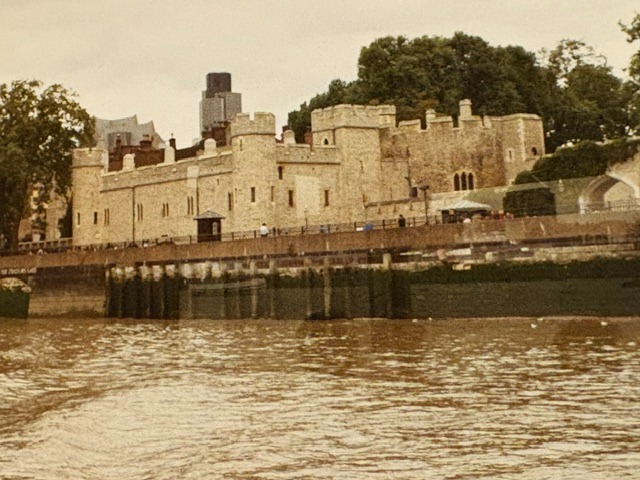
The Tower of London
During our family vacation in the United Kingdom, we encountered the Tower of London, a fortress whose history reaches back nearly a thousand years. Seen from the Thames, its stone walls suggest the protection it offered those within, and the difficulty of leaving for those held there as prisoners. William the Conqueror began building the […]
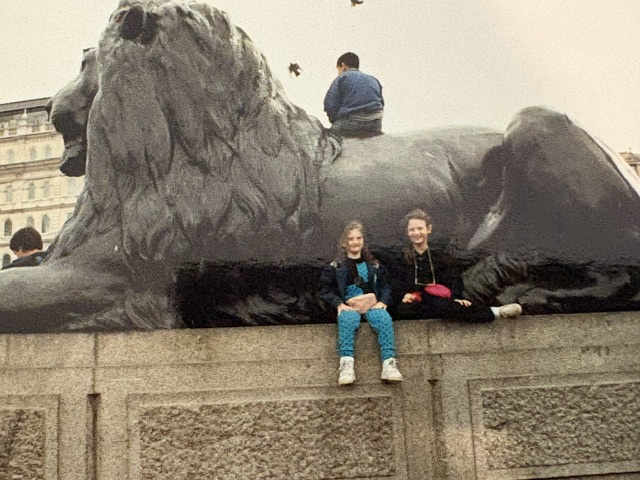
The Lions of Trafalgar Square
Four enormous bronze lions rest at the base of Nelson’s Column in London’s Trafalgar Square. The column commemorates Admiral Horatio Nelson, who died during Britain’s victory over the combined French and Spanish fleets at the Battle of Trafalgar in 1805. Although the column was completed in 1843, its now-famous lions were not added until more […]
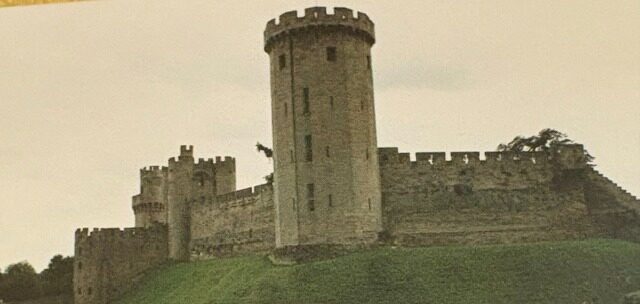
Warwick Castle
We visited Warwick Castle during our family tour of the United Kingdom. Its massive stone walls and towers brought us face to face with the kind of fortress that had helped shape England’s history. Behind those defenses were generations of families whose wealth, alliances, and ambitions could influence who wore the crown. The castle began […]

