Ames Free Library
The Ames Free Library began with a gift intended to make books and learning available to the people of Easton. In his will, manufacturer and railroad investor Oliver Ames II left $50,000 for the construction and support of a library. Part of that bequest was reserved as a permanent fund to purchase books and maintain the building. His vision established an institution held in trust for public benefit, with resources intended to sustain it beyond its founding generation.
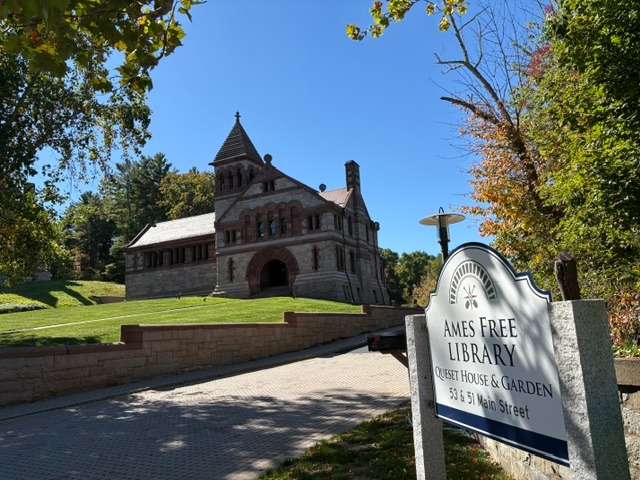
In 1877, his children, Frederick Lothrop Ames and Helen Angier Ames, began carrying out their father’s wishes. They commissioned Henry Hobson Richardson, whose design gave the library a substantial architectural presence on its elevated site along Main Street. Construction was completed in 1879, but the library did not open until March 10, 1883. Its centennial history suggests that rising costs may have contributed to the delay. Oliver’s widow, Sarah Lothrop Ames, also strengthened the institution’s finances with a $40,000 contribution to its permanent fund.
The building’s rough-faced stone, broad entrance arch, steep gables, and square tower give it the appearance of a small castle. Rows of arched windows and contrasting stone details bring rhythm to the exterior, while the long, lower wing balances the taller entrance section. These features express Richardson’s distinctive approach to Romanesque architecture, combining a sense of solidity with carefully arranged forms. The library is one of four public libraries in Massachusetts designed by Richardson.
The institution grew as the community’s needs changed. In 1931, Fanny Holt Ames funded a children’s wing, designed by Richardson’s successor firm, Shepley, Rutan and Coolidge. The addition expanded the library’s capacity to serve younger readers, continuing the family’s investment in education across another generation.
For decades, family endowments provided the library’s financial support. Town funding began in 1972, allowing it to qualify for state aid and broadening the foundation of its support. That evolution—from a family bequest to a community-supported institution—is an important part of its story. The Ames Free Library preserves both an architectural achievement and the enduring purpose behind it: giving Easton’s residents access to books, information, and a place to learn.
Read More From Nancy
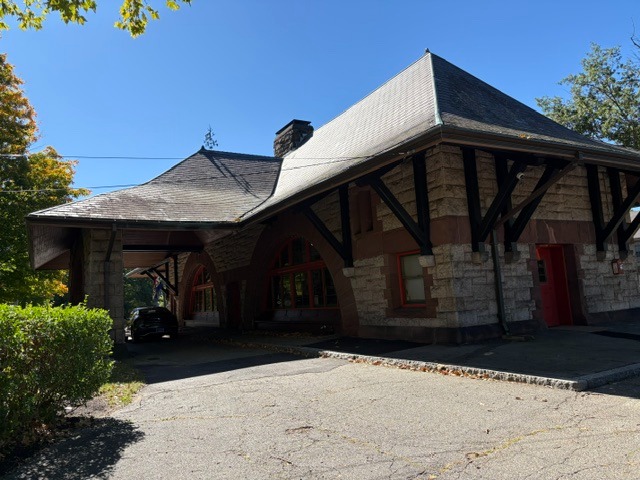
Old Colony Railroad Station
With its broad slate roof, deep overhanging eaves, and substantial stone walls, North Easton’s former railroad station gives a practical building a distinctive architectural presence. The dark timber brackets and rounded arches visible in our photographs reveal the care given to a place built for everyday arrivals and departures. Frederick Lothrop Ames commissioned the station […]
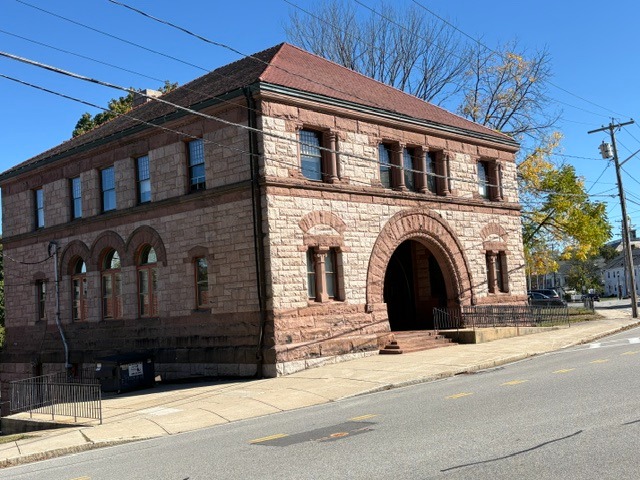
The Former North Easton Savings Bank and Post Office
The stone building at 66 Main Street preserves a chapter of North Easton’s everyday commercial history. Its substantial masonry, red-tiled roof, and broad entrance arch give it a commanding presence along the street. Behind that carefully designed exterior were services that connected residents with both their local economy and the wider world. The Easton Historical […]
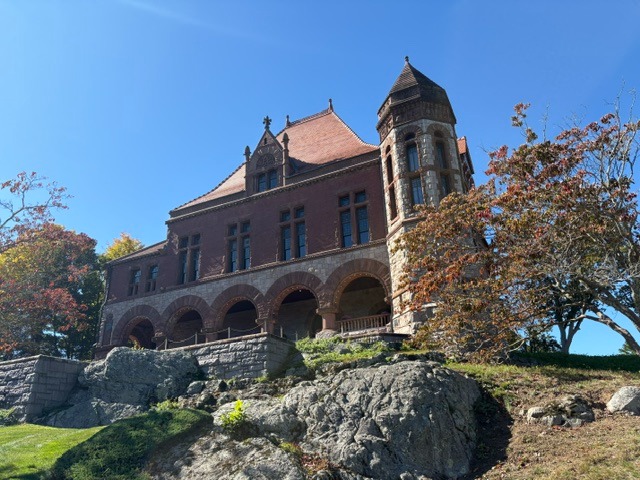
Oakes Ames Memorial Hall
Standing above the street on a rocky hillside, Oakes Ames Memorial Hall is one of North Easton’s most distinctive landmarks. Its broad arches, steep red-tiled roof, and corner tower give it a commanding presence, while the exposed rock beneath it connects the building to the surrounding landscape. Built between 1879 and 1881, the hall was […]

