The Coudersport & Port Allegany Railroad Snowplow
Winter could stop a railroad as surely as a damaged bridge. Snow buried the rails, ice collected where train wheels needed to run, and a blocked line interrupted both passengers and freight. Railroads needed to clear the track before ordinary trains could pass. At the Railroad Museum of Pennsylvania in Strasburg, the Coudersport & Port Allegany Railroad snowplow tells the story of that demanding work.
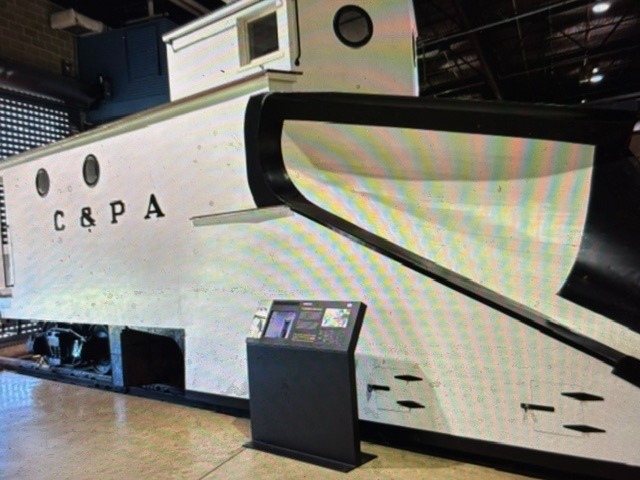
Built in 1897, the plow was designed to be pushed by a locomotive. Its broad, wedge-shaped front forced snow outward as it advanced along a single track. High above the blade, a crew member could watch from the small pilot house for fallen trees or other obstacles hidden by the snow. The heavy timber frame gave the plow the strength to withstand difficult conditions.
Clearing the snow on top of the track was only part of the job. A device called a flanger extended beneath the plow to remove snow and ice from the space inside the rails. It could be raised at switches and road crossings, where leaving it down might cause damage. Together, the wedge and flanger cleared a path for the trains that followed.
The plow served the Coudersport & Port Allegany Railroad until 1945. Its survival preserves a side of railroad history that is easy to overlook: before a train could carry people or goods through a Pennsylvania winter, another crew sometimes had to go ahead and open the line. The museum considers this plow possibly the oldest surviving example of its kind.
Read More From Nancy
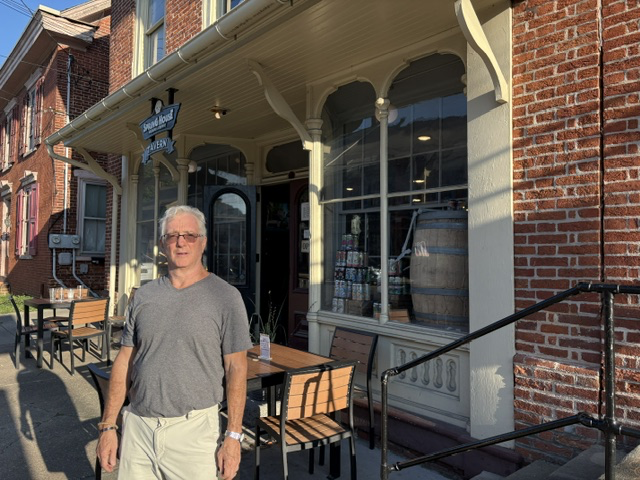
Spring House Tavern
Strasburg grew along the Old Conestoga Road, where travelers stopped and residents of the surrounding farmland came to trade. Taverns were part of that early town. They offered a place to eat and rest while serving the traffic that passed along Main Street. The brick building at 8–10 East Main Street has a connection to […]
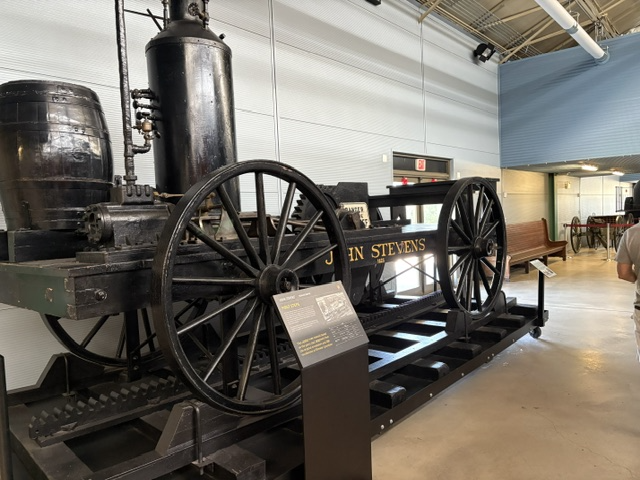
John Stevens and the First American Steam Locomotive
Among the large locomotives at the Railroad Museum of Pennsylvania stands a machine that looks almost too small to belong beside them. It has tall, exposed wheels, a boiler, and a narrow platform, with little of the enclosed form we now recognize as a locomotive. It represents an experiment made before Americans knew whether steam […]
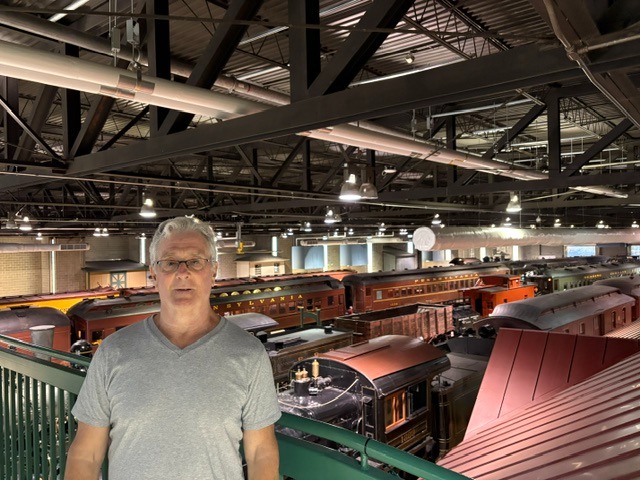
A Collection Built to Last
In this photograph, Marty stands above rows of locomotives and railroad cars inside the Railroad Museum of Pennsylvania. From this elevated viewpoint, the size of the equipment, and the space needed to preserve it, becomes especially apparent. The museum holds more than 100 historic locomotives and railroad cars, many displayed within its approximately 100,000-square-foot exhibition […]

