Fenway Park
We were not a baseball family, but that did not keep us from enjoying an occasional game at Fenway Park. It certainly did not stop us from taking a tour of this historic ballpark. Living in the Boston area, we knew Fenway as a familiar name and a gathering place for generations of fans. Touring it gave us an opportunity to learn about the place itself, beyond the excitement of a game.
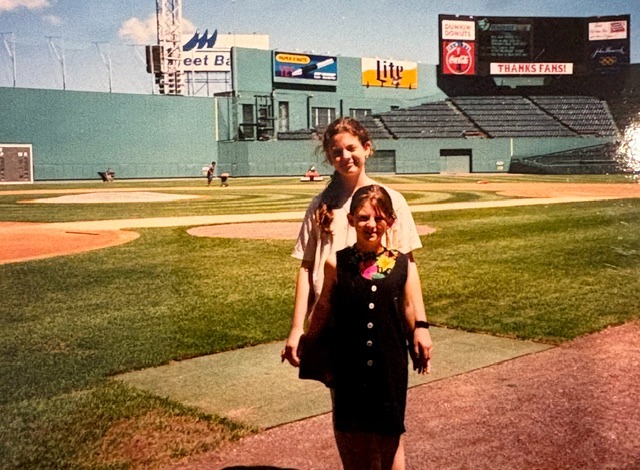
Fenway Park opened on April 20, 1912, when the Boston Red Sox defeated the New York Highlanders, later renamed the Yankees, by a score of 7–6 in eleven innings. That first season ended with a World Series championship. More than a century later, Fenway remains the oldest active ballpark in Major League Baseball. Its continued use connects today’s players and spectators with generations who have entered the same park.
Built within an established city neighborhood, Fenway developed a shape influenced by the streets and buildings surrounding it. Its irregular outfield, unexpected corners, and close relationship to the neighborhood give it a distinctive character. Those features also affect the game: players must learn how to handle a field whose boundaries are anything but uniform
The most recognizable of those boundaries is the Green Monster, the towering left-field wall. Approximately 37 feet high, it stands just 310 feet from home plate down the left-field line. Its height creates an unusual challenge. A hard-hit ball that might clear a lower fence elsewhere can strike the wall at Fenway and remain in play, making the bounce important to both the runner and the outfielder.
The wall’s familiar appearance developed over time. During the extensive renovations completed in 1934, Fenway’s left-field wall took on its imposing height, with a manually operated scoreboard at its base. It was initially covered with advertisements. In 1947, those advertisements were removed and the wall was painted green, establishing the appearance that became inseparable from the ballpark’s identity.
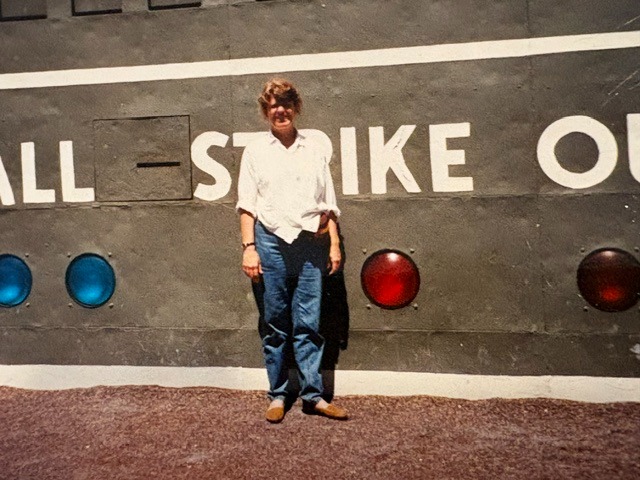
Standing beside the scoreboard brought the scale of the Green Monster into perspective. From the stands, it can seem like a backdrop to the action. At its base, the large lettering and indicator lights become substantial features in their own right. The scoreboard is also a reminder of an earlier way of following baseball, with attendants changing numbered panels by hand as the game progresses.
Fenway’s history extends beyond baseball. It has hosted football, soccer, hockey, concerts, and other public gatherings. The Boston Patriots played there during the 1960s, and the ballpark later became the setting for outdoor NHL hockey. Its role in Boston has grown through these different uses, welcoming people whose interests reach well beyond the Red Sox.
Preserving Fenway has involved adapting it. Renovations have added amenities and seating while retaining its recognizable field and historic character. In 2003, seats were installed above the Green Monster, giving spectators a new view from a structure that had long defined the park.
Read More From Nancy
Plimouth Patuxet Museums
During my homeschooling years, we made many trips to what was then called Plimoth Plantation. It was one of those places where history became much more than something we read about in a book. As we walked through the recreated 17th-century English village, the people we met remained in character, speaking and responding as though […]
Chatham Railroad Museum
For much of the nineteenth century, Chatham’s location at the southeastern end of Cape Cod made travel and commerce difficult. Residents depended upon coastal vessels, horse-drawn transportation and long overland journeys to reach other communities. Although railroads began serving other parts of Cape Cod earlier in the century, Chatham waited decades for a direct connection. […]
Marconi-RCA Wireless Museum
Long before messages could be sent instantly by telephone, satellite or the internet, Chatham served as an important link between ships at sea and the rest of the world. The Marconi-RCA Wireless Museum preserves the story of the people and technology that made those connections possible. Italian inventor Guglielmo Marconi helped transform communication through his […]

