The Wallace Fountain
Among Barcelona’s grand buildings and busy streets, a small drinking fountain carries a story of public service expressed through art. At the intersection of Passeig de Gràcia and Gran Via, four sculpted women support an ornamental dome above a cast-iron pedestal. Its dark green surface and elaborate decoration make an everyday necessity into something worth stopping to examine.
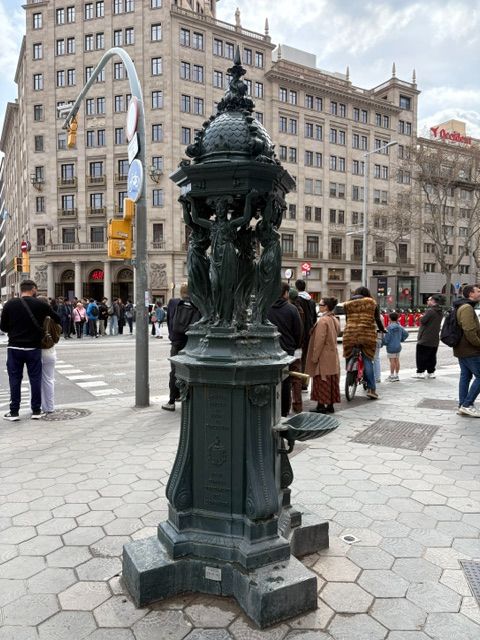
This is a Wallace fountain, named for the English philanthropist and art collector Sir Richard Wallace. In 1872, Wallace commissioned French sculptor Charles-Auguste Lebourg to design public drinking fountains for Paris. The design became popular and spread to other cities, bringing a recognizable piece of Parisian street furniture into places far beyond France.
The women are caryatids: sculpted figures that serve as architectural supports. Their flowing garments and raised arms give the fountain the appearance of a miniature classical monument. Above them, the dome carries additional ornament, while a shell-shaped basin projects from the pedestal below. The decoration rewards a closer look, but the fountain’s purpose was practical: providing drinking water in a public place.
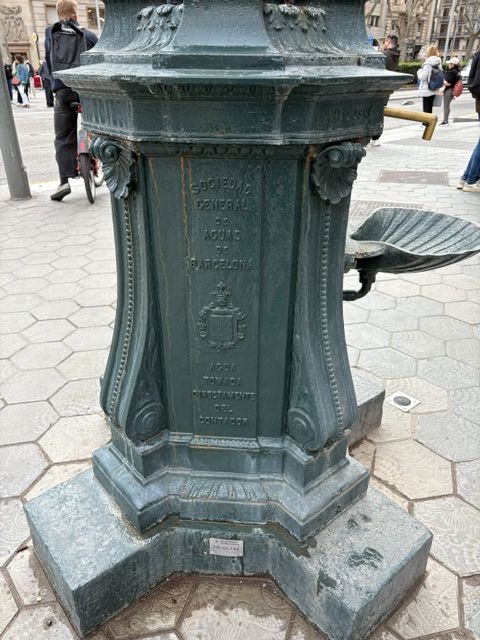
Barcelona installed twelve Wallace fountains for the Universal Exposition of 1888, when the city welcomed international visitors and presented its growing ambitions to the world. This fountain is one of the surviving originals in the city’s public streets
Barcelona’s versions were personalized with the city’s coat of arms and the name of its water supplier. Here, the inscription identifies the Sociedad General de Aguas de Barcelona. Beneath it, another inscription refers to drinking water supplied through a meter, an unusually practical detail on such an ornate object. The lettering connects the sculptural fountain directly to the infrastructure that supported the expanding city.
Around it, pedestrians cross the street, traffic moves through the intersection, and shops occupy the surrounding buildings. The fountain remains a small piece of nineteenth-century Barcelona within that modern activity. Its story reminds us that a city’s history survives in more than its palaces, churches, and celebrated monuments. Sometimes it stands on a sidewalk, in an object created to offer a simple drink of water.

Read More From Nancy
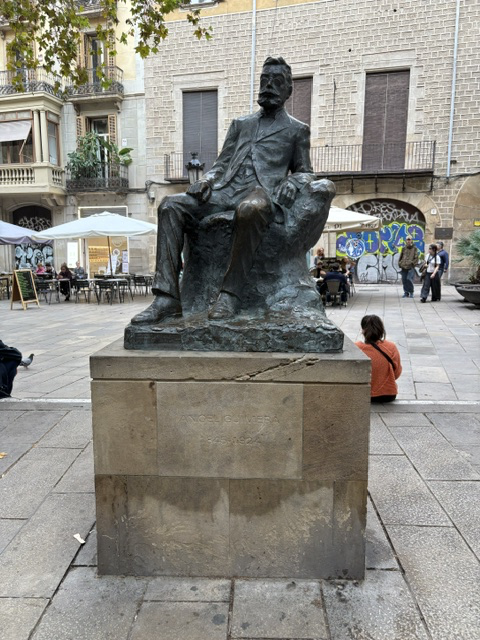
Frederic Soler Statue
Walking through Barcelona, I came across this seated figure in a small square. I didn’t know who the man was or why a monument had been placed here. But that is one of the things I enjoy about traveling: a statue, plaque or old building can make me stop and ask a simple question: who […]
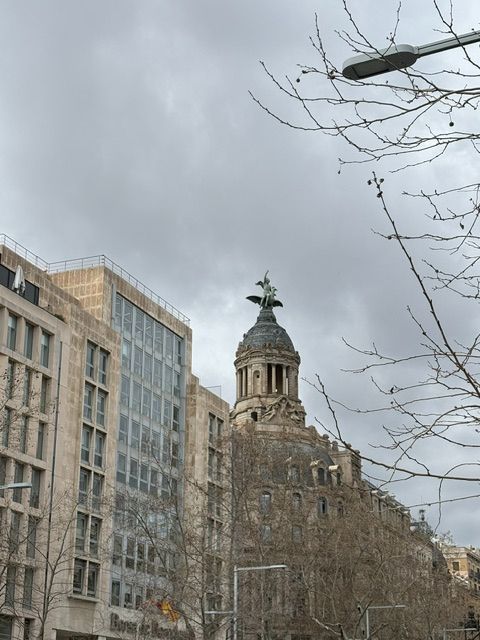
A Symbol Above the City
Walking along Passeig de Gràcia, I noticed a domed tower rising above the trees. At its summit, a winged figure stood against the sky. It was a detail that invited a closer look, and learning its purpose revealed a connection between architecture, mythology, and the business that commissioned the building. This was the Barcelona headquarters […]
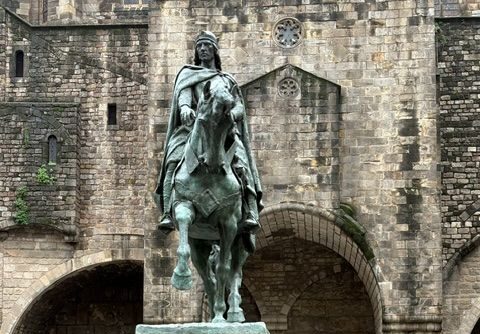
Ramon Berenguer III
As I walked through Barcelona’s Gothic Quarter, I stopped beside the equestrian statue of Ramon Berenguer III to learn more about the man it commemorates. The bronze rider stands against a backdrop of old stone walls and medieval buildings. It is a place where several periods of the city’s history meet, giving one monument a […]

