George T. Davis: Working for Freedom
Once I discovered Greenfield’s sidewalk art, I began looking for the next piece and the story it might reveal. This mural carried the name George T. Davis among colorful shapes and lettering referring to the anti-slavery movement. It introduced me to a man whose work connected Greenfield’s local history with the larger struggle to end slavery.
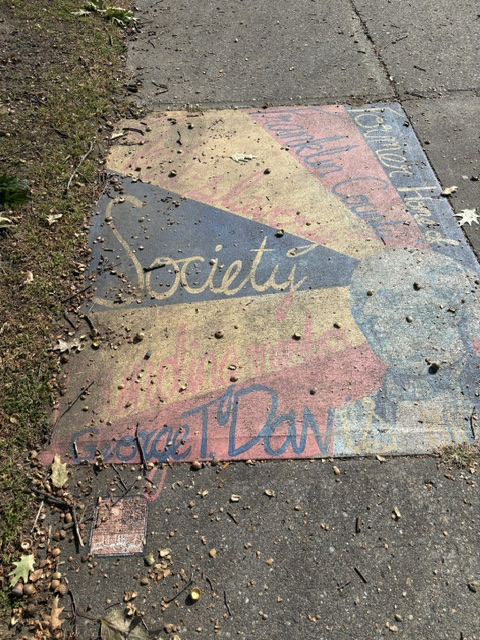
George Thomas Davis was a lawyer and public official, but his place in this story begins with his involvement in the Franklin County Anti-Slavery Society. When the organization formed in December 1836, delegates chose him as its first treasurer. The gathering brought together people from several towns, creating a county organization that could coordinate their efforts and strengthen their influence. Davis later served as a vice president.
The society’s work extended beyond condemning slavery. Its constitution also called for confronting racial prejudice and improving opportunities for Black residents. Meetings, publications, lectures, and petitions helped carry these concerns into public life. Women circulated petitions, while local organizers-maintained connections between communities. Behind the names remembered today was the steady work of people gathering signatures, raising money, and persuading their neighbors.
Davis believed that elections and political action offered an important route toward emancipation. Abolitionists did not always agree about how to achieve their goals, and these disagreements divided organizations as well as individuals. When the county society changed its affiliation and became the Franklin County Abolition Society in 1839, Davis supported the move and helped guide its work through the organization’s business committee. His approach placed responsibility on voters and public officials to act against slavery.
His connection to Greenfield also survives in the locations of his former homes. He owned a house on the site of the Greenfield Cooperative Bank on Federal Street and another on eastern Main Street, immediately west of the YMCA. Both locations are included in the downtown art walk. This mural, at the Federal Street site, was created by artist Youme Nguyen Ly, whose design draws on a Juneteenth flag and African textile traditions.
Read More From Nancy
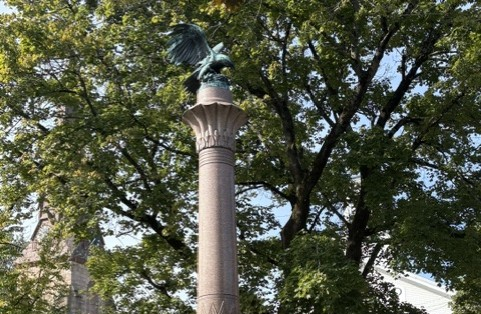
The Eagle Above the Common
Walking through downtown Greenfield, I noticed a tall reddish stone column rising above an iron fence, with a bronze eagle poised at its summit. Its height drew my attention first, but the sculpture above it held a story that was less obvious from the ground. This is Greenfield’s Soldiers’ Monument, dedicated to the town’s men […]
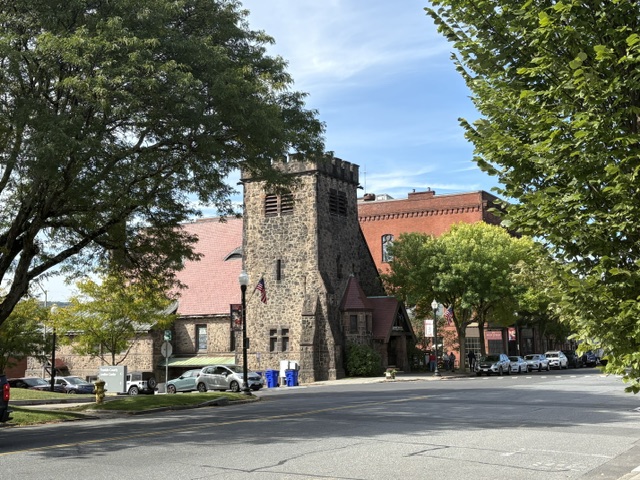
All Souls Church
Walking along Main Street in Greenfield, I noticed a stone church whose square, battlemented tower gave it an almost castle-like appearance. Its rough stone walls and steep roof stood apart from the neighboring brick commercial buildings. Learning more about All Souls Church revealed a history that extended beyond its architecture, connecting religious independence with efforts […]
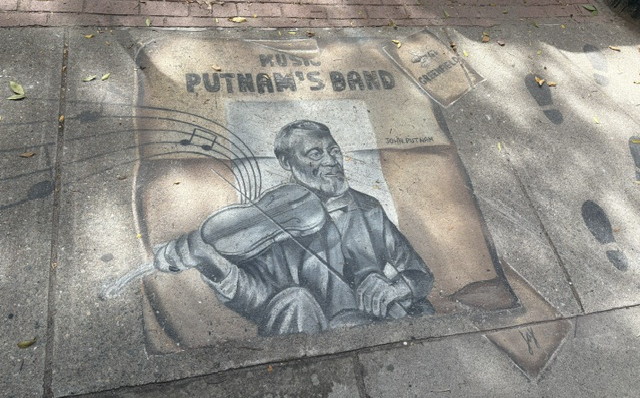
Music and the Road to Freedom
Once I knew Greenfield’s sidewalk art existed, I went looking for more. The next mural introduced me to John Putnam, shown holding a violin beneath the words “Putnam’s Band.” Musical notes curve through the artwork, inviting a closer look at a man whose story connects the town’s musical life with its history of resistance to […]

