Veterans Memorial
In Bath’s Library Park, a granite memorial honors the men and women of the city who served their country during its wars. Its inscription names no single conflict. Instead, it asks the community to remember service across generations.
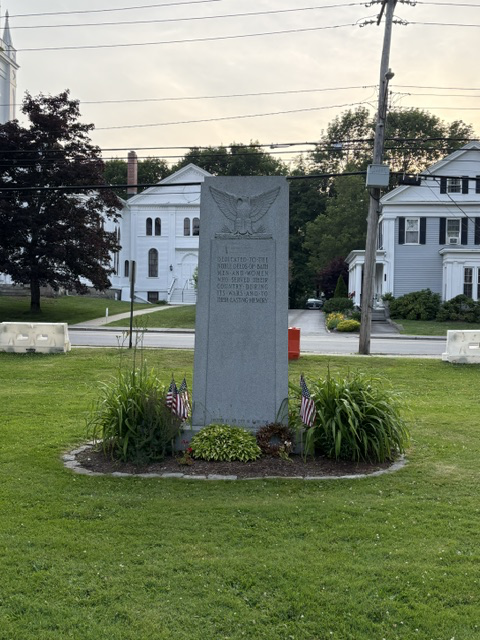
That broad dedication makes the stone different from Bath’s Civil War monument. Wars entered the lives of local families at different times, and the people who served did so in many roles. By naming both men and women, the memorial makes room for a wider history of service than one battlefield or one list of names could hold.
The stone stands among the paths and plantings of a public park, where people can encounter it during an ordinary day. Its words do not tell visitors what each person experienced. They leave space to think about the individual lives behind a shared act of remembrance.
A city’s history includes the people who left it as well as those who stayed. Bath placed this memorial in a space its residents continue to use, keeping that part of its history present in daily life.
Read More From Nancy
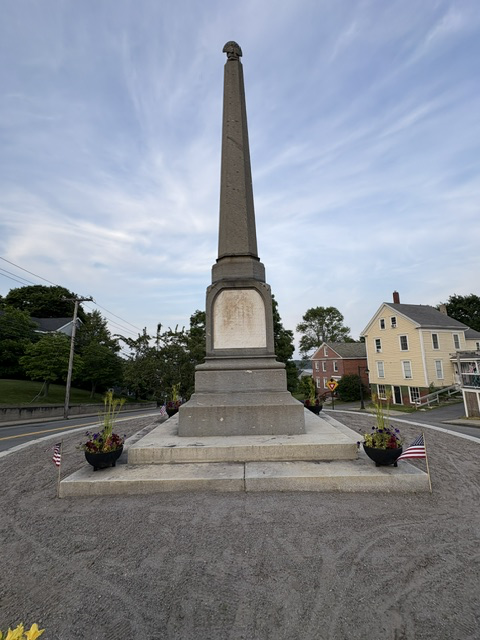
Civil War Soldiers’ Monument
The tall stone monument on Bath’s High Street was raised while the Civil War was still close in memory. Erected between 1867 and 1869, it honored the men from Bath who had died in the conflict. An eagle crowns the shaft; below it, the city’s dedication asks those passing by to remember its sons. The […]
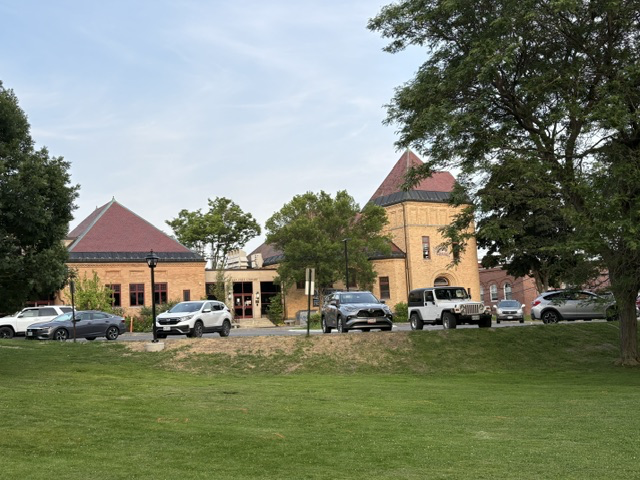
Patten Free Library
Patten Free Library began long before it had a building of its own. Founded as the Patten Library Association in 1847, it was a subscription library whose books moved through rented rooms and, later, a donated house. George and John Patten were among its generous early supporters, but a different gift would change who could […]
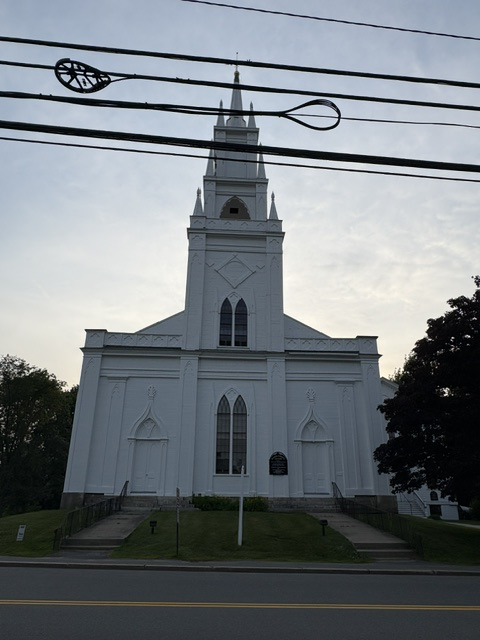
Winter Street Church
Across from Bath’s Library Park, the white tower of Winter Street Church rises above Washington Street. Pointed windows and slender spires give the building its Gothic character, while its wooden construction places that design firmly in the New England town around it. The church was built in 1843 by Anthony Coombs Raymond, a master builder […]

