Patten Free Library
Patten Free Library began long before it had a building of its own. Founded as the Patten Library Association in 1847, it was a subscription library whose books moved through rented rooms and, later, a donated house. George and John Patten were among its generous early supporters, but a different gift would change who could use the collection.
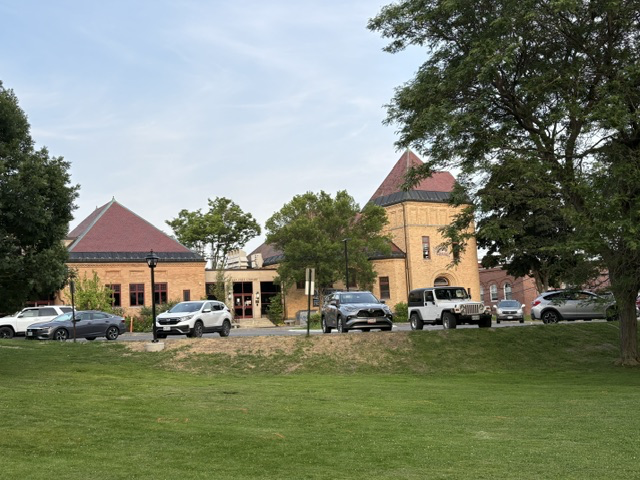
In 1887, Bath resident Galen C. Moses offered $10,000 toward a new building on one condition: the library must be free to the city’s residents. Construction began two years later, and the completed library welcomed the public at an open house on January 1, 1891. The word “Free” in its name marked a meaningful change. A person’s ability to borrow a book would no longer depend on paying for a subscription.
Architect George E. Harding gave that purpose a building with a strong presence beside City Park. Its brick walls, arched entrances, and prominent tower reflected the Romanesque style popular for important public buildings of the period. Inside, the library also set aside space for local history, an early sign that preserving Bath’s past would become part of its work
The library grew as its community’s needs changed. Children’s services began in 1911 in a room in the tower. Later additions provided more room for young readers, research, and the History and Genealogy Room, while the original building was restored. More than a century after Moses’s gift, Patten Free Library still carries the idea that shaped its creation: books, learning, and a place to explore them should be open to the community.
Read More From Nancy
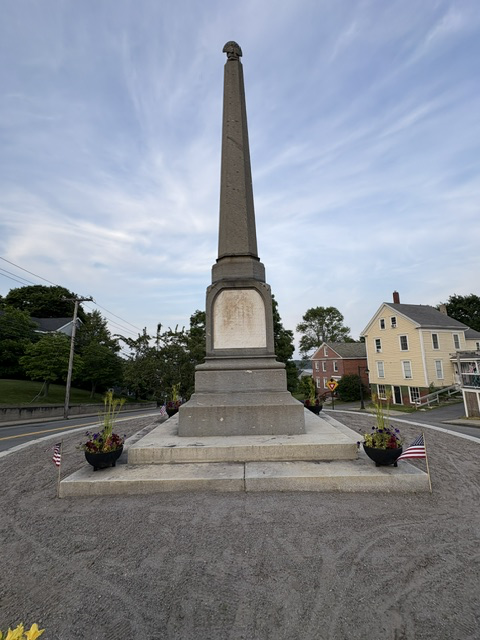
Civil War Soldiers’ Monument
The tall stone monument on Bath’s High Street was raised while the Civil War was still close in memory. Erected between 1867 and 1869, it honored the men from Bath who had died in the conflict. An eagle crowns the shaft; below it, the city’s dedication asks those passing by to remember its sons. The […]
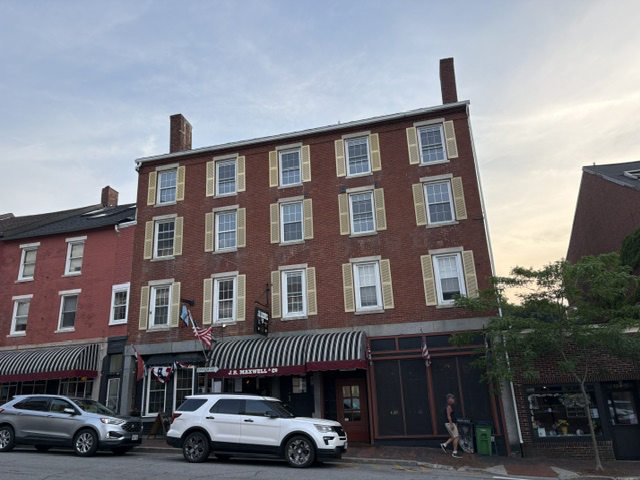
The Elliot House Block
A tall brick building on Bath’s Front Street recalls a time when the city’s waterfront drew travelers as well as ships. John Elliot had the building constructed as a hotel in 1840. Rising above many of its neighbors, the Elliot House would have been a prominent address in a town growing through shipbuilding and trade. Its […]
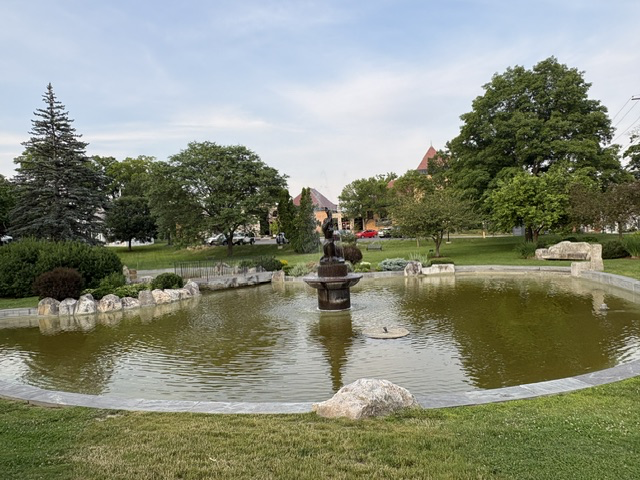
The Spirit of the Sea
As we walked through Bath’s Library Park, we came upon a broad pool with a bronze figure rising from its center. Water fell around her into the basin below. The fountain belonged to the park’s quiet setting, yet the figure’s upward reach gave it a sense of movement that drew us closer. The sculpture is Spirit […]

