The Nickerson North Beach Camp
For generations, Chatham families looked across the water toward North Beach as a place to escape the routines of everyday life. The long barrier beach once extended southward from Orleans toward Chatham, separating the protected waters of Pleasant Bay and Chatham Harbor from the open Atlantic. Reaching it required a boat, and living there meant accepting a simpler existence shaped by tides, weather and the limited supplies that could be carried across the water.
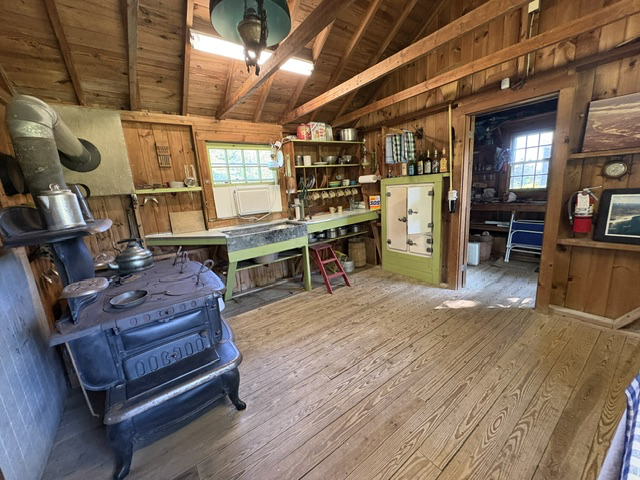
In 1947, the Joshua Nickerson family built a small summer camp on North Beach. It was not an elaborate seaside residence. Constructed of wood and furnished with practical household items, it provided the family with the necessities for spending extended periods away from the mainland. Days could be devoted to swimming, fishing, walking the beach and enjoying a landscape that felt removed from the increasingly busy summer communities across the harbor.
The camp’s interior reflected this uncomplicated way of life. A large stove provided a place to cook and warmth when the weather turned cool. Open wooden shelves held dishes, pans, bottles and basic provisions. A table covered with a simple cloth served as the center of family meals and activities. Wooden furniture, an icebox and hanging lamps completed rooms designed for usefulness rather than appearance.
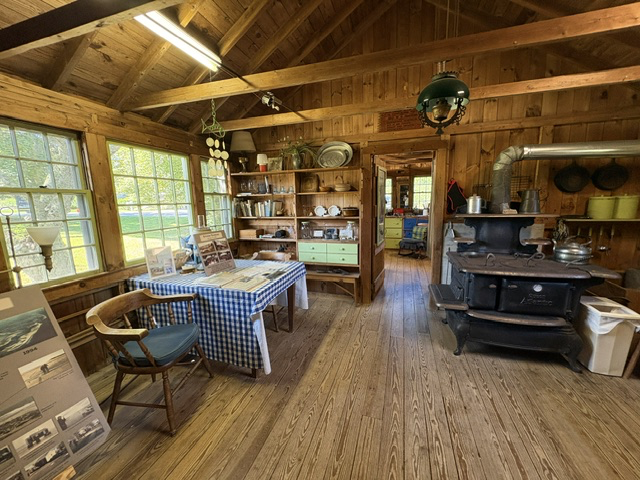
Life at the camp required planning and cooperation. Food, fresh water, fuel and personal belongings had to be transported by boat. Without the conveniences available in homes on the mainland, ordinary tasks demanded more time and attention. Yet this was part of the experience. The limited comforts encouraged family members to slow down and participate in the daily work of maintaining the camp.
North Beach provided isolation and beauty, but it was never permanent ground. Barrier beaches are continually reshaped by wind, tides and storms. Sand moves along the coastline, new channels open and old passages disappear. The same natural processes that created North Beach also made every building placed upon it vulnerable.
A powerful storm in January 1987 opened a new inlet directly across from Chatham Lighthouse. The break divided the barrier beach and allowed ocean water to flow into Chatham Harbor. During the years that followed, currents widened the opening and dramatically altered the surrounding shoreline. Buildings that had once appeared safely removed from the water became increasingly threatened by erosion and ocean overwash.
By 1991, the changing shoreline had placed the Nickerson camp in danger. Rather than allow it to disappear into the sea, the building was carefully removed from North Beach. It was floated across the water to the mainland and donated to the Chatham Historical Society by Joshua Nickerson’s son. The camp was then placed on the grounds of the Atwood Museum, where it could be preserved and interpreted.
Today, the Nickerson North Beach Camp represents a distinctive chapter in Chatham’s history. Its modest rooms preserve the experience of families who traveled across the harbor to live temporarily beyond roads, electricity and many of the conveniences of home. At the same time, the camp’s relocation documents the continuing power of the Cape Cod coastline, where the boundary between land and sea is never fixed.
The building survived because someone recognized that an ordinary family retreat could tell an important story. It preserves not the life of a famous person or the site of a major historical event, but memories of shared meals, summer days and generations shaped by the water. Saved from the advancing shoreline, the Nickerson North Beach Camp now stands as a reminder that even the simplest places can become meaningful records of a community’s past.
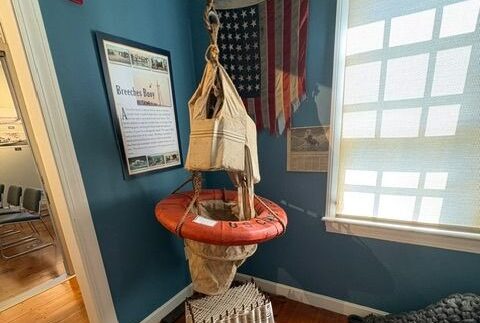
Read More From Nancy
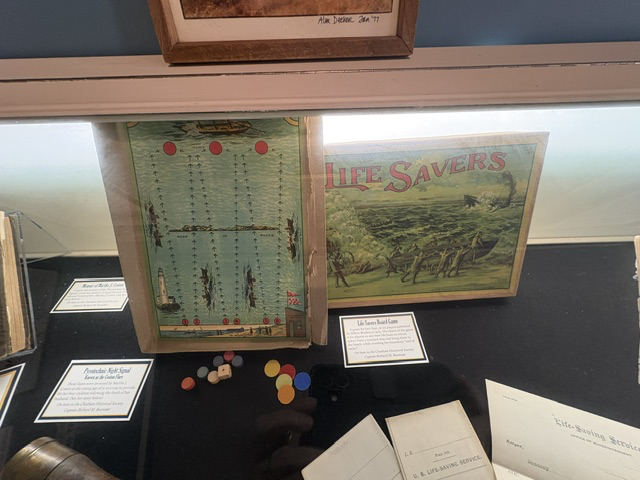
Life Savers and the Rise of American Board Games
The game Life Savers transformed the dangers of a shipwreck into a contest of rescue. Produced by the Milton Bradley Company near the turn of the twentieth century, the game challenged players to send lifeboats to a wrecked vessel, rescue its sailors, and return them safely to shore. Its illustrated cover, playing board, spinner, and colored pieces […]
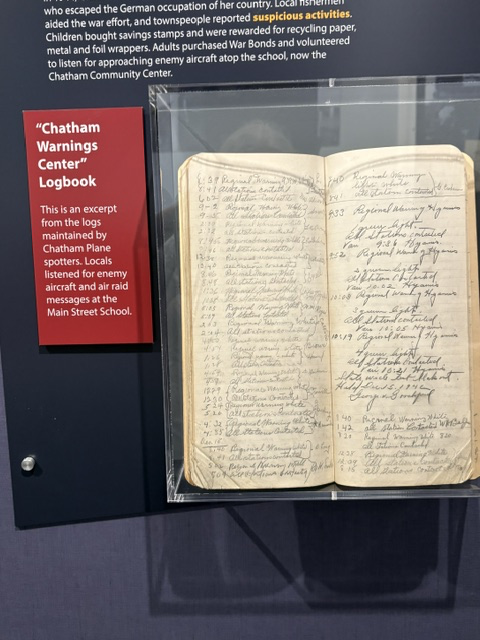
Home Front Artifacts
During World War II, the war effort extended far beyond the battlefields of Europe and the Pacific. In towns throughout the United States, ordinary citizens were asked to remain alert, conserve essential supplies, raise money and contribute whatever they could to support the country. Two artifacts preserved at the Marconi-RCA Wireless Museum: the Chatham Warning […]
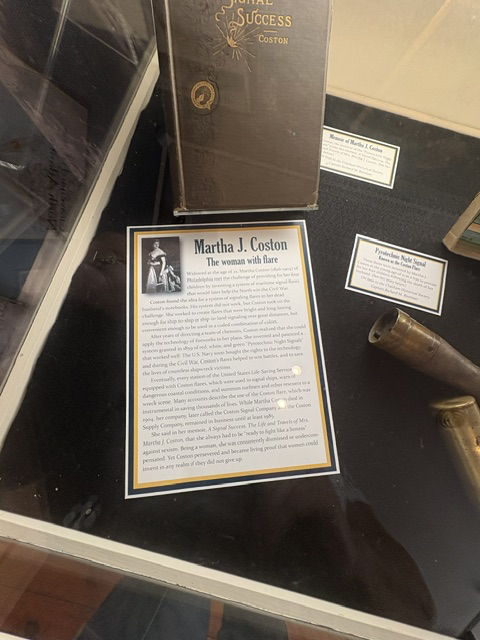
Martha J. Coston and the Signals That Saved Lives
Before radio, ships traveling at night had few reliable ways to communicate with one another or with people on shore. Flags could not be seen in darkness, and lanterns lacked the brightness and distinctive patterns needed to carry clear messages across long distances. Martha J. Coston helped solve this problem by developing a system of […]

