Passeig Arqueològic
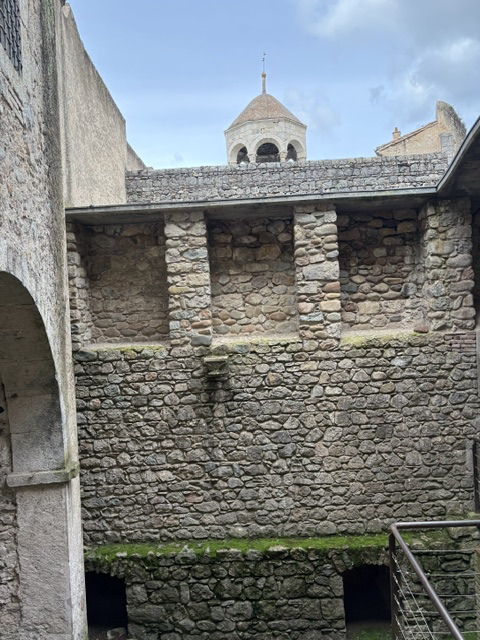
The Passeig Arqueològic follows the northeastern edge of Girona’s historic center, winding among sections of the city’s ancient walls, medieval towers and religious buildings. Stone stairways, terraces and pathways pass beneath tall cypress trees, creating a peaceful transition between the densely built Old Quarter and the greener landscape of the Galligants Valley. Although the walkway feels as though it has always been part of Girona, it is actually a relatively modern addition created to provide access to some of the city’s oldest surviving structures.
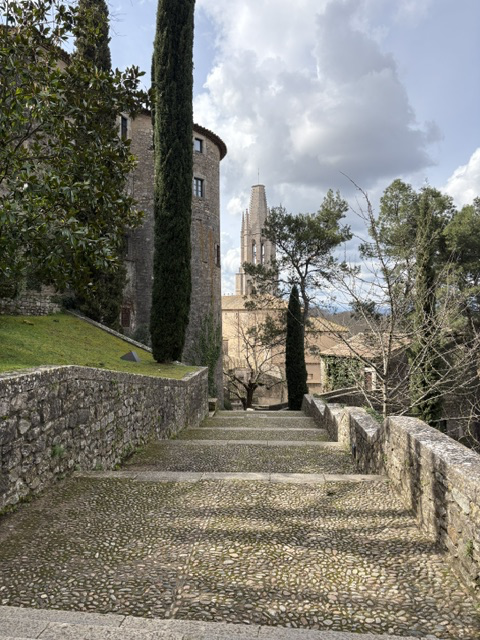
Girona’s origins reach back more than two thousand years to the Roman settlement of Gerunda. The Romans constructed a fortified city on elevated ground beside the Onyar River, choosing a location that allowed them to control an important route across northeastern Iberia. During the Carolingian and medieval periods, the defenses were enlarged and strengthened as Girona grew beyond its original Roman boundaries. Portions of these walls and their defensive towers remain incorporated into the landscape surrounding the Passeig Arqueològic.
The idea of creating an archaeological walkway was proposed in 1930 by Girona architect Rafael Masó, who was then serving as a city councilor. Masó envisioned a route following the perimeter of the Carolingian walls from the Sarraïnes area toward the Portal de Sant Cristòfol and Torre Gironella. His intention was to preserve the historic character of the area while making its archaeological remains more visible and accessible.
The project was delayed by political upheaval and the Spanish Civil War. Municipal planners returned to the idea during the 1950s, drawing upon Masó’s original route while considerably expanding the proposed landscaping and architectural work. Construction began around 1960, transforming a neglected area outside the old walls into a public promenade. Stone steps, garden terraces, fountains and overlooks were introduced among the surviving fortifications.
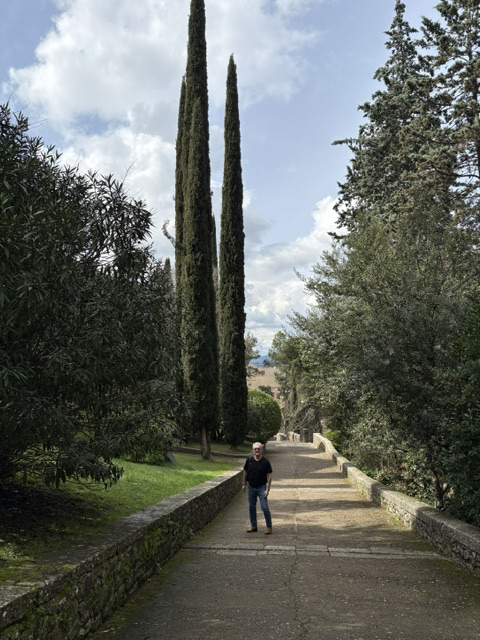
The result is an unusual combination of ancient defenses and 20th-century landscape design. The walkway passes beside the northern side of Girona Cathedral and continues along walls once intended to protect the city from attack. Cypress trees and Mediterranean plantings now soften the defensive stonework, while openings along the route provide views toward the Galligants Valley, Montjuïc and the historic buildings below.
Among the most impressive views is the Romanesque bell tower of Sant Pere de Galligants, rising from the former Benedictine monastery at the foot of the hill. Farther along the route are reminders of Girona’s strategic importance, including medieval towers, gateways and the remains of Torre Gironella, traditionally considered one of the strongest points in the city’s defenses.
Walking the Passeig Arqueològic reveals that Girona’s history is not confined to individual monuments. Roman foundations, Carolingian walls, medieval towers, religious buildings and modern gardens all occupy the same landscape. The walkway allows these different periods to be experienced together, transforming what was once the defensive edge of the city into one of its most peaceful and reflective public spaces.
Read More From Nancy
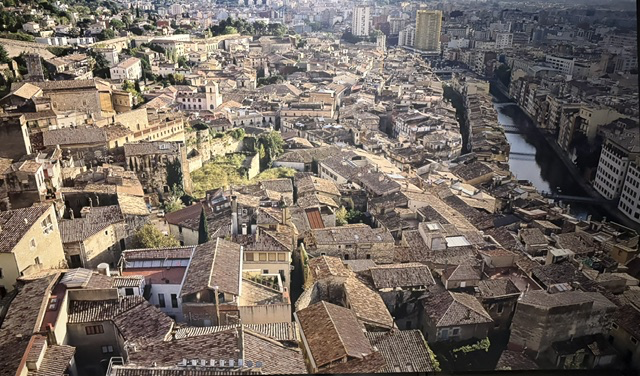
A Neighborhood Within the City
We traveled to Girona specifically to explore its Jewish Quarter, known in Catalan as the Call. Although we had seen photographs of its narrow streets and stone passageways, the aerial view in the Museum of Jewish History helped us understand the neighborhood in a different way. From above, the Call appears woven into the densely […]
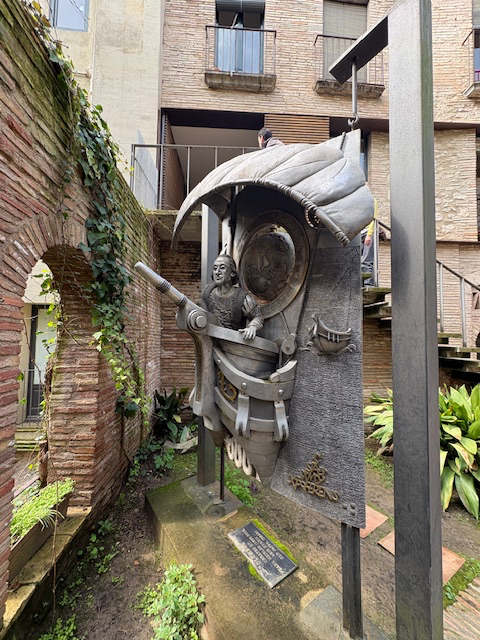
Columbus Sculpture
There is a gift that certain artists have, the ability to capture a moment so completely that the story is understood before it is explained. That is how I felt standing before the Columbus sculpture at the Museum of Jewish History in Girona. Created by Frank Meisler in 1994, this is not a single image, but […]
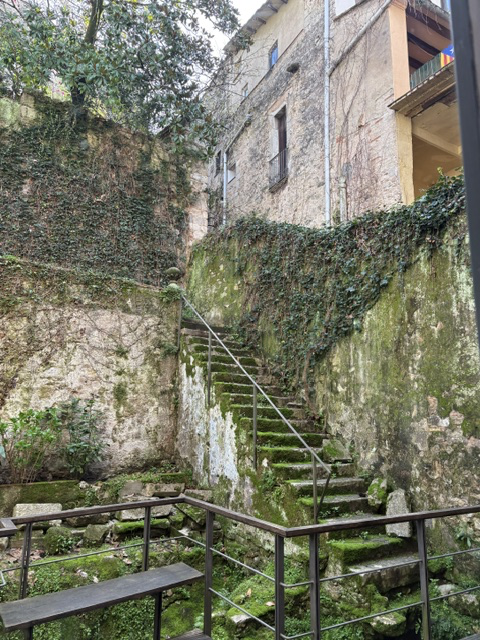
The Museum of Jewish History
The Museum of Jewish History is located on Carrer de la Força in the center of Girona’s historic Jewish Quarter. Its exhibits document the Jewish communities that lived throughout medieval Catalonia, with particular attention given to the people who made Girona an important center of Jewish life and scholarship. The museum uses archaeological discoveries, historical […]

