The Museum of Jewish History
The Museum of Jewish History is located on Carrer de la Força in the center of Girona’s historic Jewish Quarter. Its exhibits document the Jewish communities that lived throughout medieval Catalonia, with particular attention given to the people who made Girona an important center of Jewish life and scholarship.
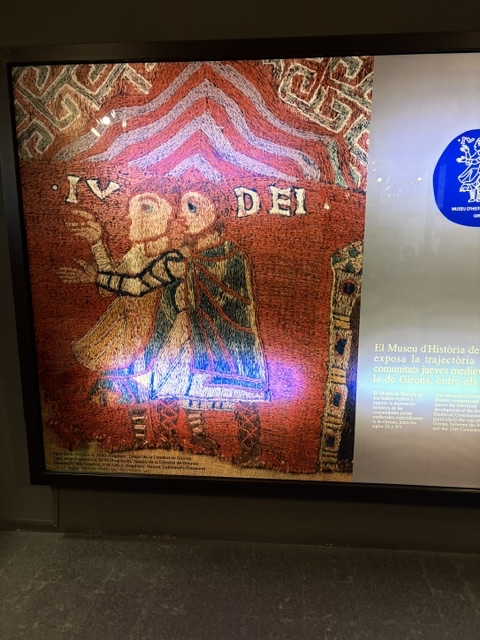
The museum uses archaeological discoveries, historical documents, religious objects, tombstones and reproductions of medieval manuscripts to describe family life, religious traditions, education, work and community organization. The large medieval image near the entrance introduces this history through the people who lived it, presenting Jewish life as a story of individuals, families and relationships rather than simply a collection of dates and artifacts.
The museum occupies the Bonastruc ça Porta Centre, a complex built on the site of Girona’s final synagogue. The Jewish community acquired the property in 1435, during a period when its members were increasingly confined to a smaller section of the Call. The synagogue provided space not only for prayer but also for religious study, education, community meetings and assistance for those in need.
The complex also contained a mikveh, or ritual bath, whose remains were discovered centuries later during archaeological investigations. Its location helped confirm that this property had been used by the Jewish community until the expulsion of 1492.
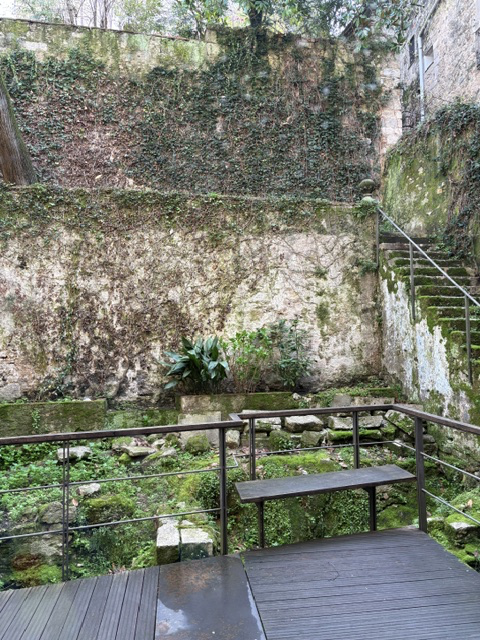
The enclosed courtyard provides another connection to the property’s past. Courtyards were important within the densely constructed Jewish Quarter because they allowed light and air to reach the surrounding rooms. Some contained gardens, wells or systems for collecting water, while also providing a measure of privacy within the crowded neighborhood.
After Girona’s Jewish residents were expelled, the synagogue and its adjoining properties were sold and divided among private owners. New walls, rooms and stairways were added as the complex was adapted for residential and commercial purposes. These changes gradually concealed much of its original function.
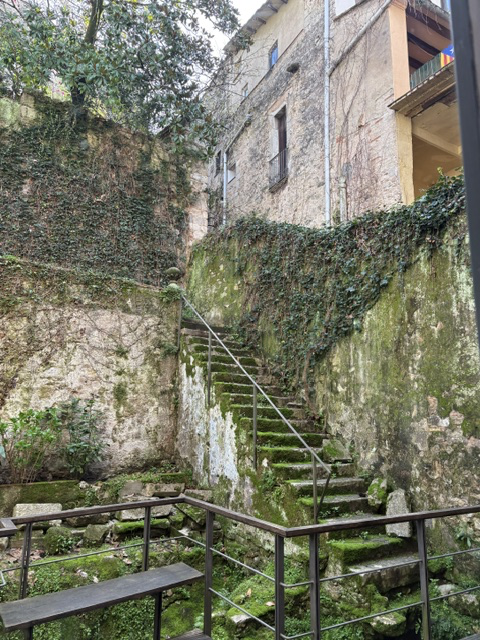
The courtyard seen today reflects several periods of construction rather than one unchanged medieval design. Its stone walls, stairways and uneven levels nevertheless help illustrate how buildings were arranged within the steep and closely built Call.
By bringing together objects, documents and surviving architectural features, the museum reconnects the property with the Jewish community that once worshipped, studied and gathered there. It preserves both the broader history of Jewish life in medieval Catalonia and the story of the people who occupied this particular site until 1492.