Basilica of Sant Feliu
Rising above Girona’s Old Quarter, the Basilica of Sant Feliu is one of the city’s most recognizable landmarks. Its tall Gothic bell tower dominates the surrounding rooftops and forms an important part of Girona’s historic skyline. Although it is sometimes overshadowed by the nearby cathedral, Sant Feliu has its own remarkable history extending back to the earliest centuries of Christianity in the city.
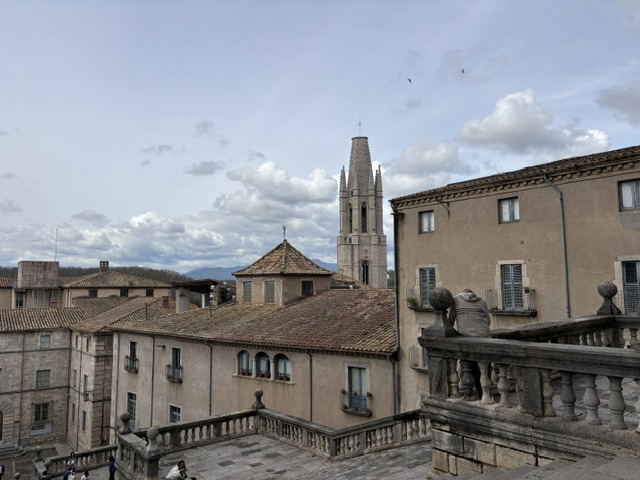
The basilica is dedicated to Saint Felix of Girona, an early Christian martyr traditionally believed to have died during the persecution of Christians under the Roman emperor Diocletian at the beginning of the fourth century. A place of Christian worship developed near the martyr’s burial site outside the walls of Roman Gerunda. Sant Feliu eventually became Girona’s principal church and served as its first cathedral until the 10th century.
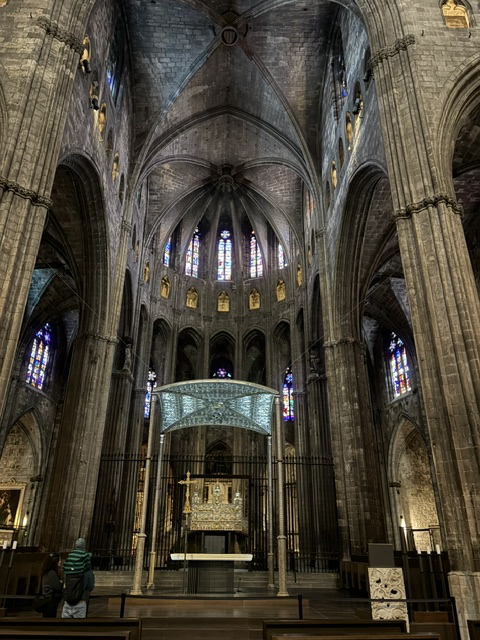
The present building was constructed and altered over several centuries, resulting in a striking combination of architectural styles. The oldest surviving portions are Romanesque, including parts of the eastern end of the church. The spacious nave and much of the bell tower are Gothic, while the principal façade and its broad stairway reflect later Baroque influences. This gradual development allows the building itself to serve as a record of Girona’s changing artistic and religious traditions.
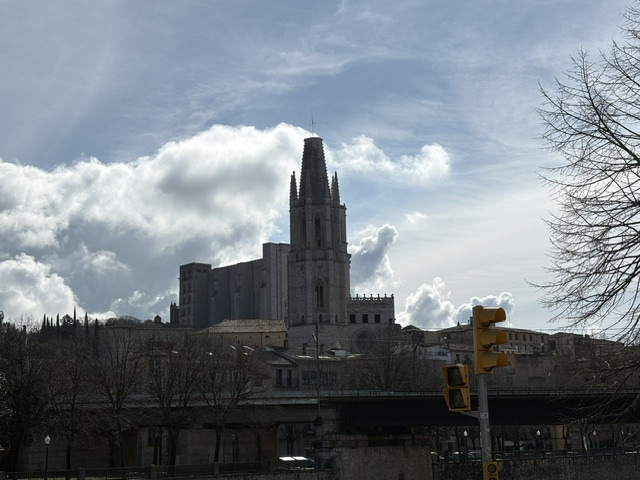
The bell tower, constructed between the 14th and 16th centuries, is the basilica’s most prominent exterior feature. Its narrow vertical form pointed openings and stone pinnacles draw the eye upward. The tower once had an even taller spire, but lightning damaged its upper portion during the 17th century. Its somewhat abrupt crown became part of the distinctive silhouette that continues to identify Sant Feliu from across Girona.
Among the basilica’s greatest treasures are eight Roman and early Christian sarcophagi dating largely from the fourth century. Set into the walls of the presbytery, their carved scenes include both pagan subjects and biblical stories. They provide evidence of the transition from the Roman religious world to the growing Christian community and connect the church to Girona’s earliest Christian burial traditions.
Sant Feliu also preserves important works of medieval religious art. One of the best known is a 14th-century sculpture of the recumbent Christ attributed to Aloi de Montbrai. The basilica is also associated with Saint Narcissus, one of Girona’s patron saints, whose medieval tomb became an important focus of local devotion. Together, these objects demonstrate that Sant Feliu was not simply a neighborhood church but a major center of worship, pilgrimage and civic identity.
The basilica’s long history mirrors the history of Girona itself. It began as a place of remembrance near a Roman burial ground, became the city’s principal Christian church and gradually developed into the Romanesque, Gothic and Baroque structure seen today. Its architecture and collections preserve evidence from many different periods, joining Girona’s Roman beginnings with its medieval religious life and later artistic traditions.
The tower of Sant Feliu continues to rise above the Old Quarter as it has for centuries. More than an architectural landmark, the basilica represents the endurance of a sacred site that has remained connected to Girona’s spiritual and civic life since the earliest days of Christianity in the city.
Read More From Nancy
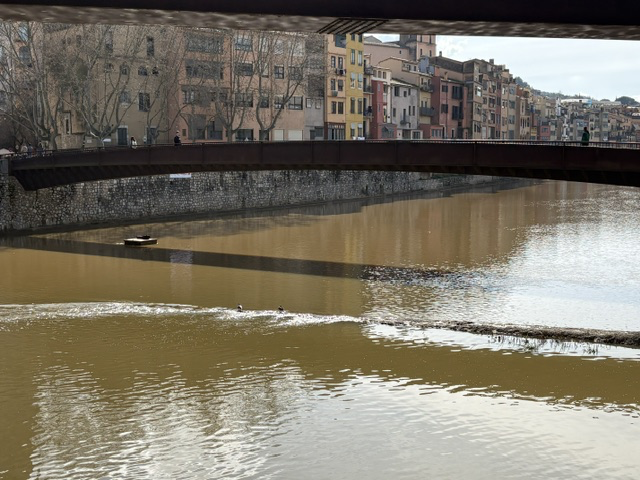
The Onyar River
The Onyar River flows northward through the center of Girona before joining the larger Ter River. It is one of four rivers associated with the city, together with the Ter, Güell and Galligants, and has played an important role in shaping Girona’s growth and appearance. As we walked along the river, we stopped to take […]
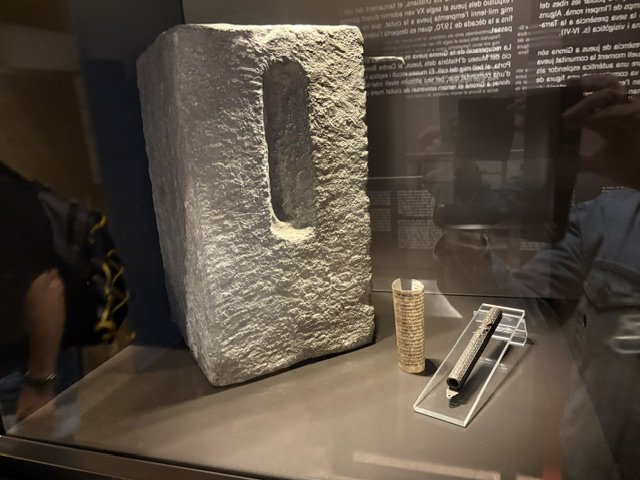
The Mezuzah
Inside Girona’s Museum of Jewish History, a large piece of an old doorway preserves the long, narrow recess that once held a mezuzah. Displayed beside examples of parchment scrolls and protective cases, the stone connects a continuing Jewish tradition with the families who lived in Girona’s Jewish Quarter centuries ago. The tradition originates in two […]
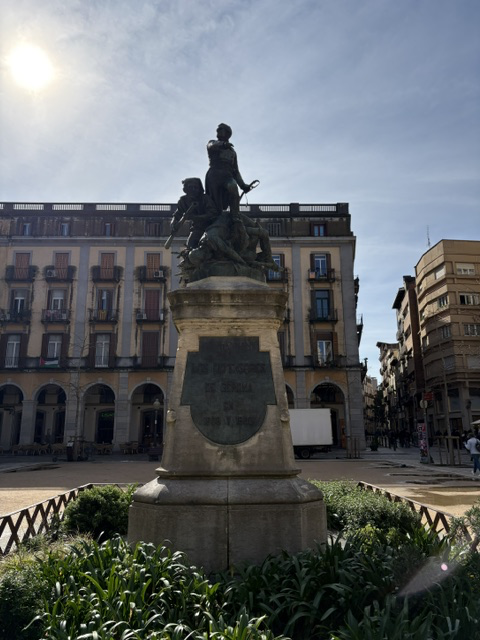
Monument to the Defenders of Girona
While visiting Girona during our travels in Spain, we noticed this impressive monument standing in the center of Plaça de la Independència. So much of Spanish history is new to us, which makes it especially important to pause and identify the prominent monuments found in the country’s public squares. These memorials often reveal the events […]

