Morse Code
Before voices could be transmitted by radio, messages traveled through patterns of short and long electrical signals. These signals became known as Morse code, named for Samuel F. B. Morse, one of the inventors responsible for developing the electric telegraph.
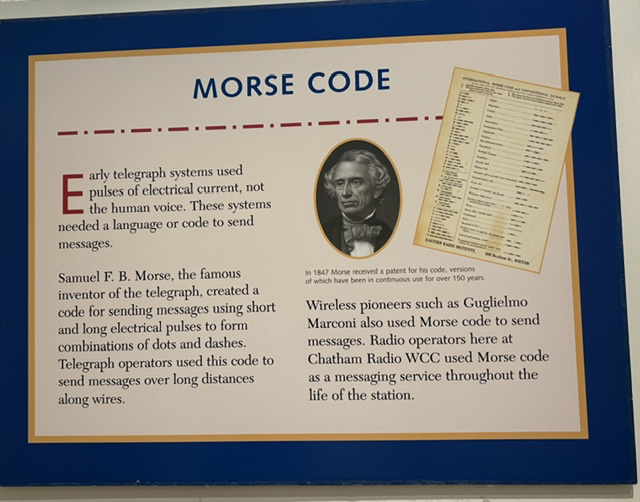
Morse and his associates created a system in which combinations of dots and dashes represented letters, numbers and punctuation. Telegraph operators used a key to send the signals along wires. A trained operator at the receiving end listened to or recorded the pattern and translated it back into words.
The development of wireless communication allowed Morse code to travel through the air rather than over a physical wire. Guglielmo Marconi and other wireless pioneers adapted the code for radio transmission, making it possible to communicate with ships at sea and with distant stations that could not be reached by conventional telegraph lines.
Chatham Radio/WCC relied upon Morse code throughout its years of maritime service. Skilled operators listened for signals from ships around the world, recorded the messages and forwarded them to their destinations. Weather reports, navigational information, business communications and personal messages all passed through the station as carefully transmitted patterns of dots and dashes.
Morse code provided a common language between ships and coastal stations. For much of the 20th century, its distinctive rhythm connected mariners at sea with people and services on shore.

Read More From Nancy
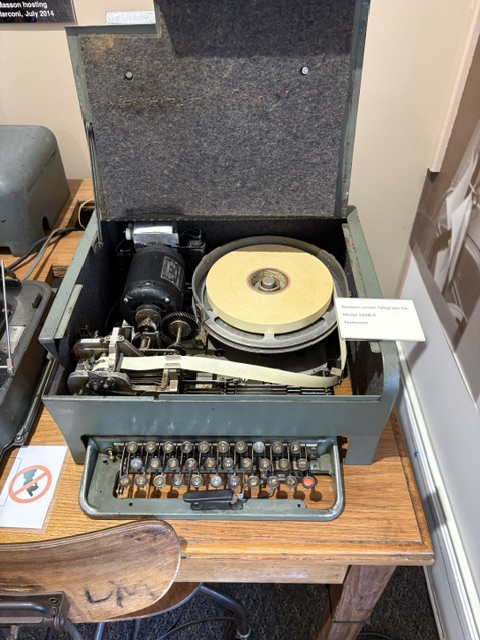
From Telegraph to Teletype
The development of telegraphy transformed long-distance communication. Instead of waiting days or weeks for a written message to travel by ship, train or horseback, information could be transmitted across wires almost instantly. In 1844, Samuel Morse publicly demonstrated an electric telegraph connection between Washington, D.C., and Baltimore. Messages were translated into patterns of dots and […]
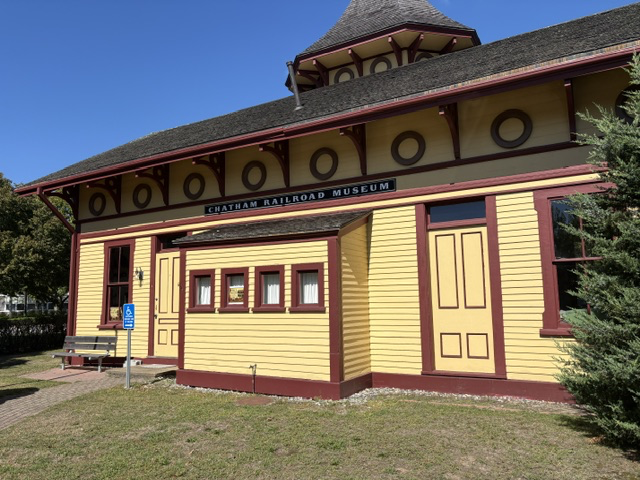
Chatham Railroad Museum
For much of the nineteenth century, Chatham’s location at the southeastern end of Cape Cod made travel and commerce difficult. Residents depended upon coastal vessels, horse-drawn transportation and long overland journeys to reach other communities. Although railroads began serving other parts of Cape Cod earlier in the century, Chatham waited decades for a direct connection. […]
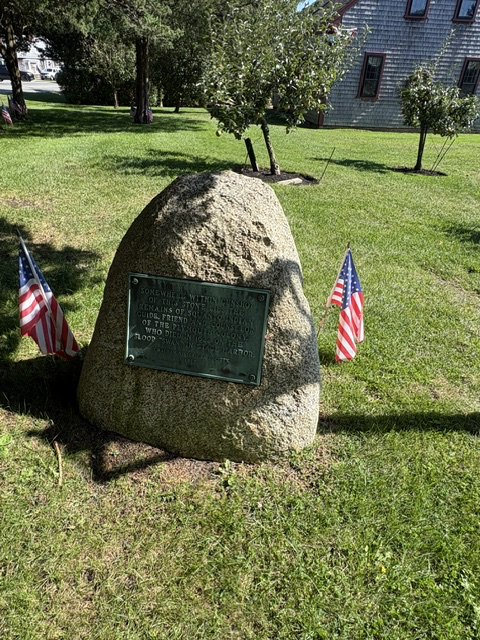
Tisquantum (Squanto) Memorial
Tisquantum, better known as Squanto, is most often remembered as the Native American who helped the English settlers at Plymouth survive their first difficult years. His complete story, however, is far more complicated. It is a story of kidnapping, enslavement, survival, cultural displacement and an extraordinary ability to move between two very different worlds. Tisquantum […]

