Jaffa Clock Tower
The Jaffa Clock Tower stands at the northern end of Yefet Street, near the historic entrance to the old city. Rising above a busy square, the limestone tower recalls a period when Jaffa was developing from an ancient fortified port into a modern commercial center.
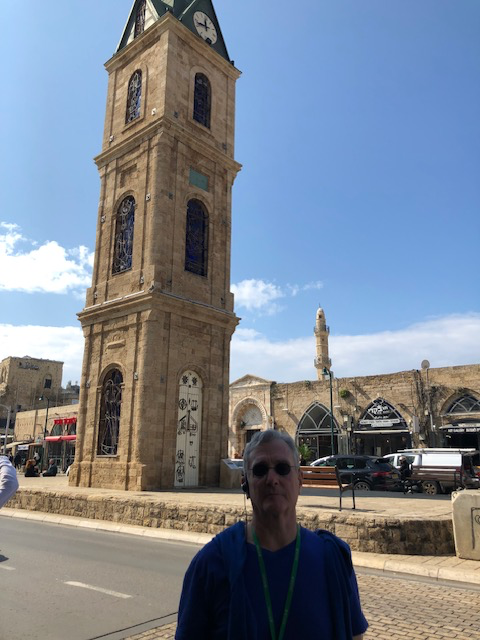
Jaffa had served as an important Mediterranean port for centuries. During the late nineteenth century, its population and economy expanded as pilgrims, merchants and travelers passed through the city. The export of citrus fruit brought international trade, while new roads, steamship connections and the Jaffa–Jerusalem railway linked the port with communities farther inland.
The clock tower was constructed during this period of rapid change. Its cornerstone was laid in 1900, and construction was completed in 1903. The project commemorated the twenty-fifth anniversary of the reign of Ottoman Sultan Abdul Hamid II, who had ascended the throne in 1876.
More than one hundred clock towers were built throughout the Ottoman Empire in recognition of the sultan’s silver jubilee. The Jaffa tower was one of several constructed in Ottoman Palestine. These towers honored the ruler, but they also represented an increasingly organized and modern approach to civic life. Public clocks provided a common standard of time for government offices, transportation, businesses and residents.
The Jaffa project was initiated by Joseph Bey Moyal, a prominent local Jewish businessman. Its construction was financed through contributions from Jaffa’s diverse population, including Arab Muslims, Christians, Jews, Armenians and Maronites. The tower therefore emerged not only as an imperial monument but also as a civic structure supported by the communities that lived and worked around it.
Its location was particularly important. The square outside Jaffa’s old walls had become the center of government and commerce. Municipal offices, markets, transportation services, a post office and other public buildings operated nearby. Before the clock tower was constructed, many residents depended on bells from religious institutions to measure the day. The new public clock allowed merchants, travelers and government employees to organize their activities according to a shared measure of time.
The tower was built of local limestone and designed with clock faces visible from different approaches to the square. Its tall, narrow form combined Ottoman and European architectural influences. Arched windows, decorative stonework and the roof rising above the clocks distinguished it from the lower buildings surrounding it.
During the decades that followed, Jaffa passed from Ottoman administration to British control and then became part of the modern State of Israel. The neighborhoods around the tower changed substantially, but Clock Square remained an important intersection between the old city, the port and the expanding urban area.
The Jaffa Clock Tower preserves the memory of the city at the beginning of the twentieth century. It represents Ottoman authority, local civic cooperation and the modernization of daily life within one of the region’s oldest port cities. More than a century after its construction, it continues to mark the historic entrance to Jaffa and the center of the square that developed around it.

Read More From Nancy
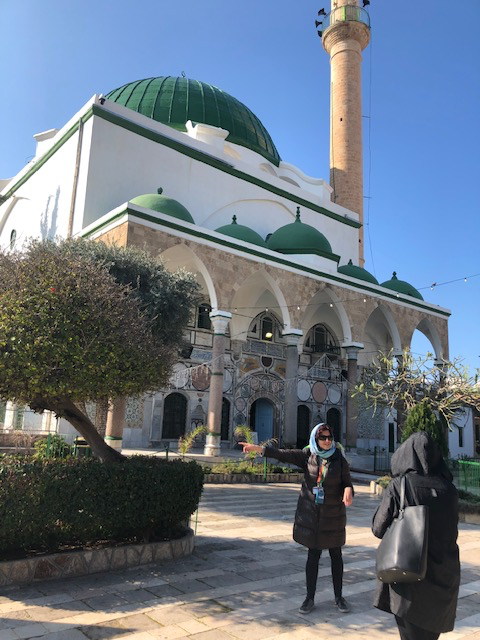
The Al-Jazzar Mosque
During our tour of the Old City of Acre, we visited the Al-Jazzar Mosque, one of the city’s most prominent landmarks. Its large green dome and tall minaret rise above Acre’s walls and tightly clustered buildings, making the mosque an unmistakable part of the city’s skyline. The mosque was constructed in 1781 by Ahmad Pasha […]
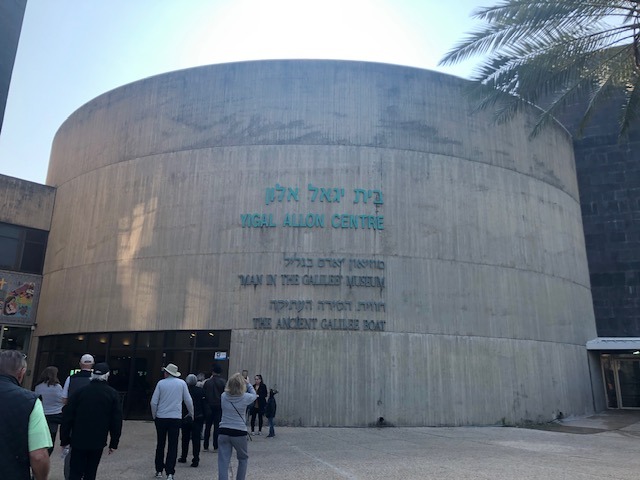
The Yigal Allon Centre
On the shore of the Sea of Galilee, the Yigal Allon Centre brings together regional history, personal remembrance, and education. Established in 1986, it houses the Museum of “Man in the Galilee,” which explores the lives of people who have settled, worked, and built communities in this landscape across generations. The centre is named for […]
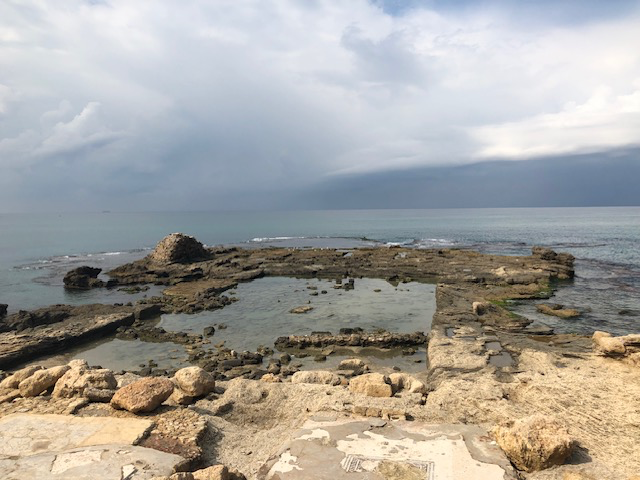
Herod’s Promontory Palace
On our visit to Caesarea, we walked among the remains of an ancient city built along the Mediterranean Sea. The setting alone was striking, with the ruins extending toward the water and waves breaking against the exposed stone. One of the most intriguing places we encountered was the remains of a large rectangular pool surrounded […]

