Inside the Cathedral of Saint Mary
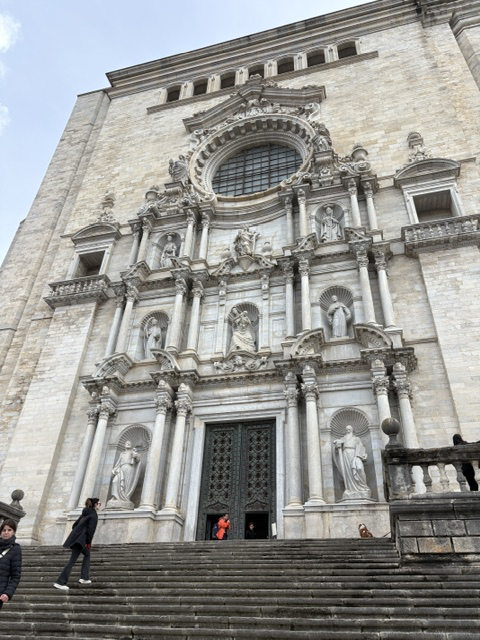
Stepping inside the Cathedral of Saint Mary of Girona reveals a space very different from its elaborately decorated Baroque exterior. The façade is filled with statues, columns and carved ornaments, but the interior is dominated by the strength and simplicity of stone. Massive piers rise into pointed arches, ribbed vaults stretch across the ceiling and tall stained-glass windows introduce bands of color into the otherwise restrained Gothic space.
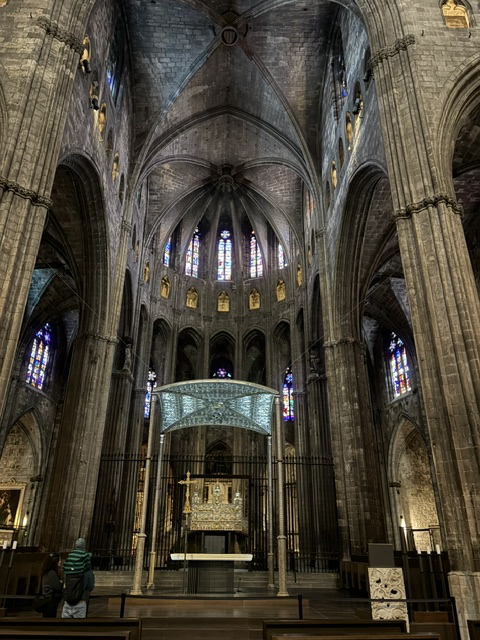
The cathedral developed over many centuries. An earlier Romanesque church was consecrated here in 1038, and portions of that building remain elsewhere within the cathedral complex. Construction of a new Gothic sanctuary began in 1312. The original plan called for a traditional church with three naves, but as work progressed, cathedral leaders began considering a far more ambitious design: continuing the building as one enormous, undivided nave.
The proposal created decades of debate. Spanning such a wide interior with a stone vault presented considerable structural risks, and master builders were consulted about whether the plan could succeed. In 1417, Bishop Dalmau de Mur and the cathedral chapter approved the single-nave design associated with master builder Guillem Bofill.
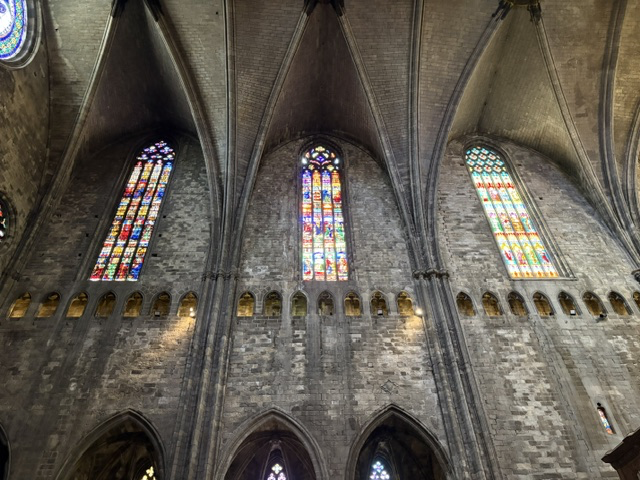
The completed nave measures nearly twenty-three meters across and rises approximately thirty-four meters above the floor. It is recognized as the widest Gothic nave in the world. Rather than dividing the interior with rows of columns, the builders created an uninterrupted central space covered by enormous ribbed vaults. The weight and outward pressure of those vaults are transferred through the stone piers and exterior buttresses, while chapels occupy the spaces between the supports.
The absence of interior columns allows the full width of the cathedral to be experienced at once. The eye can travel freely across the nave and forward toward the sanctuary. A narrow triforium, formed by a repeated series of small pointed openings, runs along the walls beneath the upper windows. Above it, the stained glass draws light into the interior and softens the heavy gray stone with areas of blue, red, gold and green.
The stained-glass windows were created and replaced at different times in the cathedral’s history. Some of the earliest references to stained glass here date to the 14th century, while later generations continued to add new windows. Their position high above the floor directs attention toward the vaults and changes the appearance of the stone as daylight moves across the building.
At the eastern end, the nave narrows visually toward the sanctuary and the older Gothic apse. Here the architecture becomes more intricate, with clustered columns, pointed arches and radiating chapels surrounding the central altar. The sanctuary preserves objects connected to the cathedral’s long history, including an 11th-century marble altar and episcopal chair, as well as an elaborate 14th-century altarpiece and baldachin fashioned with silver and gold.
The interior of the Cathedral of Saint Mary is therefore more than a large medieval room. It records centuries of construction, changing artistic styles and a remarkable act of architectural confidence. The decision made in 1417 transformed the original plan and created a unified Gothic space unlike any other—one whose breadth, height and light can only be fully understood by standing beneath its immense stone vaults.
Read More From Nancy
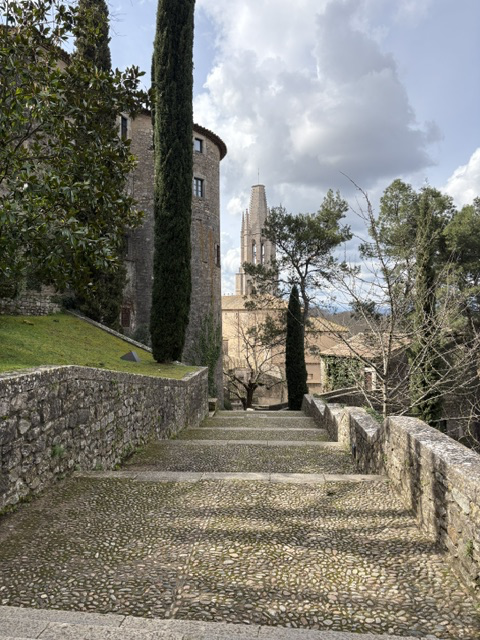
Passeig Arqueològic
The Passeig Arqueològic follows the northeastern edge of Girona’s historic center, winding among sections of the city’s ancient walls, medieval towers and religious buildings. Stone stairways, terraces and pathways pass beneath tall cypress trees, creating a peaceful transition between the densely built Old Quarter and the greener landscape of the Galligants Valley. Although the walkway […]
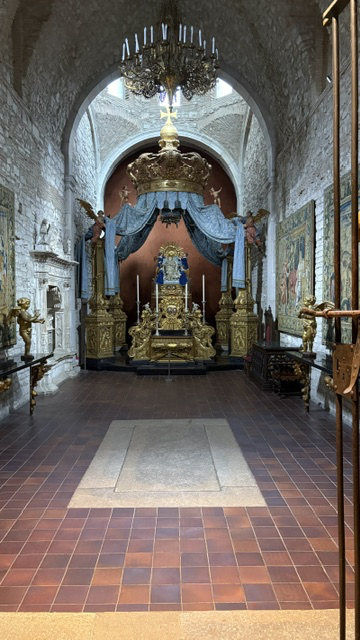
The Bed of the Virgin
As we explored the side chapels of Girona Cathedral, the contrast between the dark stone walls and this richly gilded installation immediately caught our attention. Set within the Chapel of Hope, it appeared almost like a stage, with blue fabric drawn back beneath an enormous crown to reveal the figure at its center. Known as […]
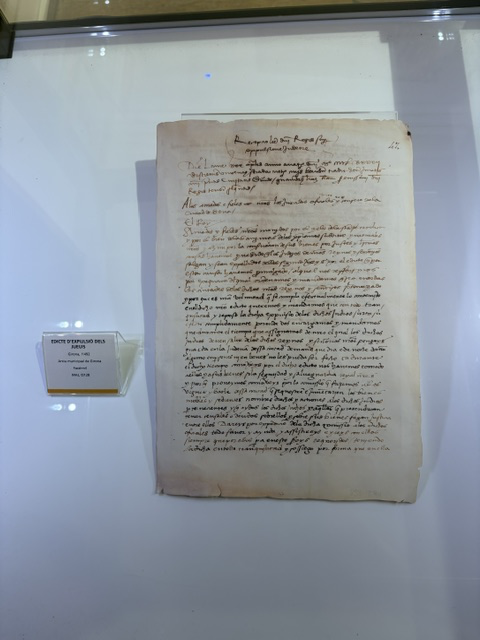
The 1492 Edict of Expulsion
This document records the order that brought Girona’s centuries-old Jewish community to an end. Issued by Ferdinand and Isabella on March 31, 1492, the Edict of Expulsion required practicing Jews to leave the kingdoms under their rule unless they accepted baptism and converted to Christianity. The edict was closely connected to the Spanish Inquisition and […]

