The Matthew Bowen Homestead / The Inn at Woodstock Hill
The house now known as the Inn at Woodstock Hill was constructed in 1816 by William Bowen and later became known as the Matthew Bowen Homestead. Located on Plaine Hill Road, it was part of a working farm owned by generations of the Bowen family, one of Woodstock’s most prominent early families.
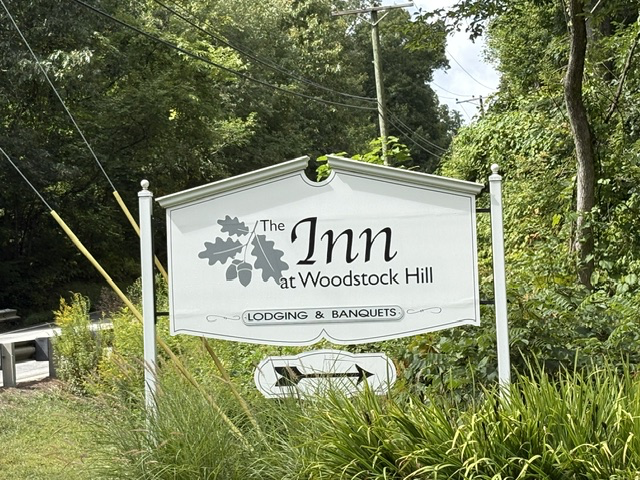
The original house was a five-bay Federal-style farmhouse. As the needs and tastes of its residents changed, the property was enlarged and updated. During the 1880s, Henry Chandler Bowen, owner of nearby Roseland Cottage, oversaw an extensive expansion that included Victorian porches and a turret. Many of these additions were removed during a major renovation in 1929, when the house was expanded to six bays and given much of its present Federal Revival appearance.
The property developed into a substantial farm complex that included barns, a carriage house, and other agricultural buildings. It remained within the Bowen family and continued to be used as farmland until 1982, preserving a connection to nearly two centuries of agricultural life in Woodstock.
The homestead was added to the National Register of Historic Places in 1987 as a well-preserved example of a Federal-period farmstead. Its later conversion into the Inn at Woodstock Hill gave the historic house a new purpose while retaining its traditional character. What began as a family farmhouse now welcomes visitors to the same rural landscape that generations of the Bowen family once called home.
Read More From Nancy
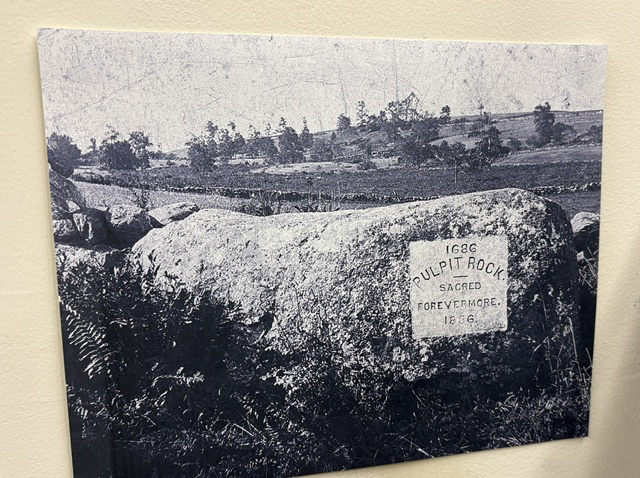
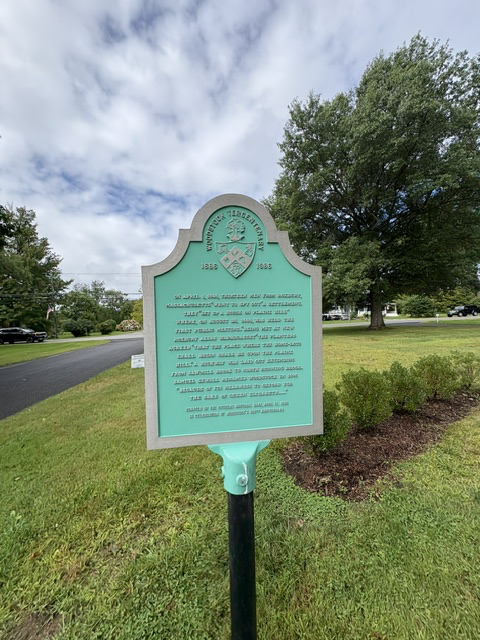
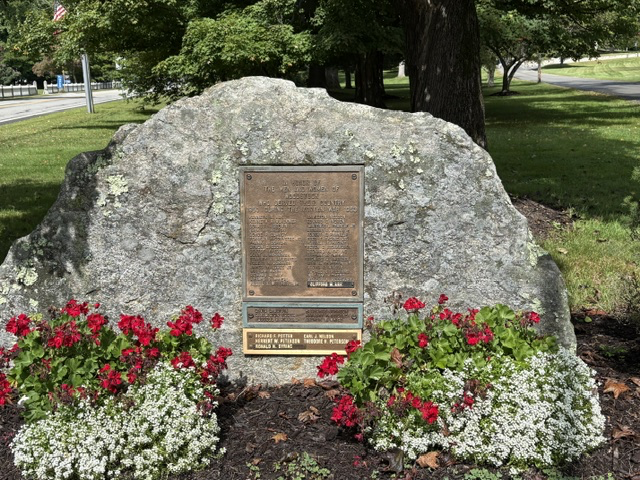
Pulpit Rock
When Woodstock’s first English settlers arrived from Roxbury, Massachusetts, in 1686, they entered a landscape without churches, meetinghouses, or other public buildings. Until a meetinghouse could be constructed, they gathered for Sunday worship around a large glacial boulder that became known as Pulpit Rock. In this open-air sanctuary, the rock served as a natural focal […]
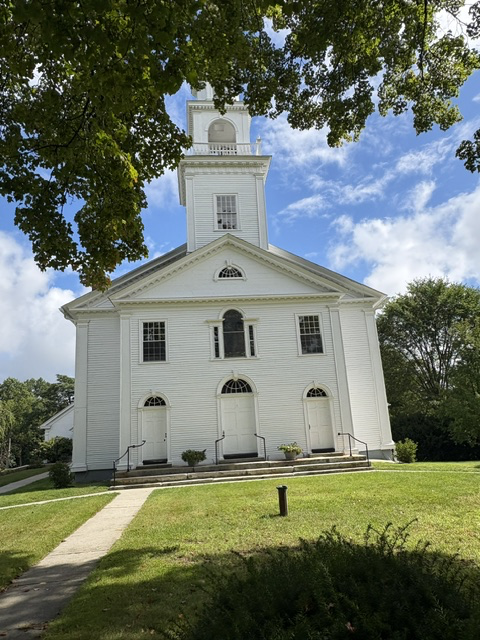
First Congregational Church of Woodstock
The First Congregational Church of Woodstock traces its beginnings to 1690, only a few years after settlers from Roxbury, Massachusetts, established the community they initially called New Roxbury. In early New England towns, the meetinghouse stood at the center of both religious and civic life. It was where residents worshiped, discussed community matters, and marked […]
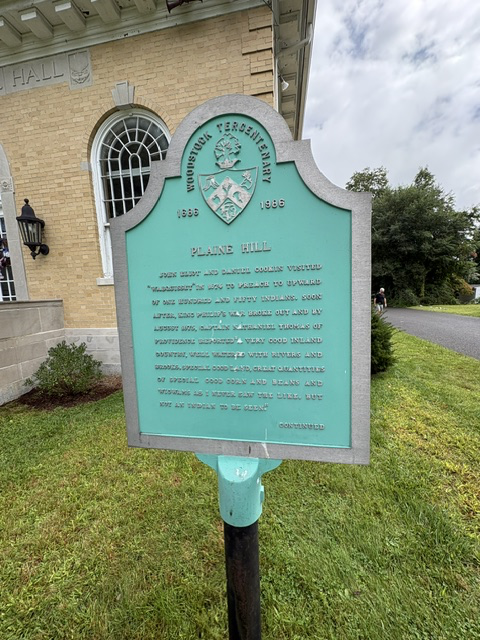
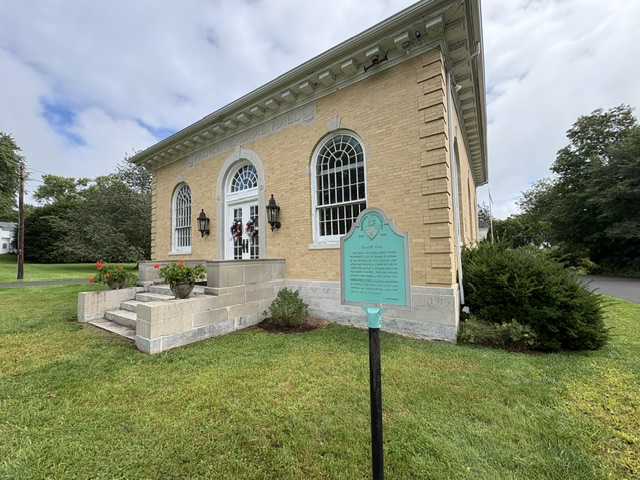
Plaine Hill
This marker preserves the name Plaine Hill, once used for the elevated village center now known as Woodstock Hill. Its inscription describes an established inland community with numerous buildings, substantial homes, productive land, orchards, and livestock. The words offer a glimpse of how earlier observers viewed Woodstock as a prosperous rural village shaped by agriculture […]

