Roseland Cottage
Roseland Cottage was constructed in 1846 as the summer home of Henry Chandler Bowen and his family. Bowen was born in Woodstock but built his career in New York City as a successful businessman, newspaper publisher, and philanthropist. Although he spent much of his adult life in New York, he maintained a strong attachment to his hometown and invested generously in Woodstock’s schools, public spaces, and community life.
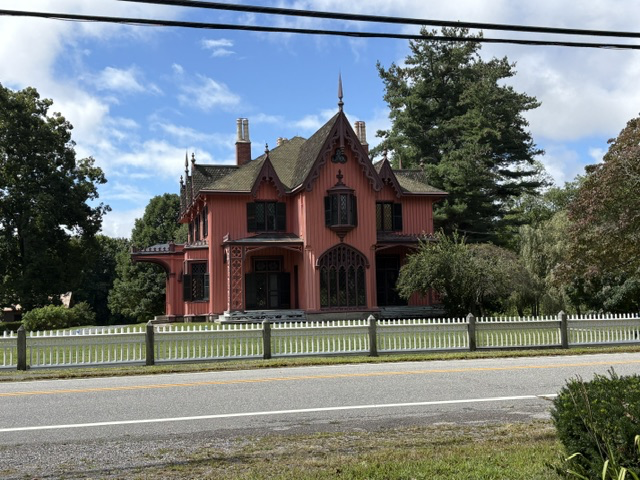
Bowen commissioned architect Joseph C. Wells to design Roseland Cottage in the Gothic Revival style. Its steep pointed gables, decorative bargeboards, tall chimneys, diamond-paned windows, and board-and-batten exterior distinguish it from the more traditional homes surrounding Woodstock Green. Its coral-pink color has made it locally familiar as the Pink House.
The property was designed as more than a private residence. Its formal garden contains twenty-one flowerbeds arranged within borders of boxwood, following a pattern established during the nineteenth century. The carriage barn contains what is recognized as the nation’s oldest surviving indoor bowling alley, where Bowen’s family and guests could enjoy a popular form of recreation.
Beginning in 1870, Bowen hosted elaborate Fourth of July celebrations that brought thousands of visitors to Woodstock. The programs included speeches, music, fireworks, and discussions of national issues. Presidents Ulysses S. Grant, Rutherford B. Hayes, Benjamin Harrison, and William McKinley were among the prominent guests welcomed by Bowen. Other visitors included Henry Ward Beecher, Julia Ward Howe, Oliver Wendell Holmes Jr., and John C. Frémont.
Roseland Cottage remained in the Bowen family until it was acquired by Historic New England in 1970. Much of its original furniture, interior decoration, and family belongings remains in place, allowing the house to tell the story of both family life and public influence during the nineteenth century. Added to the National Register of Historic Places in 1977 and designated a National Historic Landmark in 1992, Roseland Cottage preserves the world created by one of Woodstock’s most influential families.
Read More From Nancy
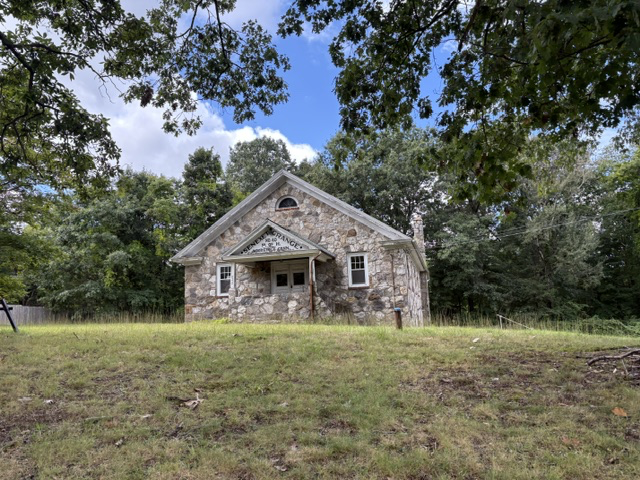
Senexet Grange No. 40
Senexet Grange No. 40 was established as a local chapter of the Order of Patrons of Husbandry, commonly known as the Grange. Founded nationally in 1867, the organization was created to support farmers and their families through education, cooperation, fellowship, and collective action. The letters “P. of H.” displayed on the building identify its connection […]
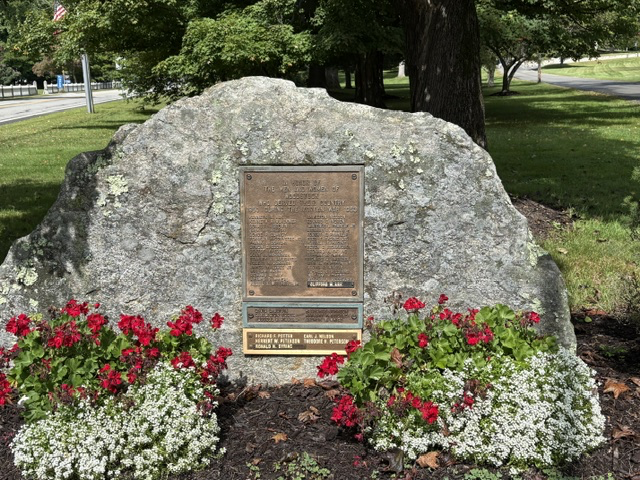
Woodstock Veterans Memorial
At the intersection of Route 169 and Academy Road, a large fieldstone bears the names of Woodstock residents who served their country during the twentieth century. The principal bronze plaque honors the men and women of the town who served during the Second World War from 1941 to 1945. The names represent local people who […]
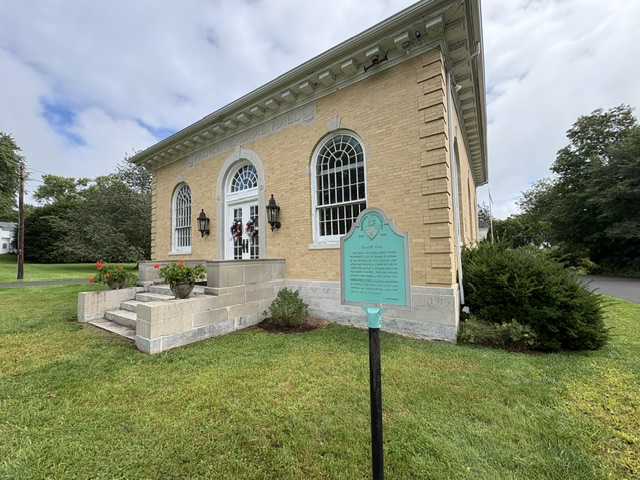
Palmer Memorial Hall
Standing prominently on Woodstock Hill, Palmer Memorial Hall is distinguished by its pale yellow brick, symmetrical design, and tall arched windows. Constructed at a time when most buildings in Woodstock were made of wood or darker brick, its unusual color and Classical Revival architecture made it an immediate landmark within the village. The story of […]

