Inside the Saint John City Market
While visiting Saint John, we stopped at the City Market for lunch. What began as a place to find something to eat also allowed us to participate in a tradition that reaches back to the city’s founding. Saint John’s 1785 royal charter authorized the operation of public markets, and vendors have gathered inside the present building since it opened in 1876.
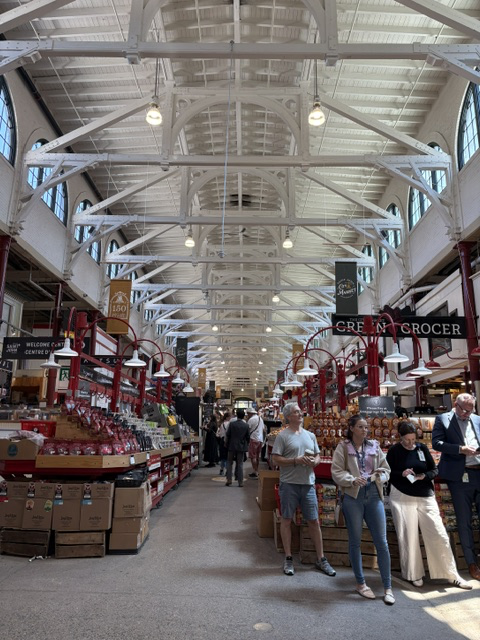
The market’s most striking feature is overhead. Its roof is supported by twenty enormous hand-hewn wooden trusses, fitted together with pegs, dovetailed joints, cross-bracing, and curved wooden supports. The framework was assembled in much the same manner as a wooden ship’s hull but turned upside down to form a roof. Looking along the central aisle, the repeating arches create the impression of standing beneath the keel of an enormous vessel.
The design seems especially appropriate in Saint John. During the nineteenth century, the city was one of the world’s leading wooden shipbuilding centers. The roof reflects the knowledge of local craftsmen who understood how to create a large, open structure from heavy timbers joined together without modern construction materials.
The market also follows the natural slope of the land. Its floor descends approximately ten feet between the Charlotte Street and Germain Street entrances. The iron columns supporting the roof therefore range from about twenty to thirty feet in height. Rather than leveling the site, the builders allowed the market to follow the hill beneath it.
For much of its history, the market operated according to rules enforced by the Market Clerk and an institution known as the Pie Powder Court. Its unusual name came from a Norman French expression referring to the “dusty feet” of traveling merchants. The court settled disputes, checked weights, imposed fines for inferior produce, and could expel merchants who violated market regulations.
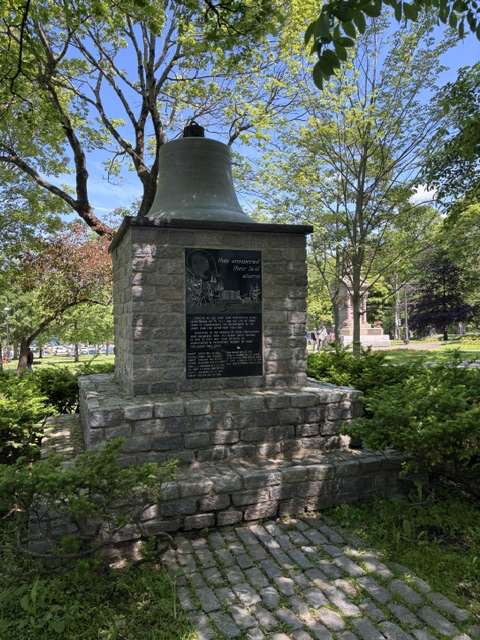
A bell still rings to announce the opening and closing of each market day. At either end of the building are wrought-iron gates made by local craftsmen and installed in 1880. Together, the bell and gates preserve the daily rituals that once governed when trading could begin and when the market was secured for the night.
Today, the long aisle remains filled with food, produce, crafts, and conversation. Stopping here for lunch allowed us to do more than enter a historic building. We walked beneath a roof constructed like a ship, across a floor that follows the slope of the city, and through a marketplace where people have gathered for nearly 150 years.
Read More From Nancy
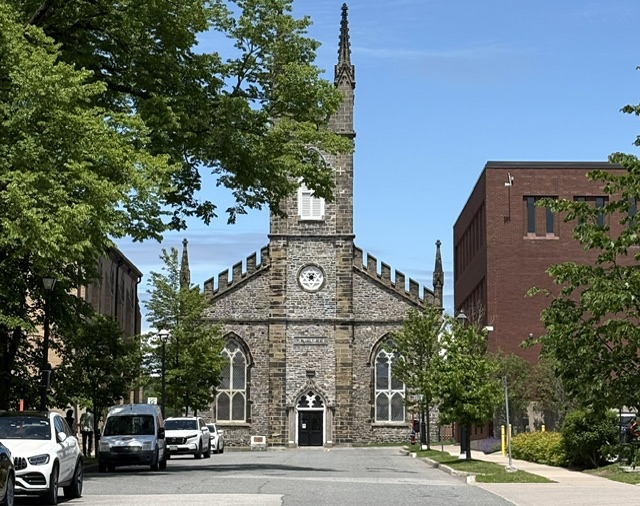
The Stone Church
At the end of Wellington Row, the narrow spire of St. John’s Anglican Church rises above one of Saint John’s oldest surviving places of worship. Commonly called the Stone Church, it has stood on Carleton Street for two centuries, witnessing the city’s growth, its devastating fires, and the many changes that have reshaped the surrounding […]
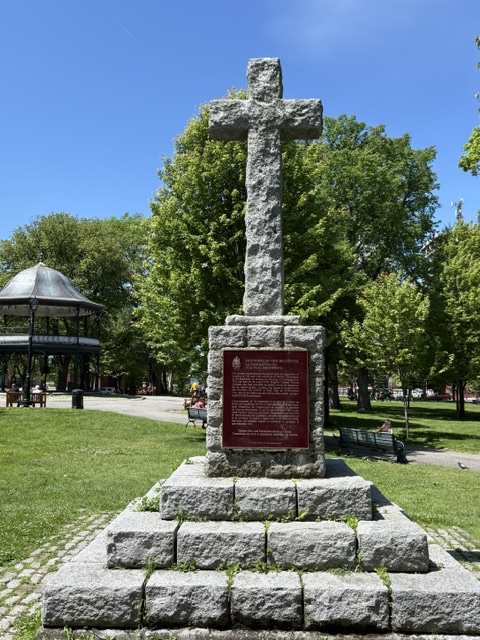
Founding of New Brunswick Monument
A tall granite cross in Saint John’s King’s Square marks the political events that created the Province of New Brunswick. Its story begins with the conclusion of the American Revolution, when thousands of people who had remained loyal to the British Crown left the newly independent United States and traveled north. In 1783, approximately 14,000 […]
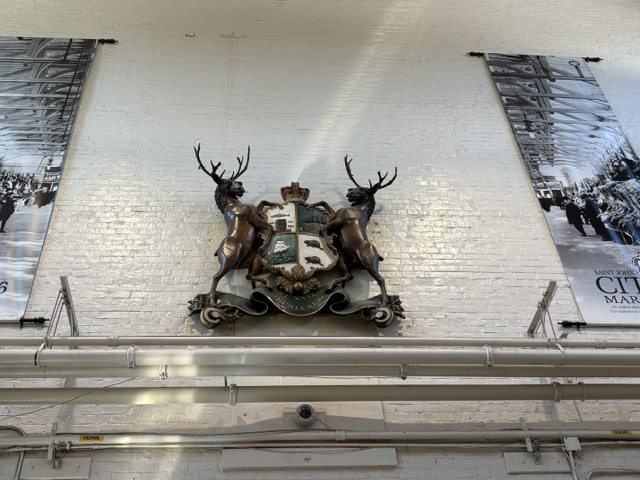
Saint John Coat of Arms
Mounted high upon the wall inside the Saint John City Market is the city’s historic coat of arms. Surrounded by two antlered moose and topped by a crown, the emblem brings together symbols representing the natural resources, maritime industries, and British institutions that shaped Saint John. The shield is divided into sections containing images associated […]

