Loyalist House
Surrounded by the larger buildings of modern Saint John, Loyalist House appears almost out of place. Its white wooden walls, green shutters, and balanced rows of windows preserve the appearance of an earlier city and one that largely disappeared in the Great Fire of 1877.
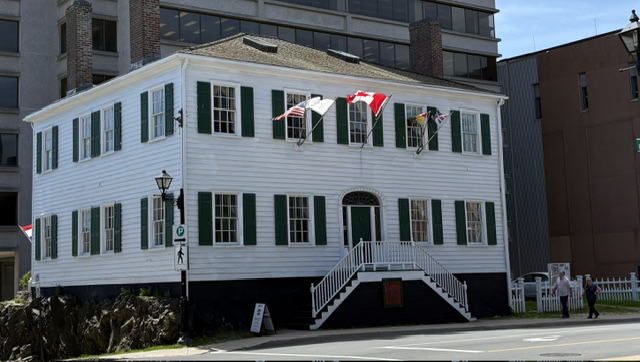
The story of the house begins with Thomas and Amy Merritt, who left Rye, New York, with their family in 1783. Thomas had opposed the American Revolution and signed a declaration supporting the British government. After the British defeat, the Merritts joined thousands of other Loyalists who traveled north and established new lives around the Saint John River.
Their son David Daniel Merritt became a successful Saint John merchant and began constructing this family residence around 1810. Work continued for several years, possibly delayed by the War of 1812, before the house was completed in 1817. Its symmetrical design, central doorway, semicircular fanlight, and orderly windows reflect the New England Federal style familiar to families arriving from the former American colonies.
When the Great Fire swept through Saint John in 1877, the wooden house stood directly in danger. According to the story preserved by New Brunswick tourism authorities, servants protected it by covering and surrounding it with wet towels. Their efforts succeeded, and the house survived while more than 1,600 buildings across the city were destroyed.
The Merritt family and their descendants continued living here for nearly 150 years. Five generations occupied the house as the quiet edge of Saint John developed into part of the busy Uptown district. The elevated entrance and exposed foundation reveal another change: the surrounding streets were eventually lowered to make the steep climb easier for horses pulling heavily loaded wagons.
The New Brunswick Historical Society acquired the property in 1959, and it opened as a museum in 1961. Now designated a National Historic Site of Canada, Loyalist House preserves far more than the residence of one prosperous family. It connects Saint John’s Loyalist beginnings with the story of the Great Fire and provides a rare glimpse of the wooden city that existed before much of it was lost.
Read More From Nancy
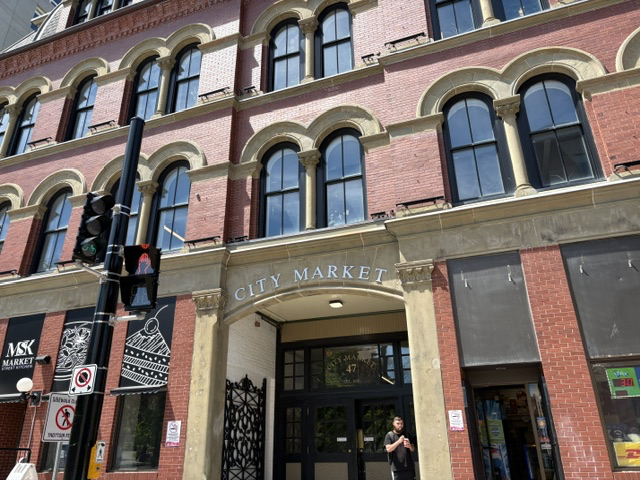
Saint John City Market
One year after the Saint John City Market opened, fire swept through the city. The Great Fire of 1877 destroyed hundreds of acres, leaving much of Saint John in ruins. Yet the new market, protected by its solid brick-and-stone construction, survived. Its exterior therefore represents more than nineteenth-century architecture. It is one of the buildings […]
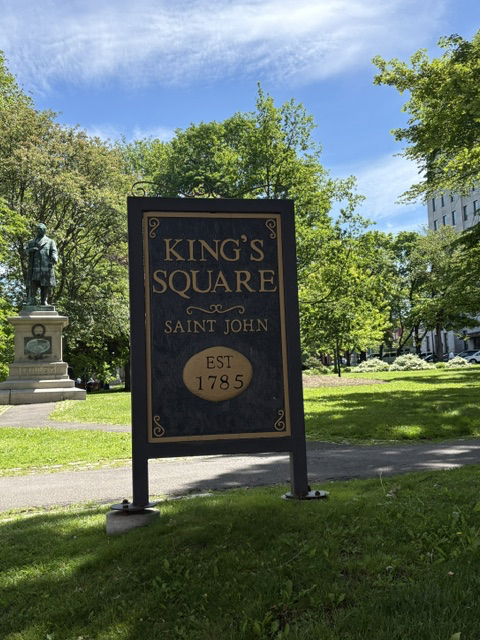
King’s Square
At the center of Uptown Saint John is King’s Square, a public space that has served the city since its earliest years. Named for King George III, the land was granted to Saint John through the royal charter that incorporated the city in 1785. Its history therefore began alongside that of Saint John itself, which […]
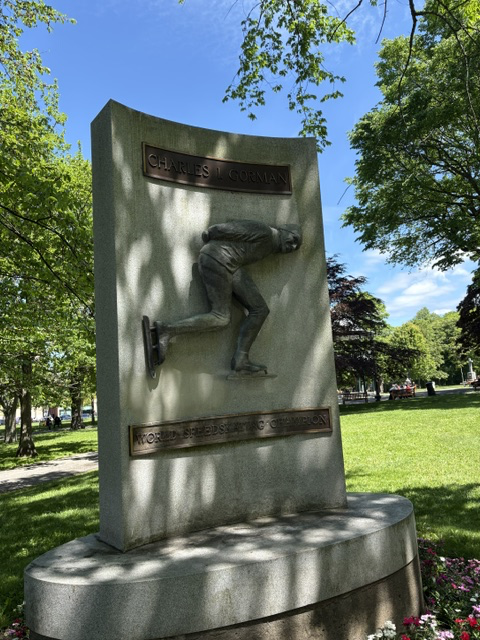
Charles Gorman Memorial
The figure on this monument is not shown standing triumphantly on a podium. Instead, Charles Gorman is captured at the beginning of a race with his body bent forward, one skate braced behind him, and every muscle prepared for the explosive first stride that made him one of the fastest skaters of his generation. Born […]

