Charles Gorman Memorial
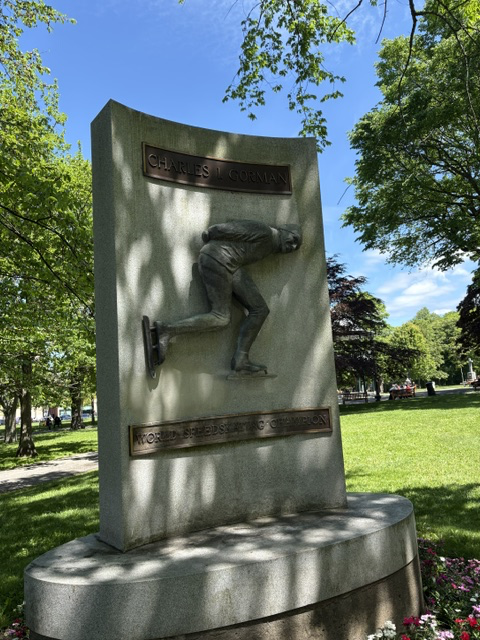
The figure on this monument is not shown standing triumphantly on a podium. Instead, Charles Gorman is captured at the beginning of a race with his body bent forward, one skate braced behind him, and every muscle prepared for the explosive first stride that made him one of the fastest skaters of his generation.
Born in Saint John in 1897, Gorman won his first Maritime speed-skating championship when he was only fifteen. His athletic career was interrupted by the First World War, during which he served as a machine gunner with the Canadian Expeditionary Force. A shrapnel wound severely injured one of his legs, and doctors reportedly believed that he would never compete again.
Gorman proved otherwise. After returning home, he excelled in both baseball and speed skating. He was reportedly offered an opportunity to play for the New York Yankees but chose to concentrate on skating. During the 1920s, he won Canadian, American, North American, and world championships, earning the nicknames “the Human Dynamo” and “the Man with the Million-Dollar Legs”.
He represented Canada at the first Winter Olympic Games in Chamonix in 1924 and competed again at St. Moritz in 1928. Olympic speed skating followed the European format of racing in pairs against the clock, while Gorman was accustomed to the more physical North American style in which several skaters raced together. Although he did not win an Olympic medal, he remained one of the dominant North American skaters of his era.
When Gorman retired in 1928, he held seven recognized world records and was undefeated in championship competition. He returned to Saint John, operated a chain of gasoline stations, and remained a celebrated local figure until his death in 1940 at the age of forty-two. Thousands reportedly lined the city’s streets during his funeral procession.
Created by Acadian sculptor Claude Roussel, the memorial in King’s Square preserves Gorman at the instant before motion begins. It honors not only a world champion but also a Saint John athlete who overcame a wartime injury to compete on the international stage and become New Brunswick’s first Winter Olympian.
Read More From Nancy
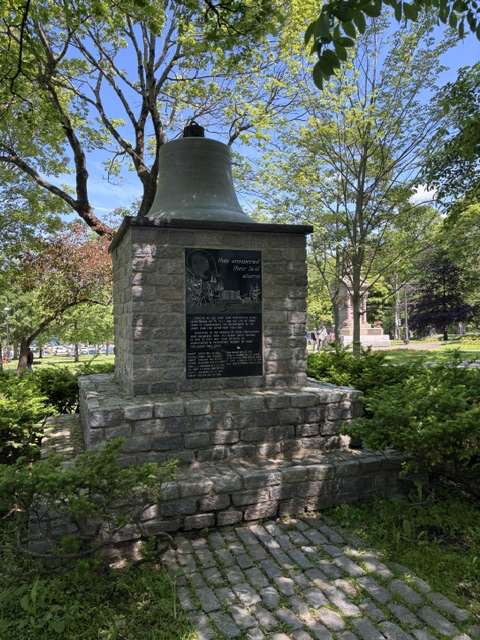
Last Alarm Bell Monument
A large bronze bell stands silently in King’s Square as a memorial to Saint John firefighters who died while serving their community. Known as the Last Alarm Bell Monument, it was erected in 1986 to commemorate the two-hundredth anniversary of the Saint John Fire Department. The department was established in 1786, only one year after […]
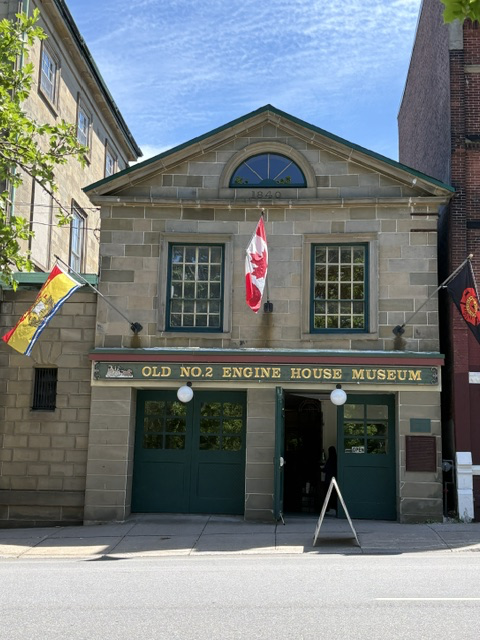
Engine House Museum
Before fire engines had motors, alarms were transmitted electronically, or firefighters were employed by the city, Saint John relied upon volunteer companies to respond when flames threatened the community. One of those companies operated from the No. 2 Engine House at 24 Sydney Street, where volunteers once pulled a hand-operated fire engine through the wide […]
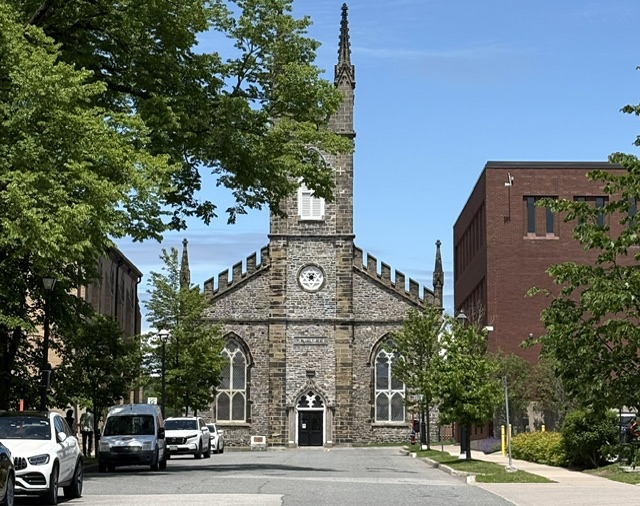
The Stone Church
At the end of Wellington Row, the narrow spire of St. John’s Anglican Church rises above one of Saint John’s oldest surviving places of worship. Commonly called the Stone Church, it has stood on Carleton Street for two centuries, witnessing the city’s growth, its devastating fires, and the many changes that have reshaped the surrounding […]

