Wild Bill Hickok’s Last Poker Game
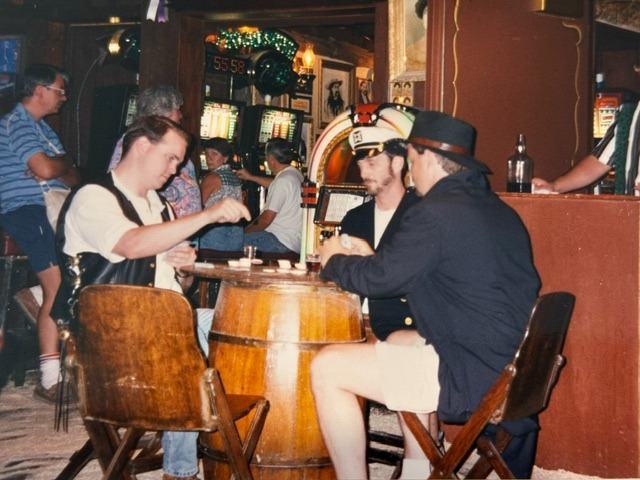
Marty took a seat at the poker table in Deadwood, joining costumed performers in a staged recreation of one of the town’s most famous stories. The scene recalled the final card game of Wild Bill Hickok, whose death became inseparable from Deadwood’s history.
James Butler “Wild Bill” Hickok arrived in Deadwood in July 1876, already known for his exploits as a frontier lawman and gunfighter. He spent only a few weeks in the town, but his brief stay would become its most remembered historical episode.
On August 2, 1876, Hickok was playing poker at Nuttal & Mann’s Saloon No. 10 when Jack McCall approached from behind and shot him in the back of the head. A man whose reputation rested partly on his ability to handle dangerous confrontations was killed while seated at a card table.
According to the story handed down about that game, Hickok held two pairs: black aces and black eights. Those cards became known as the “Dead Man’s Hand.” The precise hand belongs partly to the legend surrounding his death, but the phrase remains one of the most recognizable connections between poker and the American West.
McCall’s first trial took place the following day before an improvised miners’ court in Deadwood, which acquitted him. That proceeding had no legal jurisdiction. He was subsequently arrested, tried by territorial authorities, convicted, and hanged in Yankton in 1877. His two trials reveal the uncertain administration of justice in the young mining settlement.
The original saloon building no longer survives, and the later establishment known as Saloon No. 10 occupies a different location. Reenactments preserve the story through performance, inviting visitors to witness, or, as Marty did, participate in, a recreation of the poker game.
Behind the theatrical scene is a real event that shaped Deadwood’s identity. Hickok’s reputation brought him fame before he arrived; his death ensured that this town would remain part of his story.