What Does the Birth Process Have to Do With Development?
When we talk with parents about their baby’s development, we often begin with the birth story. Parents remember what happened, how they felt, and whether the delivery went as expected. That history gives us context.
The journey through birth can place considerable physical demands on a baby. During a vaginal delivery, the infant’s head and body must adapt to the shape of the birth canal. The bones of the newborn skull while flexible are connected by flexible tissues, called the dura. This allows the head to mold or change shape temporarily during delivery and accommodate rapid brain growth afterward.
Babies born by cesarean section experience a different physical transition.Where tension on their necks is increased during the process. Most infants adapt well to birth, and temporary head molding is common, particularly after vaginal delivery. Still, some newborns may have difficulty adapting to their birth experience and this can manifest as them having difficulty feeding, finding a comfortable position, or moving their head freely. These concerns deserve attention, regardless of how the baby was delivered.
As parents, we know how easy it is to revisit the birth and wonder whether something should have happened differently. We encourage families to approach that experience without blame. A difficult birth does not automatically mean that a child will have developmental problems. An uncomplicated delivery does not tell us everything about how a newborn is adapting, either.
For us, the next step is paying attention to the baby’s everyday experience.
Does your baby feed comfortably on both sides? Do they consistently turn their head in one direction? Are they comfortable in different holding positions? Do their arms and legs move freely? What changes are you noticing as the weeks pass?
These are practical questions that connect development to the moments you already share with your child. Feeding, changing, holding, and floor time all give you opportunities to become familiar with your baby’s movements and responses.
Through more than four decades of working with children and families, we have learned to value what parents notice. You may not have a clinical term for what you are seeing, but “she always looks this way” or “he seems uncomfortable in this position” is useful information to bring to your baby’s healthcare provider.
Understanding the birth process helps us appreciate the transition a newborn has experienced. Watching what follows helps us recognize their individual needs and support their continuing development. Drawing on more than seven decades of combined experience, we hope to share the insights and wisdom we’ve gained while exploring the touchstones and turning points that shape our lives.
Read More From Nancy

Your Baby’s Brain Is Just Beginning
A newborn arrives with an extraordinary capacity to learn and adapt. Although much of the basic structure of the brain is already present at birth, the connections between nerve cells are developing at an incredible rate. During the first two years, the brain undergoes tremendous growth and organization. Everyday experiences provide information that helps shape […]
Hands-on Learning
We hear a great deal about hands-on learning, but what does it look like for a child? In our family, it took different forms. Our daughter, Emily, set up her easel and studied a landscape as she painted or drew it. She learned by looking closely: noticing where the light fell, how colors changed, and […]
Movement and Reflexes
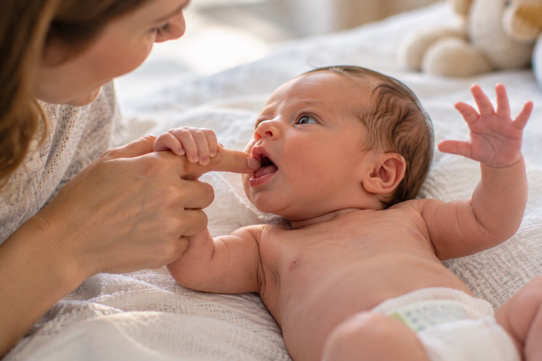
Babies are born with automatic responses called primitive reflexes. These early reflexes support important activities such as feeding, responding to touch, and reacting to sudden changes in position. They give us a glimpse into how the newborn nervous system functions before a baby has developed more intentional control of movement. You may recognize some of […]

