Weddings in a Time of War
Among my mother’s keepsakes is another wedding invitation from the years of World War II. This one is addressed not only to Mary Hannigan but also to Mrs. Hannigan, her mother. That small detail immediately paints a picture of my mother’s life in 1943. She was still living at home in Concord, New Hampshire, sharing in the life of her family and parish while the world was at war.
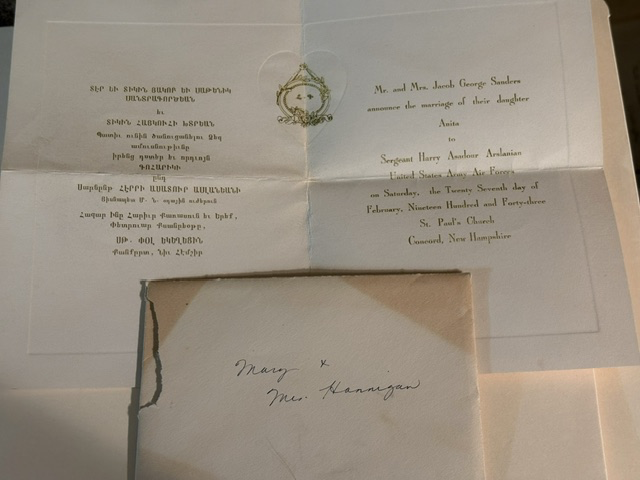
The invitation announces the marriage of Anita Sanders to Sergeant Harry Arakel Arslanian of the United States Army Air Forces on February 27, 1943, at St. Paul’s Church in Concord. The invitation is printed in both English and Armenian, reflecting the heritage of the bride’s family and reminding us that New England’s communities were enriched by families who had brought their traditions and faith from many parts of the world.
Like so many weddings during the war, this marriage joined a young woman with a man in military service. Across the country, thousands of couples were planning weddings around military schedules, uncertain futures, and the realities of a nation at war. Every leave was precious, and every wedding carried with it both joy and the knowledge that separation might soon follow.
This ceremony took place in St. Paul’s Church itself. Whether Sergeant Arslanian had sufficient leave to allow for a more traditional church wedding or whether circumstances were simply different, I cannot know. What both invitations reveal, however, is that life continued even during wartime. Families gathered, churches opened their doors, and young couples made lifelong commitments despite the uncertainty surrounding them.
I especially like that this invitation was addressed to both my mother and my grandmother. It reminds me that before she became Mary Watson, she was Mary Hannigan, a young woman surrounded by family, friends, and the close-knit Catholic community of Concord. She likely attended this wedding with her mother.
Today, this invitation is much more than a reminder of one wedding. It is a small window into everyday life on the home front, when communities celebrated hope during uncertainty and continued to believe that life, love, and family would endure beyond the war.
Read More From Nancy
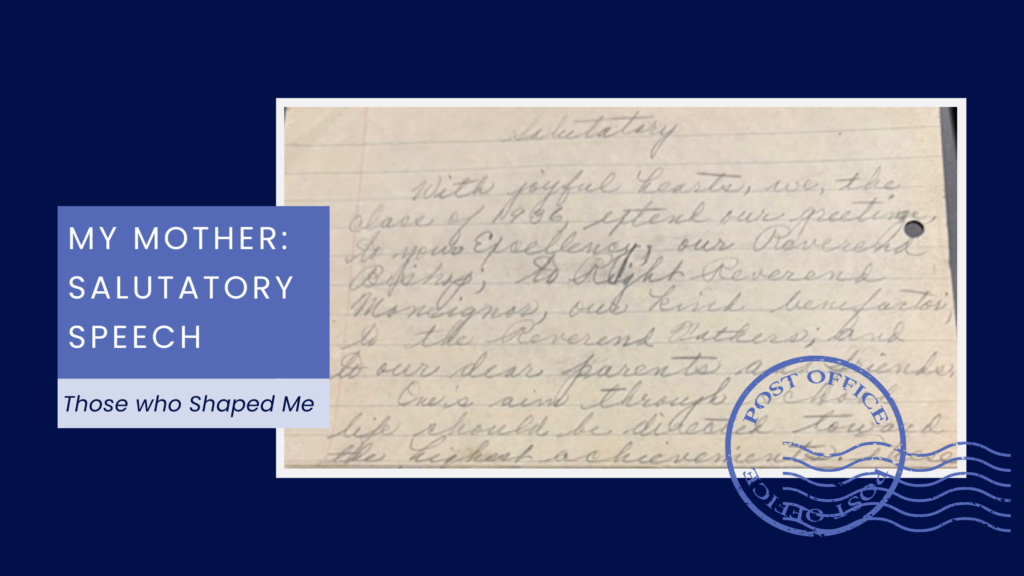
My Mother: Salutatory Speech
My mother graduated high school second in her class, earning the honor of delivering the salutatory address. She was just sixteen years old. As I explored the papers she left behind, I came across the beginning of that speech, written carefully in her own cursive, each word formed with intention, preserved across time on a page she once […]
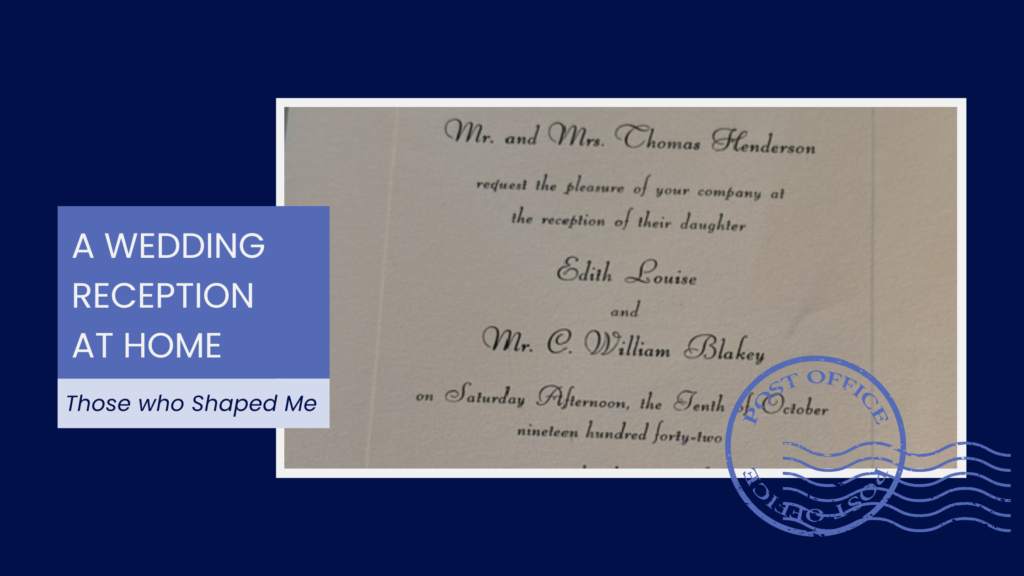
A Wedding Reception at Home
Another invitation my mother saved takes us to October 10, 1942, when Mr. and Mrs. Thomas Henderson invited guests to the wedding reception of their daughter, Edith Louise, and Mr. C. William Blakey. The reception was to begin at 12:30 in the afternoon at the Henderson family home at Seven Lake Street in West Concord, […]
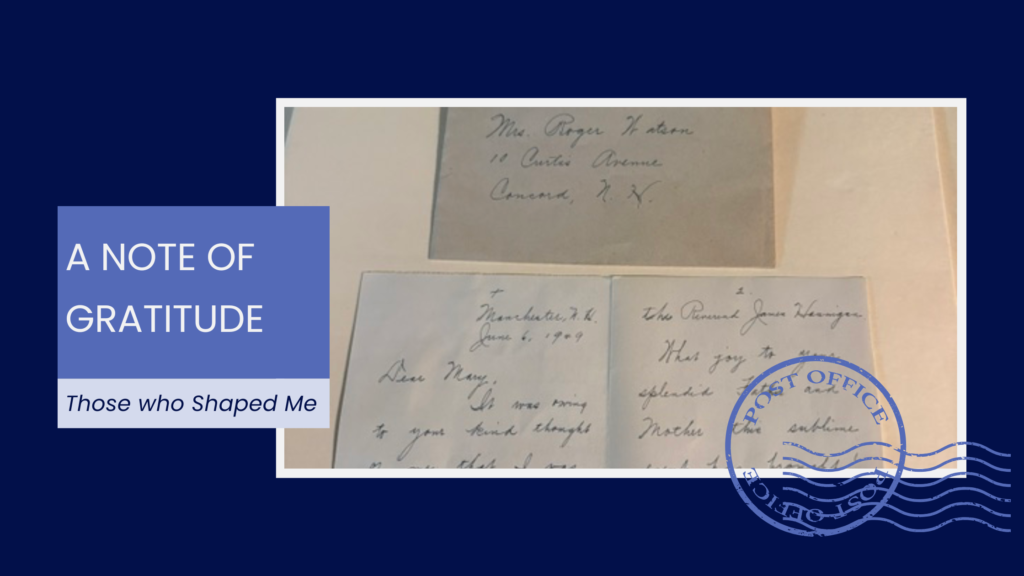
A Note of Gratitude
Among my mother’s keepsakes is this small handwritten note, dated June 6, 1949. At first glance, it appears to be an ordinary thank-you card. It preserves one of the happiest occasions in the ordination and the celebration of a First Mass. The note was written to my mother, Mary Watson, thanking her for including the […]

