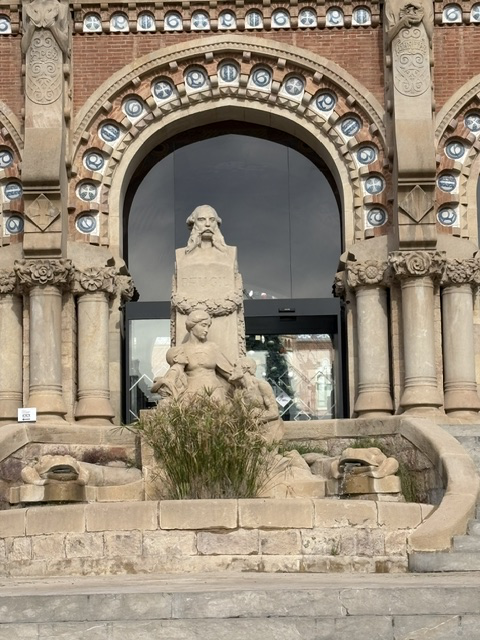
Museo Picasso Málaga
While visiting Málaga, we made our way to the Museo Picasso Málaga. Pablo Picasso was born here in 1881, and seeing his work in the city where his life began gave the museum a connection that would have been difficult to duplicate anywhere else.
Picasso grew up in an artistic family. His father, José Ruiz Blasco, was a painter and art teacher, and Picasso demonstrated remarkable ability at a very young age. Although his family left Málaga when he was still a child and he would spend much of his adult life in France, Málaga remained part of his personal history. The city where he first encountered art would eventually become home to one of the most important collections devoted to his work.
The Museo Picasso Málaga opened in 2003, thirty years after Picasso’s death. Members of his family played an important role in making it possible, particularly his daughter-in-law Christine Ruiz-Picasso and his grandson Bernard Ruiz-Picasso, whose contributions helped establish a collection spanning many periods of his extraordinarily long career.
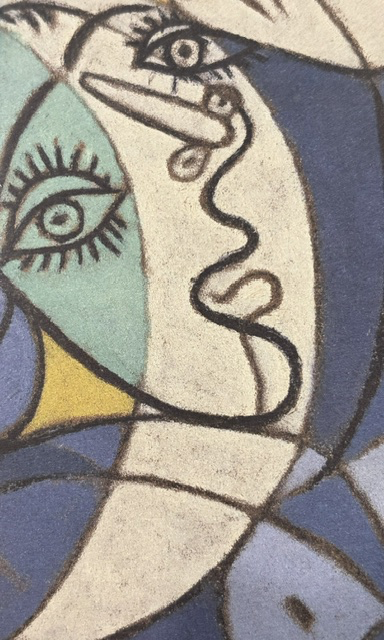
Walking through the museum makes it clear that there was never just one Picasso. Before he began breaking apart faces and bodies into the forms we so readily associate with him, he had mastered traditional drawing and painting. Over the course of his career, he continually experimented with painting, drawing, sculpture, ceramics and printmaking. Along with Georges Braque, he helped develop Cubism, challenging the idea that an artist had to represent a subject from a single viewpoint.
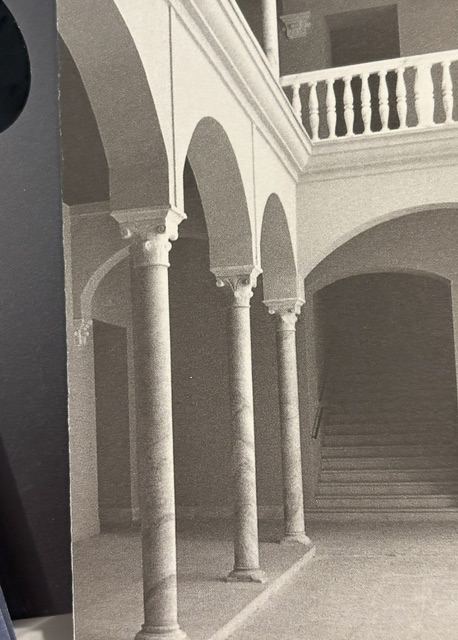
The setting of the museum adds another story. It occupies the Palacio de Buenavista, a 16th-century palace built around a beautiful courtyard of columns and arches. Walking through these quiet spaces creates an intriguing contrast between Renaissance architecture and the work of an artist who, centuries later, would challenge many of the traditions that had shaped Western art.
But the history goes even deeper. Archaeological remains beneath the palace reveal earlier layers of Málaga’s past, including evidence from its Phoenician, Roman and Islamic periods. The museum therefore becomes much more than a collection of Picasso’s work. Beneath us were traces of civilizations that had occupied Málaga for thousands of years; around us stood a Renaissance palace; and on its walls was the work of one of the most influential artists of the 20th century.
Picasso may have spent most of his life away from Málaga, but here his work has returned to the city where his story began. And the museum created to remember him has itself become a place where remarkably different chapters of Málaga’s history come together.