The Molly Maguires
This marker in Jim Thorpe tells one of the darkest and most controversial stories connected with old Mauch Chunk: the story of the Molly Maguires and the executions of 1877.
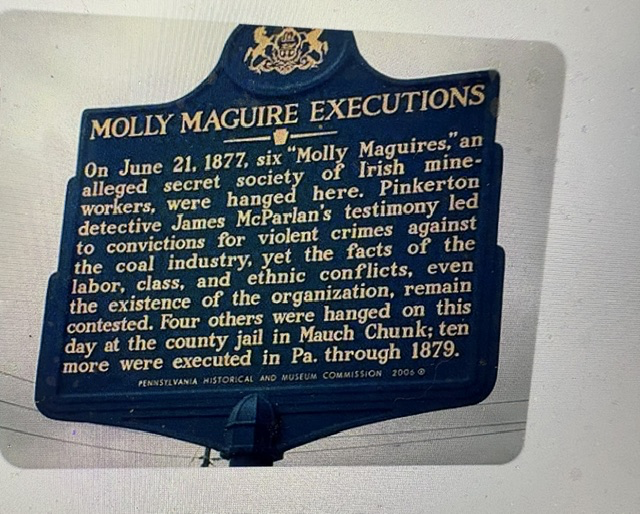
During the nineteenth century, thousands of Irish immigrants came to Pennsylvania’s anthracite region looking for work. Many found themselves deep underground in the coal mines, performing dangerous work for low wages while mine and railroad companies exercised enormous economic and political power over the communities around them.
Out of this environment came the group remembered as the Molly Maguires. They were said to be a secret organization of primarily Irish mine workers who used intimidation and violence against mine officials and others they believed had mistreated workers. But even today, historians caution that separating the Molly Maguires themselves from the broader labor unrest, union activity, ethnic conflict and violence occurring throughout the coal region is difficult.
The mine owners were determined to stop them. Franklin B. Gowen, president of the Philadelphia and Reading Railroad and a powerful figure in the coal industry, employed the Pinkerton National Detective Agency. An Irish-born Pinkerton detective named James McParlan went undercover among the miners, infiltrating their organizations and gathering information that would eventually be used in court.
The trials that followed remain controversial. McParlan’s testimony was instrumental in securing convictions, while coal and railroad interests were deeply involved in the prosecutions. The Pennsylvania State Archives notes that mine-owning interests were even permitted an official prosecutorial role in some of the proceedings. The culmination came on June 21, 1877. A day that became known as “Black Thursday.”
Ten men identified as Molly Maguires were executed in Pennsylvania that day. Six were hanged at the Schuylkill County Prison in Pottsville and four here in Mauch Chunk at the Carbon County Jail. The four executed in Mauch Chunk were Alexander Campbell, John “Yellow Jack” Donahue, Michael J. Doyle and Edward J. Kelly. They had been convicted in connection with the murders of mine bosses John P. Jones and Morgan Powell.
The story did not end that day. Additional executions followed, and by 1879 a total of twenty men associated with the alleged Molly Maguires had been put to death in Pennsylvania. One of the most haunting stories survives just a short distance from this marker. Before Alexander Campbell went to the gallows at the Carbon County Jail, legend says that he placed his muddy hand against the wall of his cell and proclaimed that the mark would remain as evidence that an innocent man had been condemned. A handprint can still be seen on the wall of the old jail today, despite repeated attempts over the years to remove or paint over it. The story has become inseparable from the Molly Maguire legend.
What makes this history so compelling is that there is no simple interpretation of it. There was real violence in Pennsylvania’s coal fields, and mine officials were murdered. But there were also terrible working conditions, bitter ethnic prejudice against Irish immigrants, powerful corporations determined to control the coal fields, and an emerging labor movement struggling for greater protection and better wages. Even the Pennsylvania Historical and Museum Commission describes the existence and nature of the Molly Maguires as contested.
Standing in Jim Thorpe today, surrounded by the beautiful Victorian buildings created during Mauch Chunk’s years of prosperity, it is easy to admire what anthracite coal brought to this town. The Molly Maguire story reminds us of the other side of that prosperity—the miners who went underground, the conflicts between labor and industry, and the enormous human cost that accompanied the wealth being created above them. And on June 21, 1877, that conflict reached the gallows here in Mauch Chunk.
Read More From Nancy
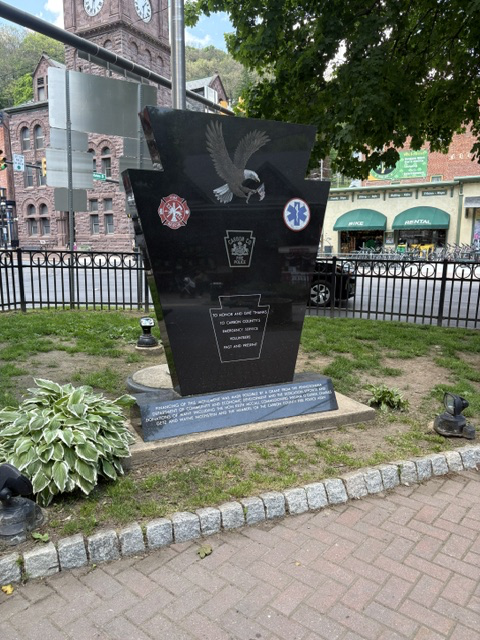
Carbon County Emergency Services Memorial
While so much of Jim Thorpe tells the story of coal, railroads, industrialists and nineteenth-century Mauch Chunk, this memorial brought us into a much more recent chapter of the community’s history. Standing in the small park across from the Carbon County Courthouse is a polished black granite monument dedicated to the men and women who […]
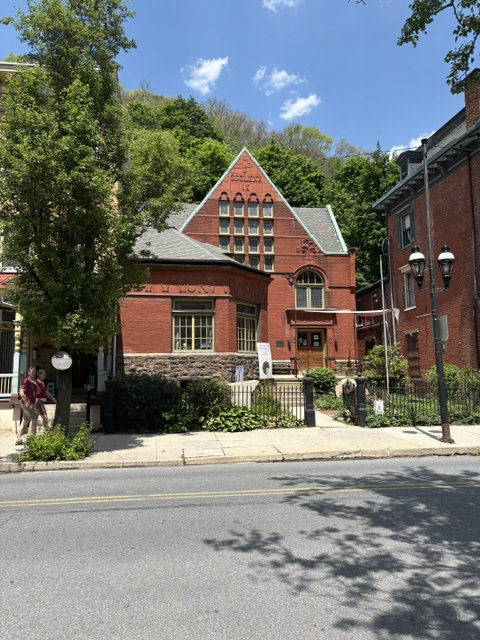
The Dimmick Memorial Library
Among the beautiful buildings lining Broadway in Jim Thorpe, the Dimmick Memorial Library immediately stands out. Its red brick, steep gables, large arched windows and decorative terra-cotta details give it a character very different from the houses surrounding it. But after seeing the Dimmick House, the library becomes even more interesting because the two buildings […]
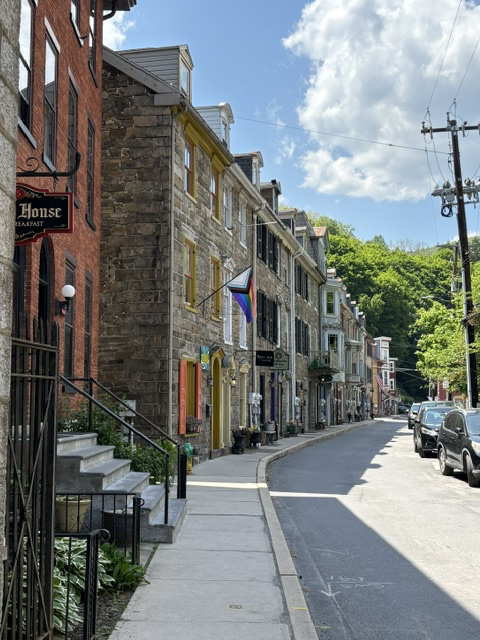
Race Street
Walking down Race Street in Jim Thorpe feels like stepping into an earlier version of the town. The narrow roadway, closely spaced stone and brick houses, and steep wooded hillside behind them preserve much of the character of nineteenth-century Mauch Chunk. The street itself has roots in the town’s early industrial history. Its name comes […]

