Living Along Race Street
Not every building in Jim Thorpe needs to have been the home of someone famous to tell us something about old Mauch Chunk. Walking along Race Street, I was just as interested in the ordinary houses and storefronts that have survived alongside the town’s better-known landmarks.
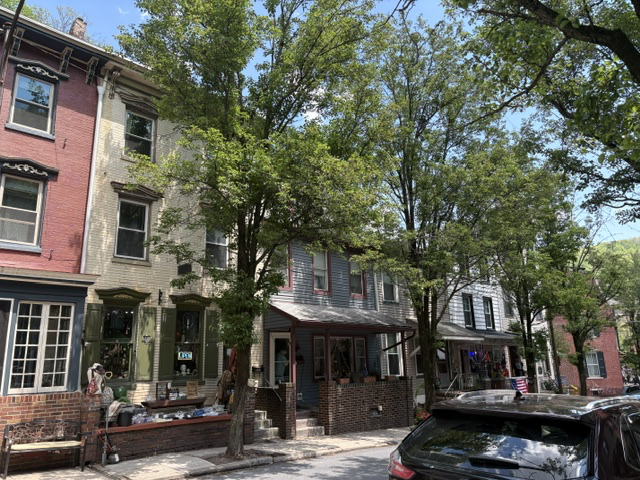
Here, tall brick houses with decorative window surrounds stand beside smaller frame buildings with porches almost touching the sidewalk. There is little uniformity. Buildings of different sizes, materials and periods sit shoulder to shoulder, reflecting the way the neighborhood changed and grew over generations.
Race Street was never a grand boulevard. Space was limited by the mountain rising behind it, and buildings were fitted wherever the terrain permitted. Houses were narrow, lots were small, and front doors opened only a few steps from the street.
What makes the view particularly appealing today is that these buildings are still being used. Porches, shops, signs, benches and open doorways remind us that this is not a preserved museum street. People have continued to adapt these old buildings to new purposes while retaining much of the scale and appearance of the neighborhood.
We had already seen the mansions, churches and imposing public buildings that tell the story of Mauch Chunk’s wealth and importance. But streets like this tell another part of its history: the everyday places where people lived, worked, shopped and knew their neighbors. Sometimes the best way to understand an old town is simply to walk down one of its streets and imagine all the lives that have passed through the same doors.
Read More From Nancy
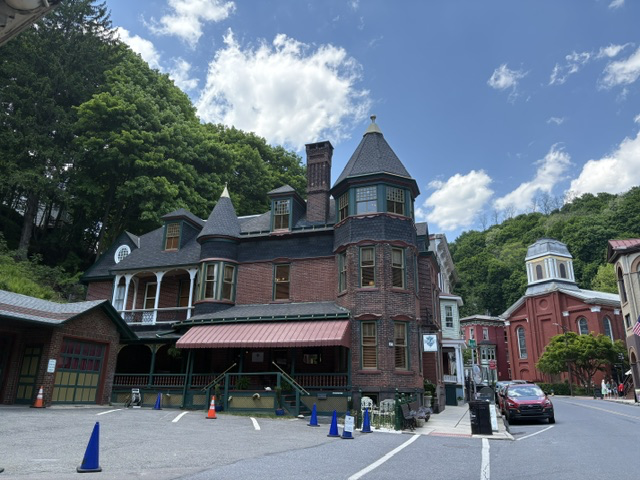
The Dolon House
Walking along Broadway in Jim Thorpe, the Dolon House immediately stands out. Its turret, elaborate roofline, porches and decorative brickwork make it easy to imagine this street during the prosperous years when the town was still known as Mauch Chunk. The house was completed around 1888 for John C. Dolon, a prominent local businessman who […]
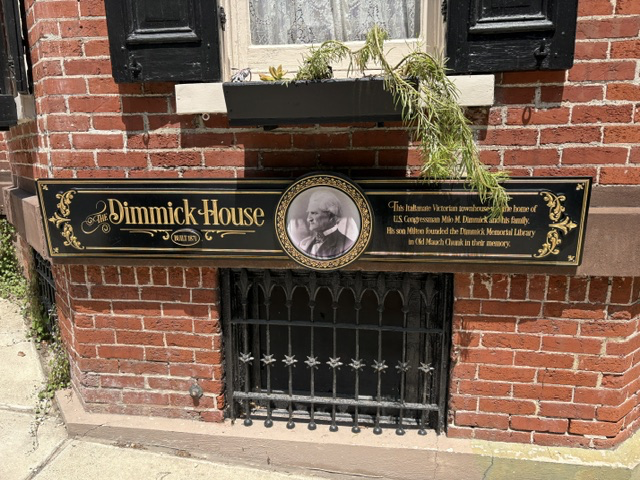
The Dimmick House
Along Broadway stands another reminder of the people who shaped Mauch Chunk during its prosperous nineteenth-century years. The Dimmick House, built in 1871, was the home of former U.S. Congressman Milo M. Dimmick and his family. This handsome Italianate Victorian townhouse is part of the impressive collection of residences along Broadway often referred to as […]
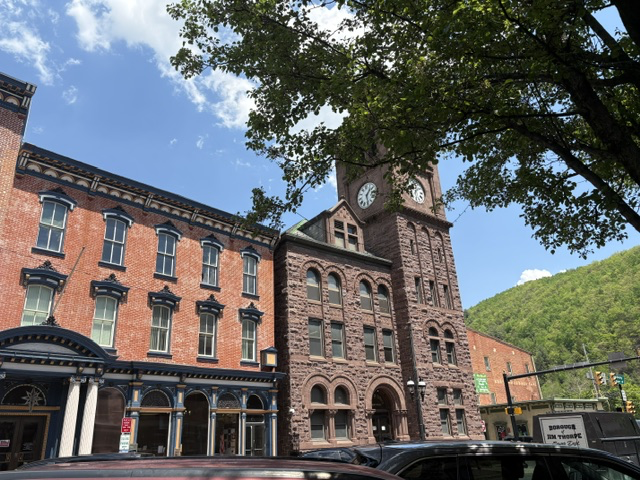
The Carbon County Courthouse
Standing prominently at the corner of Broadway in Jim Thorpe, the Carbon County Courthouse is one of the buildings that immediately draws your eye. Its massive stone walls and tall clock tower seem perfectly suited to the narrow valley and steep mountains surrounding the town. The courthouse we see today is the third to occupy […]

