Summer at Camp Bernadette — Wolfeboro, New Hampshire
During my elementary school years, I spent the month of July at Camp Bernadette, a sleepaway camp for girls in Wolfeboro, New Hampshire. I loved going to camp because it gave me opportunities that I did not have at home. I could try archery, boating, horseback riding, riflery, swimming and many other activities. For a young girl, camp offered an unusual sense of independence—a place where I could test myself, learn new skills and discover what I was capable of doing.
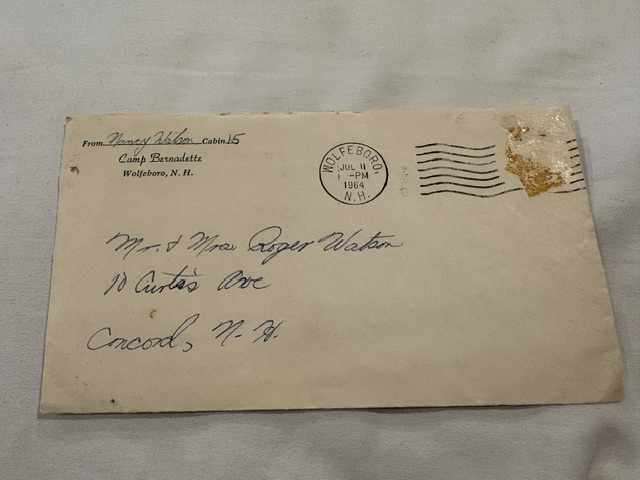
Camp Bernadette had been founded in 1953 by the Roman Catholic Diocese of Manchester, so when I attended in 1964, it was still a relatively young camp. Located on the shores of Lake Wentworth, it was created to give girls a summer experience combining Catholic faith, outdoor adventure, friendship and the opportunity to develop new skills. Camp Bernadette continues to operate today, welcoming new generations of girls to the same lakeside setting where I spent my childhood summers. Its present mission still emphasizes faith, friendship, confidence and learning through outdoor experiences—the same qualities that made my own summers there so meaningful.
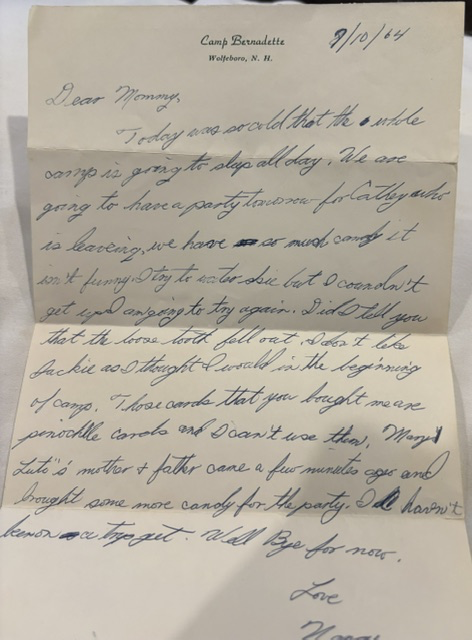
I wrote this letter to my mother on July 10, 1964, when I was eleven years old. It is filled with the kind of news that seemed important enough to send home from camp. I reported that the entire camp was going to sleep outside that night. A party was being planned for the following day for a girl who was leaving, and another camper’s parents had arrived with more candy for the celebration. I also mentioned losing a tooth and complained that the cards my mother had bought for me were pinochle cards that I could not use.
But the part of the letter I remember most clearly is my attempt to water-ski.
Before I was permitted to try, I had to demonstrate a required level of swimming ability. Passing that test mattered to me because water-skiing looked exciting—and, from the shore, deceptively easy. I had watched others rise from the water and glide behind the boat, and I believed I could learn to do it too.
When my opportunity finally came, I discovered how difficult it was. Water-skiing required several movements to happen at once. I had to hold the towrope, position the skis, keep my body balanced and respond at precisely the right moment as the boat pulled forward. I needed enough control to allow the boat to lift me rather than fighting against its force. I could not coordinate everything well enough to get up on the skis.
In my letter, I explained it simply: “Today I tried to water ski but I couldn’t get up.” There was no dramatic account of the disappointment and no suggestion that I was ready to quit. I immediately added, “I’m going to try again.”
I never did learn to water-ski. Yet the experience reveals something about the child I was. I was willing to attempt something new even when it was difficult. I did not have an explanation for why my body would not do what I wanted it to do, but I did not interpret that first failure as the end of the story. My response was not, “I can’t do it.” It was, “I’m going to try again.”
The rest of the letter moves easily among camp activities, a loose tooth, unusable playing cards, candy for a party and a trip I was still waiting to take. That collection of ordinary details brings back the distinctive world of summer camp, where each day offered some new experience and even small events became important news to share with home.
Camp Bernadette gave me the freedom to explore. Not everything I attempted became something I could master, but mastery was not the only measure of the experience. Sometimes the accomplishment was earning the chance to try. Sometimes it was getting into the water, holding on to the rope and discovering what would happen. And sometimes it was being unsuccessful yet still believing that the next attempt might be different.
More than sixty years after I wrote this letter, girls still arrive at Camp Bernadette ready to swim, explore, make friends and test themselves through new experiences. The camp has grown and changed, but the opportunity it offers remains remarkably familiar. It is still a place where a young girl can leave home for a while, discover a little more independence and return with stories about the things she tried.
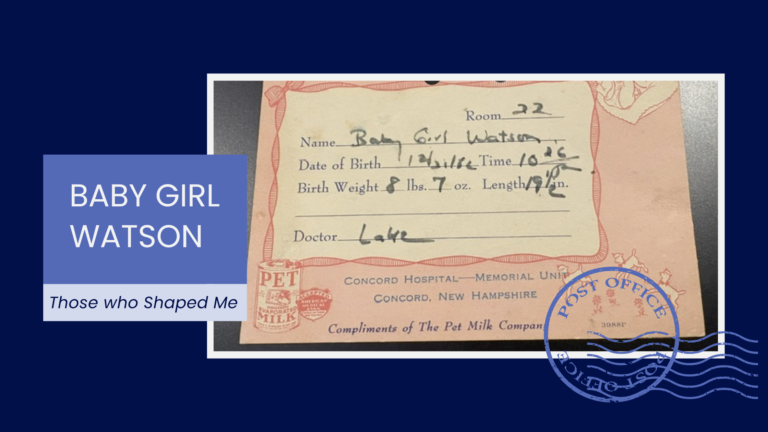
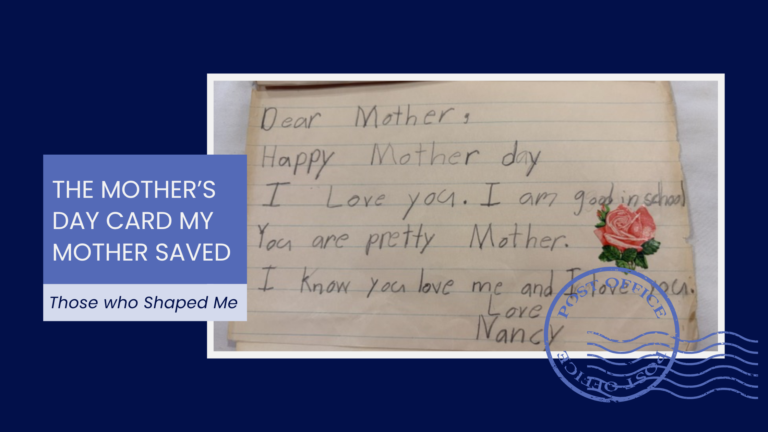
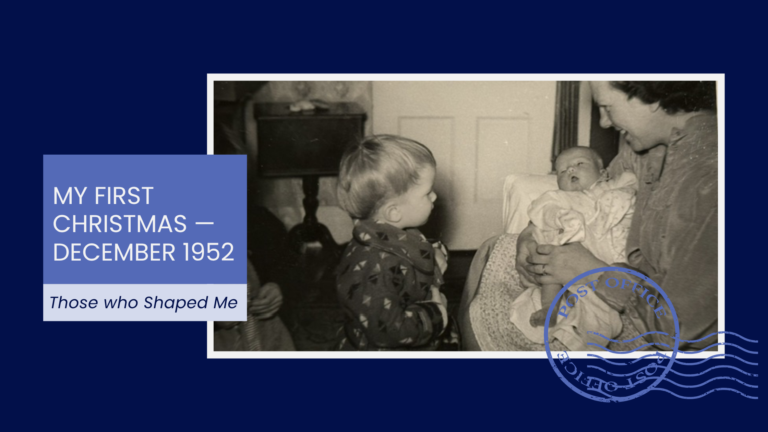
Read More From Nancy
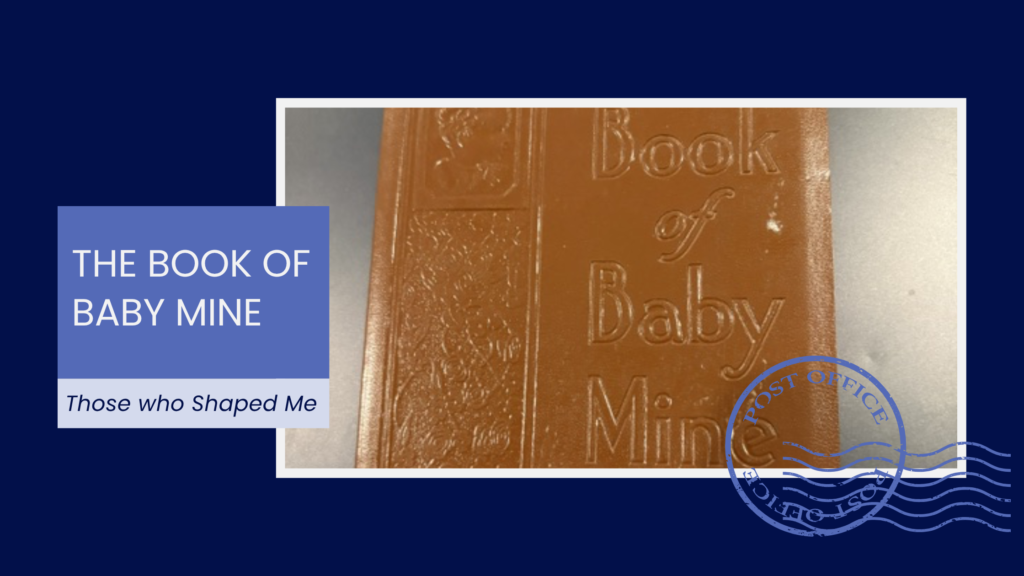
The Book of Baby Mine
The worn brown cover of my baby book bears the title The Book of Baby Mine. Inside, in my mother’s careful handwriting, she began recording the story of my life. She wrote my full name, Nancy Jean Watson, followed by the details of my birth at Concord Hospital on December 21, 1952. The information is […]
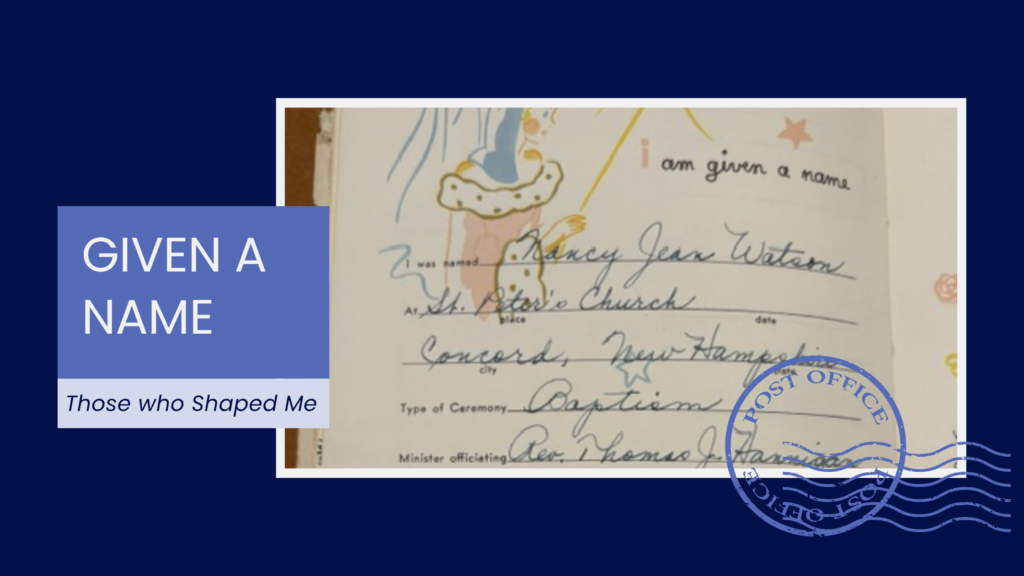
Given a Name
Only a few pages in my baby book were completed, but this was one of them. My mother may not have recorded every childhood milestone, yet she made certain to preserve some of the details of the day I was baptized. She wrote my full name in her beautiful handwriting: Nancy Jean Watson. The ceremony […]
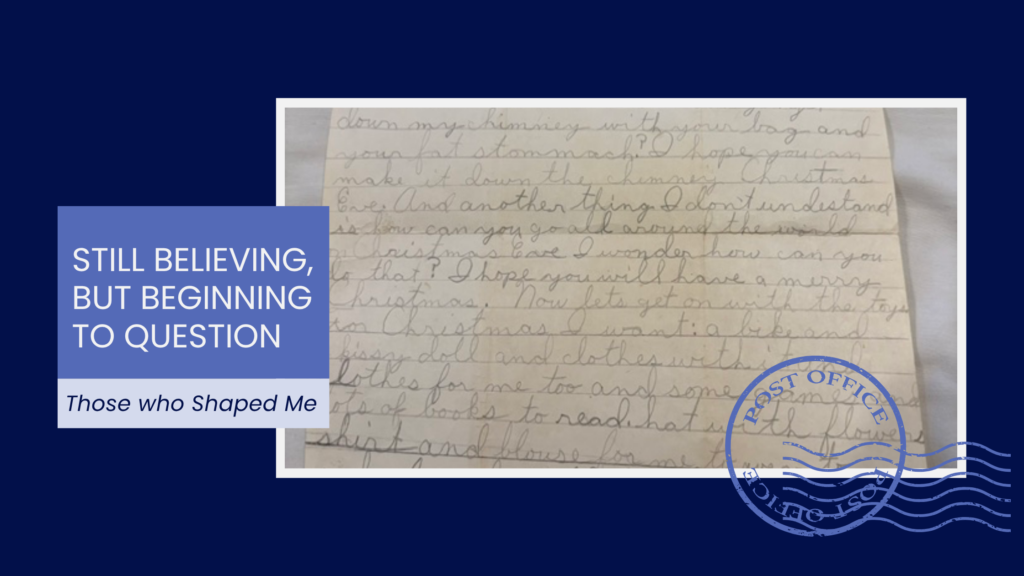
Still Believing, but Beginning to Question
I was nine years old and in the third grade when I wrote this letter to Santa Claus. I began politely, thanking him for the presents he had given me the year before. I told him that school was a little harder that year but assured him that I did not mind very much. I also introduced […]

