Still Believing, but Beginning to Question
I was nine years old and in the third grade when I wrote this letter to Santa Claus. I began politely, thanking him for the presents he had given me the year before. I told him that school was a little harder that year but assured him that I did not mind very much. I also introduced my family, explaining that I had one sister and three brothers.
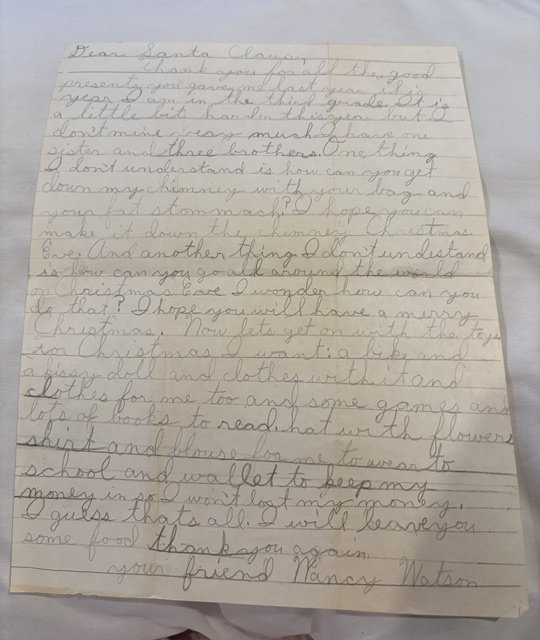
I still believed in Santa, but questions were beginning to creep into that belief. The practical details of Christmas Eve simply did not make sense to me. How could Santa get down the chimney with his bag and his “fat stomach”? Even if he managed that, how could he possibly travel all around the world in a single night?
I did not ask these questions as accusations. I genuinely wanted to understand. I hoped Santa could make it down the chimney on Christmas Eve, and I wondered how he accomplished everything that children had been told he could do. The letter captures that delicate childhood moment when imagination and logic exist side by side, when a child still wants to believe but has begun testing the story against what she knows about the world.
After considering these mysteries, I moved briskly to the real purpose of the letter: “Now let’s get on with the toys.” My list included a bike, a big doll with clothes, clothes for myself, games, and lots of books to read. I also asked for a hat decorated with black and brown flowers that I could wear to school and a wallet in which I could keep my money so I would not lose it. The list was an appealing mixture of childhood wishes and practical concerns: something to ride, something to play with, something to read, something pretty to wear, and something useful for keeping my money safe.
The request that stands out most to me now is the bicycle.
I never owned a bike, and I was never able to ride one because of the vestibular and balance problems that I did not yet understand. At nine, however, I apparently saw no reason why I should not ask for what so many other children had. A bicycle represented movement, freedom, and the simple pleasure of joining other children in an ordinary childhood activity.
There is something both hopeful and poignant in that request. I did not yet have the language to explain why balancing was difficult for me. I only knew that a bicycle was something children wanted, and I wanted one too. There was no self-pity in the letter and no suggestion that I believed it might be impossible. I simply placed the bike at the beginning of my Christmas list and trusted Santa to take care of the rest.
I ended by telling Santa that I would leave him some food and signed the letter, “Your friend, Nancy Watson.” That closing may be the sweetest part of all. Santa was not merely a mysterious visitor who delivered presents. He was my friend—someone I could thank, question, tease about his stomach, and trust with my wishes.
This letter preserves more than a childhood Christmas list. It captures me at nine years old: polite but direct, imaginative but already questioning, interested in books as well as toys, and hopeful enough to ask for something my body would never allow me to use. The bicycle was never under the Christmas tree, but the wish remains here on the page, a small reminder of the child I was and of all the possibilities I still believed were waiting for me.
Read More From Nancy
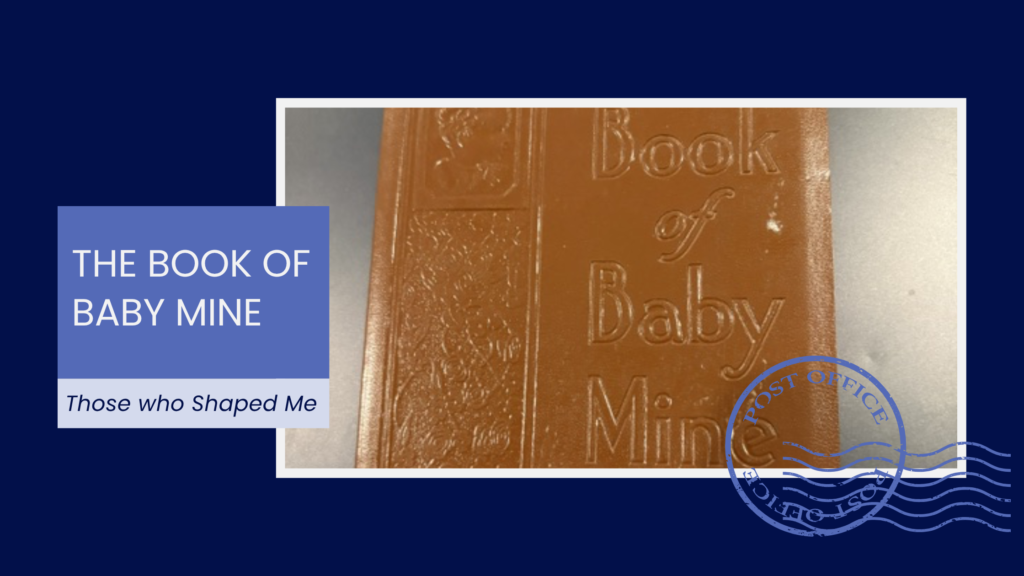
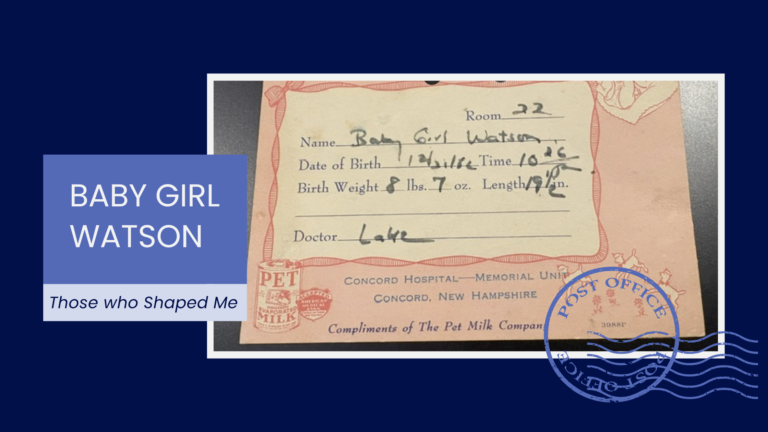
The Book of Baby Mine
The worn brown cover of my baby book bears the title The Book of Baby Mine. Inside, in my mother’s careful handwriting, she began recording the story of my life. She wrote my full name, Nancy Jean Watson, followed by the details of my birth at Concord Hospital on December 21, 1952. The information is […]
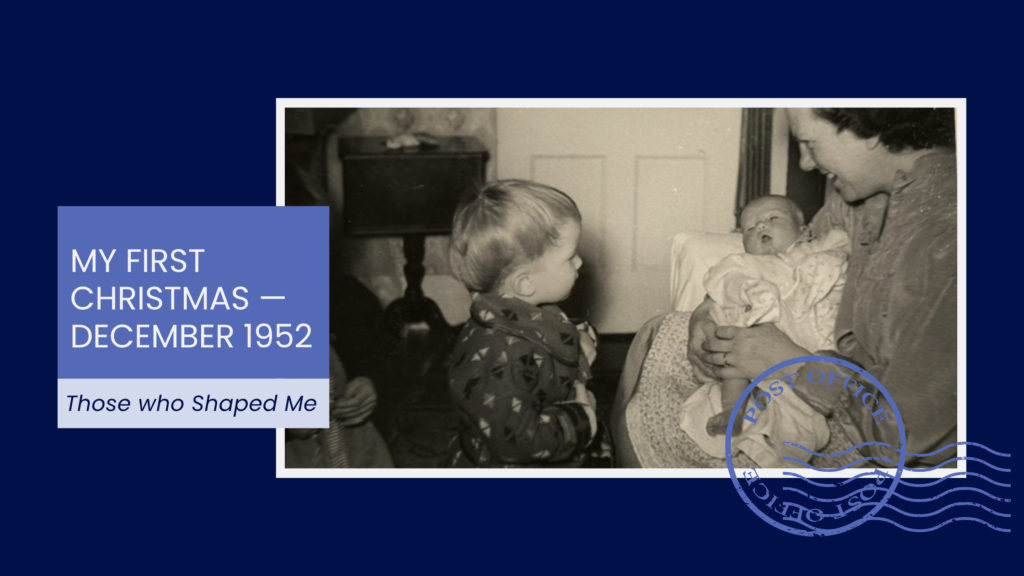
My First Christmas — December 1952
I was born on December 21, 1952, only four days before Christmas. In my baby book, my mother recorded my first holiday with one brief sentence: “Spent in hospital—4 days after birth.” At that time, it was customary for a mother and newborn to remain in the hospital for several days following delivery. There was […]
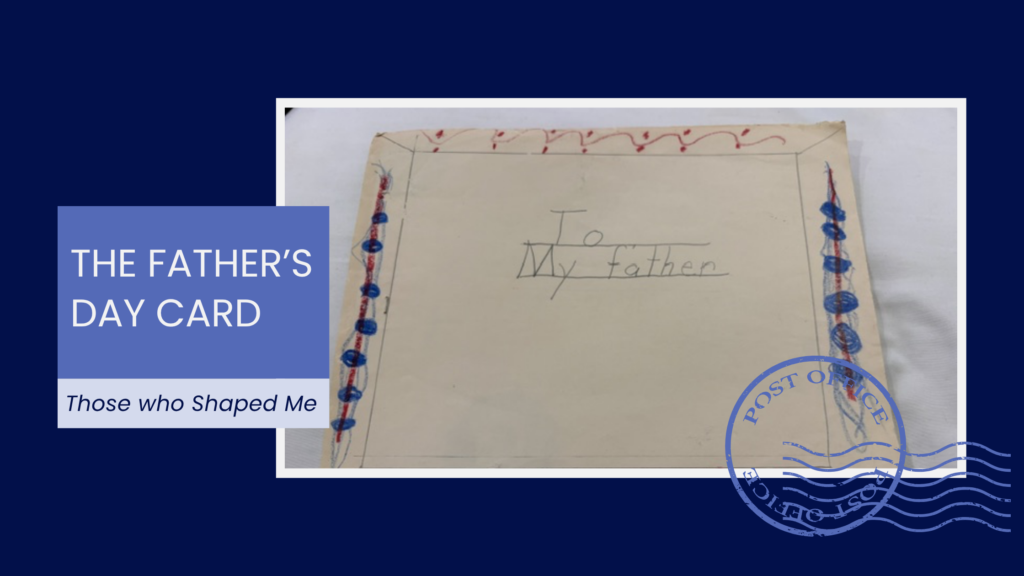
The Father’s Day Card
I made this Father’s Day card when I was in the second grade. I can date it because the small photograph included inside is my second-grade school picture. It was one of those classroom projects in which we created something special to bring home to a parent for a major holiday. The folded-paper cover is […]

