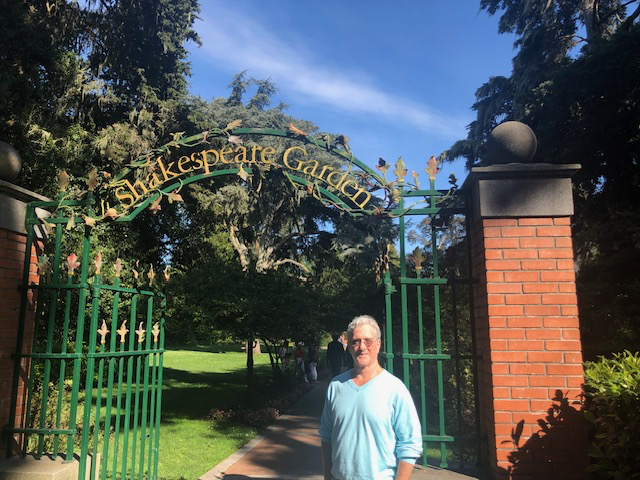
Shakespeare Garden
Passing through the ornamental gate of Shakespeare Garden in Golden Gate Park is like entering a place where literature has been given physical form. The garden was created not simply as a collection of flowers but as a living tribute to William Shakespeare and the natural world preserved within his plays and poetry.
The idea for the garden came from Alice Eastwood, a respected botanist who served for many years as curator of botany at the nearby California Academy of Sciences. Established in 1928, the garden was designed to include flowers, herbs, trees, and shrubs mentioned in Shakespeare’s works. Within this small landscape, plants that appeared on the stage and page could be encountered growing from the earth.
At the far end of the garden stands a bust of Shakespeare surrounded by plaques bearing passages from his works. Paths, benches, trees, and cultivated beds create a secluded space within the much larger Golden Gate Park. The garden does not attempt to reproduce one precise place from Shakespeare’s England. Instead, it gathers elements from his writing and allows visitors to experience the close relationship between his language and the natural world.
The garden is also part of the remarkable history of Golden Gate Park. Beginning in 1870, more than one thousand acres of windswept sand dunes were gradually transformed into an expansive public landscape. Over time, museums, gardens, lakes, monuments, and recreational spaces were created within it.
Beyond the gate was a place where literature was no longer confined to a book. The plants Shakespeare used to express love, sorrow, memory, and the passage of time had become part of a living landscape, continuing to connect visitors with words written more than four centuries ago.